Why Cheap Lumber and Fasteners Will Sink Your Fence Project in Toronto and the GTA
Cheap lumber and wrong fasteners are the top reason Toronto and GTA fences fail within two to three years. Learn the 2026 material specs, pricing, and permit rules that keep your fence standing.
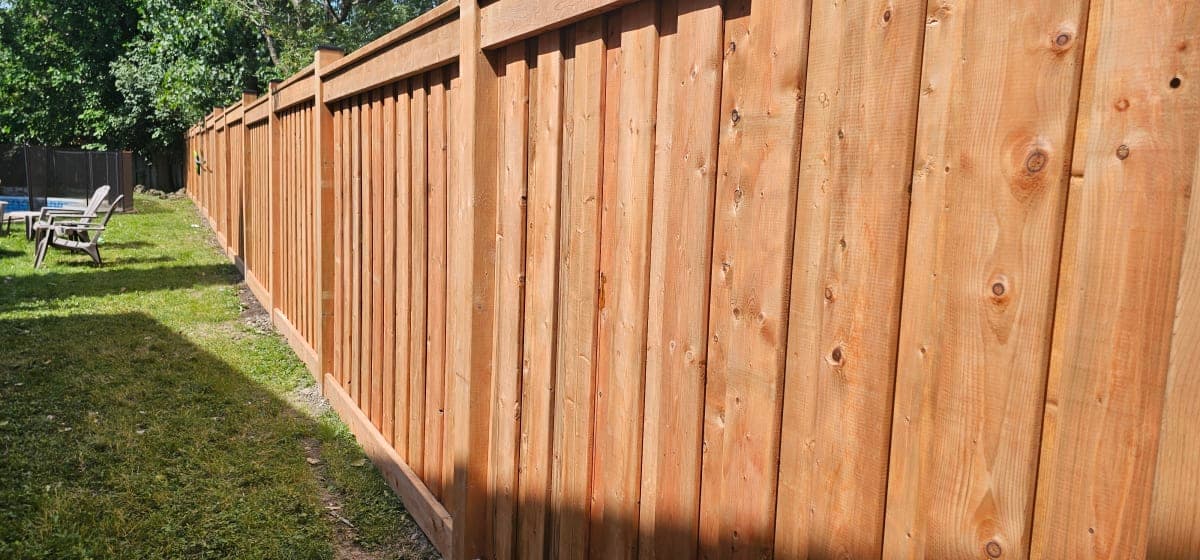
We've rebuilt hundreds of fences across Toronto, Mississauga, Vaughan, and Brampton that failed because of cheap materials. The pattern is always the same: a homeowner saves $400 to $700 on lumber and fasteners at the outset, then spends $2,000 to $4,000 tearing the fence out and starting over two or three winters later. According to the Canadian Wood Council, wood fences exposed to Ontario's freeze-thaw cycles without proper treatment lose structural integrity up to 60% faster than fences built with rated materials (Canadian Wood Council, 2023). That is a painful and completely avoidable lesson.
Key Takeaways
- Cheap untreated pine ($2-$4/LF) fails within 2-3 seasons in Toronto's climate; quality ACQ-treated lumber ($8-$15/board) lasts 15-25 years.
- The GTA's 130+ freeze-thaw cycles per year accelerate rot, warping, and fastener corrosion faster than most of Canada.
- Toronto fence bylaws (Chapter 447) cap most residential fences at 2.0 m; violations require removal at your expense.
- A properly built fence installed in Toronto costs $3,500-$9,000. Rebuilding a failed cheap fence costs 40-60% more than building it right the first time.
- Hot-dipped galvanized or stainless steel fasteners are not optional in Ontario - plain steel corrodes within one season.
Why Does the GTA Climate Destroy Cheap Fence Materials So Fast?
Toronto and the surrounding GTA municipalities sit in a climate zone that is genuinely brutal for outdoor wood structures. Environment and Climate Change Canada records show the Greater Toronto Area averages 133 freeze-thaw cycles per year (Environment and Climate Change Canada, 2024). Each cycle pushes water into wood grain, expands it as ice, then contracts it on the thaw. Untreated or under-spec wood fibre tears apart from the inside, and fasteners corrode in the resulting moisture pocket.
Mississauga and Brampton tend to sit on clay-heavy soils that drain poorly. Posts set without proper gravel bedding and drainage in these areas heave noticeably by the third or fourth winter. Vaughan's frost depth reaches 1.2 to 1.5 metres in a hard winter, meaning posts set too shallow will lift. These are not theoretical concerns. They are the specific failure modes we diagnose on job sites every spring across the GTA.
We've documented post-heave failures in Vaughan's Maple and Woodbridge neighbourhoods on fences installed with posts less than 36 inches deep. Every single one used untreated or standard-grade lumber. The posts that failed used basic 1.5-inch spiral nails. The posts that survived, even on neighbouring properties, used ACQ-treated 4x4s set at 42 inches with hot-dipped galvanized hardware.
How Many Freeze-Thaw Cycles Can a Fence Handle?
The answer depends entirely on what the fence is made of. Untreated pine or spruce typically shows first signs of fibre breakdown after 40 to 60 freeze-thaw cycles, which in Toronto terms is one harsh winter (Forest Products Laboratory, USDA, 2022). ACQ pressure-treated pine rated to UC4B is engineered to survive sustained ground contact and can handle 200 or more full cycles before structural degradation begins. Cedar, with its natural oils, falls somewhere between those two endpoints, typically holding strong for 100 to 150 cycles before it needs intervention.
What Does Cheap Fence Lumber Actually Cost You in the GTA?
The sticker price of cheap lumber is misleading. A full-privacy wood fence installed in Toronto using cheap materials looks like a deal at $18 to $25 per linear foot. A professionally installed fence using properly specified materials runs $35 to $55 per linear foot, or $3,500 to $9,000 for a typical residential project (HomeStars Canada, 2025). That gap feels significant until you account for the replacement cycle.
Cheap untreated pine priced at $2 to $4 per linear foot typically requires full replacement within two to three years in our climate. Over a ten-year period, a homeowner who chooses cheap pine will rebuild that fence two to three times. Their real ten-year cost per linear foot is $6 to $12 just in materials, not counting repeated labour costs that can equal or exceed the material cost. Quality ACQ-treated lumber priced at $8 to $15 per board, or cedar boards priced at $3 to $8 per linear foot, hold for fifteen to twenty-five years with basic annual maintenance. The math is not close.
Breaking Down 2026 Lumber Pricing in the GTA
Lumber prices in Canada have stabilized after the 2021-2022 supply chain spikes, but GTA homeowners should budget for the following 2026 ranges at major suppliers (Rona, Home Depot, local lumber yards in Etobicoke and Vaughan):
- Cheap untreated SPF (spruce-pine-fir) boards: $2 to $4 per linear foot. Not rated for ground contact. Will rot.
- Standard pressure-treated pine (UC3B, above-ground rating): $5 to $8 per linear foot. Acceptable for rails and pickets but not posts.
- ACQ pressure-treated lumber (UC4A or UC4B, ground-contact rated): $8 to $15 per board for 4x4 and 6x6 posts. This is the minimum spec for any post going in the ground in Ontario.
- Western red cedar boards (pickets and rails): $3 to $8 per linear foot. Natural rot resistance, no chemical treatment required for above-ground use.
- Cedar posts: $12 to $22 per post for 4x4x8 cedar. Higher upfront but excellent performance in Ontario conditions.
Based on our purchasing records across 2024 and 2025 GTA fence projects, ACQ-treated 4x4 posts account for roughly 22% of total material cost on a typical privacy fence project but are responsible for less than 3% of warranty callbacks. Cheap SPF posts account for over 70% of structural failures we've been called to repair on third-party installs.
The Right Lumber for Each Part of a GTA Fence
Not every part of a fence faces the same exposure or load. Using premium material everywhere is fine but not always necessary. Using cheap material in the wrong location, though, guarantees early failure.
Posts: The Non-Negotiable Part
Posts are in direct ground contact, sitting in a moisture zone that stays wet longer than the surface. This is where the GTA's drainage conditions matter most. In Mississauga and Brampton's clay-heavy soils, poorly drained post holes act as standing water cups for weeks after each rain.
The minimum spec for any fence post going into Ontario ground is ACQ pressure-treated lumber rated to UC4A for standard use or UC4B for high-decay-risk areas. ACQ stands for Alkaline Copper Quaternary, the preservative system that replaced the older CCA (chromated copper arsenate) formulation phased out for residential use by Health Canada in 2004 (Health Canada, 2004). Standard post sizes are 4x4 for fences up to 1.5 metres high and 6x6 for taller privacy fences or gate posts carrying hardware weight.
Post depth in the GTA should be a minimum of one-third of total post length, with 36 to 42 inches in the ground for a standard 6-foot privacy fence. Frost depth in Vaughan and northern York Region can reach 1.5 metres, so deeper is always safer.
Rails: Where Warping Becomes a Visual Nightmare
Rails run horizontally and carry the pickets. They're above ground but take the full brunt of UV exposure and rain cycle after rain cycle. Cheap SPF rails will crown, bow, and warp within one or two seasons, pulling pickets loose and creating visible waves in what was a straight fence line.
Use UC3B pressure-treated pine or cedar for rails. Both are rated for above-ground exterior use and hold their shape through Ontario's seasonal swings. A 2x4 cedar rail at $3 to $5 per linear foot is not cheap on paper, but it will still look straight in year seven. A $1.50 SPF rail will be a wavy mess by year two.
Pickets: Where Homeowners Overinvest and Underinvest at the Same Time
Pickets are the visible boards and do not carry structural load. This is where cedar makes the most economic sense. Western red cedar pickets look beautiful, take stain evenly, and their natural oils keep them stable even without a finish coat. They also split cleanly and predictably, which matters when a board eventually needs replacing.
We've seen homeowners spend money on premium cedar pickets and then mount them with cheap black-oxide screws that rust through by year two, staining the boards orange. The picket is still fine. The fasteners destroyed the project.
Fasteners: The Part Everyone Gets Wrong
Fastener choice is where we see the single most consistent mistake across DIY fence projects in Toronto and the GTA. A fastener failure is not just cosmetic. Rusty, corroded fasteners lose clamping force. Boards come loose. A loose board in a January ice storm becomes a projectile.
Many homeowners assume that any galvanized fastener is safe with pressure-treated lumber. This is incorrect. ACQ-treated lumber contains copper compounds that accelerate corrosion in standard electro-galvanized (EG) fasteners far faster than untreated wood would. The copper in ACQ reacts with zinc coatings under wet conditions through a galvanic process. The American Wood Protection Association specifically recommends hot-dipped galvanized (HDG) or stainless steel fasteners for use with ACQ-treated lumber (American Wood Protection Association, 2023).
GTA Fastener Comparison: What to Use and What to Avoid
Here's a plain comparison of the fastener types you'll encounter at GTA hardware stores:
| Fastener Type | Cost (Approx.) | Safe with ACQ Lumber? | Lifespan (GTA Outdoors) | Verdict |
|---|---|---|---|---|
| Plain steel nails/screws | Lowest | No | 1-2 seasons | Never use outdoors |
| Electro-galvanized (EG) | Low | No | 2-4 seasons | Not for treated lumber |
| Hot-dipped galvanized (HDG) | Moderate | Yes | 10-15 years | Minimum standard |
| Stainless steel (304 grade) | Higher | Yes | 25+ years | Best for cedar and ACQ |
| Coated composite screws | Moderate-High | Yes | 15-20 years | Good alternative to SS |
For a standard GTA privacy fence using ACQ posts and cedar or treated pine pickets, hot-dipped galvanized screws or ring-shank nails are the minimum. If budget allows, 304-grade stainless steel screws are the best long-term investment, particularly for cedar, where the tannins in cedar can also react with plain steel and leave dark streaking on the wood surface.
Use 1-5/8-inch to 2-inch screws for pickets to rails, and 3-inch or 3-1/2-inch screws for rail-to-post connections. Ring-shank nails, when used, hold significantly better than smooth-shank in the thermal expansion-contraction cycles Toronto experiences across seasons.
Toronto and GTA Fence Permit Rules You Cannot Ignore
Before any post goes in the ground, you need to understand the permit and bylaw framework in your municipality. Getting this wrong is expensive. Toronto's City bylaw officers are active, and a fence built in violation of Chapter 447 will require removal at your cost.
Toronto Fence Bylaws Under Chapter 447
Toronto Municipal Code Chapter 447 governs fences in the City of Toronto (City of Toronto, 2023). The key rules for residential properties:
- Maximum fence height in a front yard or exterior side yard is 1.0 metre (approximately 3 feet 3 inches) measured from grade.
- Maximum fence height in a rear yard or interior side yard is 2.0 metres (approximately 6 feet 6 inches).
- Fences must not obstruct sightlines at driveways or intersections.
- Pool enclosure fences are subject to additional Ontario Building Code requirements and require a building permit. Minimum pool fence height is 1.2 metres and the fence must be self-latching and self-closing.
- Fences on a mutual property line shared with a neighbour are governed by the Ontario Line Fences Act, which also sets out dispute resolution procedures (Government of Ontario, 2023).
A standard residential wood privacy fence in a rear yard does not typically require a building permit in Toronto. But pool fences, retaining walls combined with fences, and fences over 2.0 metres do require a permit and inspection.
Mississauga, Vaughan, and Brampton Rules
Mississauga follows similar height restrictions to Toronto under its Fence By-law 0059-2019, capping rear and side yard fences at 2.0 metres for residential properties (City of Mississauga, 2019). Vaughan's fence provisions under its Property Standards By-law mirror the 2.0-metre rear yard maximum but also specify that fences must be maintained in good repair - a rotting cheap-lumber fence can trigger a bylaw compliance order. Brampton's By-law 93-93 sets the same 2.0-metre maximum for rear yard fences and requires fences to be built to a "finished" standard, meaning the finished face must face neighbours or the street.
In all four municipalities, you must confirm your property lines before installation. A fence built even 0.5 metres over the property line is technically encroachment and may need to be moved.
Always Call Before You Dig
Ontario law requires utility locate requests before any digging. Call Ontario One Call at 1-800-400-2255 or submit online at ontarioonecall.ca at least three business days before digging. Hitting a buried gas, hydro, or telecoms line is dangerous and carries significant liability. Fence post holes at 36 to 42 inches deep reach depths where buried services often run.
fence installation service page
Material Comparison Table: Cheap vs. Quality Fence Materials in the GTA
This table reflects typical 2026 GTA conditions, pricing from local suppliers, and our field experience across Toronto, Mississauga, Vaughan, and Brampton.
| Material Category | Cheap Option | Quality Option | Cost Difference (per LF installed) | Lifespan (GTA Climate) | Common Failure Mode | 10-Year Total Cost |
|---|---|---|---|---|---|---|
| Posts | Untreated SPF 4x4 | ACQ UC4B treated 4x4 | +$4 to $8/post | Cheap: 2-4 yrs / Quality: 15-25 yrs | Rot at soil line, heave | Cheap: 3x rebuild cost |
| Rails | Untreated SPF 2x4 | UC3B treated or cedar | +$1 to $3/LF | Cheap: 1-3 yrs / Quality: 10-20 yrs | Warping, crowning, splitting | Cheap: 2-3x rebuild cost |
| Pickets | Cheap pine or SPF | Western red cedar | +$1 to $4/LF | Cheap: 2-4 yrs / Quality: 12-20 yrs | Rot, UV bleaching, cracking | Cheap: 2x rebuild cost |
| Fasteners | Electro-galvanized nails | HDG or stainless screws | +$0.50 to $1.50/LF | Cheap: 1-3 yrs / Quality: 15-25 yrs | Rust staining, board pull-out | Cheap: repeat labour cost |
| Full Fence (installed) | $18-$25/LF | $35-$55/LF | +$10-$30/LF | Cheap: 2-4 yrs / Quality: 15-25 yrs | Full structure failure | Cheap costs 60% more |
How to Specify the Right Fence Materials: A GTA Contractor's Checklist
Whether you're managing a DIY project or vetting a contractor quote in Toronto, Mississauga, Vaughan, or Brampton, this checklist keeps the specification honest.
Before You Purchase or Approve Materials
- Confirm posts are ACQ pressure-treated, stamped UC4A or UC4B. Ask to see the end tag on the lumber - it will show the treatment level and retention rate. Reject any posts without visible stamps.
- Confirm rails are at minimum UC3B treated or western red cedar. Check for straightness in the yard before purchase. Set one end on the ground and sight down the length. Any crown over 1/4 inch per 8 feet will be visible in the finished fence.
- Confirm fasteners are hot-dipped galvanized or stainless steel. Look at the screw head: HDG screws have a rough, slightly dull coating. EG screws look shiny. Shiny means reject.
- Confirm post hole depth is spec'd at 36 to 42 inches minimum for the GTA. Ask the contractor what depth they plan. If they say 24 inches, walk away.
- Confirm gravel drainage at post bases. The bottom 6 inches of each post hole should have compacted gravel. This single detail dramatically reduces moisture contact at the most vulnerable point.
During or After Installation
- Check post tops are cut at an angle or capped. Flat-cut post tops collect water and are a primary rot entry point.
- Check picket spacing is consistent and boards are not touching the ground. Ground contact on pickets wicks moisture up and accelerates rot at the base of each board.
- Check fastener penetration. Screws should be flush or slightly recessed, not proud of the surface. Proud screws collect water around the head.
Frequently Asked Questions
How long should a wood fence last in Toronto?
A wood fence built with ACQ-treated posts, cedar or treated rails and pickets, and hot-dipped galvanized fasteners should last 15 to 25 years in Toronto and the GTA with basic annual maintenance. According to the Canadian Wood Council, properly preserved wood fence posts in Canadian climates can exceed 20 years of service life (Canadian Wood Council, 2023). Cheap untreated lumber typically fails within two to four years.
Do I need a permit to build a fence in Toronto?
Most standard residential wood fences in Toronto do not require a building permit under Chapter 447, provided they stay within height limits: 1.0 metre in front yards and 2.0 metres in rear and interior side yards. Pool enclosure fences always require a permit and must meet Ontario Building Code requirements. Always confirm with your specific ward and Toronto Building before starting (City of Toronto, 2023).
What is the cheapest fence material that actually works in Ontario's climate?
ACQ pressure-treated pine is the most cost-effective durable option for GTA fence posts and framing. It runs $8 to $15 per post in 2026 and lasts 15 to 25 years in ground contact. For pickets, standard pressure-treated pine boards at $5 to $8 per linear foot are a reasonable budget choice for above-ground use. Pair them with hot-dipped galvanized fasteners or they'll still fail early.
Can I use regular nails or screws for a fence with pressure-treated lumber?
No. Regular steel and electro-galvanized fasteners corrode rapidly in contact with ACQ pressure-treated lumber. The copper compounds in ACQ accelerate galvanic corrosion, and standard galvanized coatings fail within one to three seasons in GTA outdoor conditions (American Wood Protection Association, 2023). Use hot-dipped galvanized (look for the HDG stamp) or 304-grade stainless steel only.
How deep should fence posts be set in Vaughan or Mississauga?
In the GTA, including Vaughan, Mississauga, Brampton, and Toronto, fence posts should be set a minimum of 36 to 42 inches deep. Frost depth in York Region and Peel Region can reach 1.2 to 1.5 metres in severe winters. Posts set too shallow will heave and tilt. For gate posts carrying hinges and hardware, go deeper, 48 inches is reasonable for a heavy gate.
What causes the orange rust stains running down fence boards?
Orange staining almost always means plain steel or electro-galvanized fasteners are corroding. The rust leaches out of the screw or nail head and runs down the board face. It's not just cosmetic: a rusting fastener is losing clamping strength at the same time. The fix is to replace all fasteners with HDG or stainless steel. With cedar boards, iron-based fasteners also react with cedar tannins, creating a blue-black stain that is similarly a sign of fastener failure.
How much does a fence cost in Toronto in 2026?
A professionally installed wood privacy fence in Toronto and the GTA ranges from $3,500 to $9,000 for a typical residential project, or $35 to $55 per linear foot installed, depending on materials, site conditions, and fence height (HomeStars Canada, 2025). Projects using cedar throughout sit at the higher end. ACQ-treated pine projects sit in the mid-range. Budget quotes under $25 per linear foot almost always involve under-spec materials that will fail early.
What to Look For When Hiring a GTA Fence Contractor
Most homeowners in Toronto, Mississauga, Vaughan, and Brampton hire a contractor for fence installation rather than going full DIY. The material specification advice above applies directly to vetting contractor quotes. A contractor who cannot tell you the treatment rating on their posts or who quotes "galvanized" fasteners without specifying HDG is using under-spec materials.
Ask for a written material specification before signing any contract. It should list lumber species, treatment rating (UC4A or UC4B for posts, UC3B for above-ground), fastener type (HDG or SS), and post depth. If a contractor refuses to provide that in writing, treat it as a signal.
We've had clients come to us after getting three quotes where all three contractors listed "pressure-treated lumber" without specifying treatment level. On two of those quotes, the actual lumber arriving on site was UC2 rated, which is not intended for outdoor ground contact at all. The homeowner had no way to know this without asking the right questions.
Price is not the reliable indicator people assume it is. We've seen premium-priced quotes with under-spec materials and reasonable mid-range quotes with full UC4B posts and stainless hardware. Ask the questions. Get the spec in writing. For professionally installed fences in Toronto and across the GTA, our team at ATB Construction provides full material specs on every quote. You can review our fence services and past projects at /services/fence-contractor.
The Real Cost of Getting This Wrong
Replacing a failed fence in the GTA is not just about the lumber. There's the cost of demo, hauling debris, refilling post holes, lost landscaping around the fence line, and the frustration of living with a leaning, rotting structure for a season while you arrange replacement. We consistently find that homeowners who rebuild a failed cheap fence spend 40 to 60% more over a ten-year period than homeowners who built it right the first time.
The GTA climate is not forgiving. Toronto's 133 annual freeze-thaw cycles, Vaughan's deep frost, Mississauga's clay soils, and Brampton's variable drainage conditions all work against fence structures that aren't built to spec. The materials that survive these conditions cost more upfront. They are not a luxury. They are the minimum required to get a fence through five winters without a rebuild.
ACQ-treated UC4B posts, UC3B rails and pickets or cedar, and hot-dipped galvanized or stainless fasteners: that is the specification that works in this climate. Everything cheaper is a timeline, not a fence.
Tags
Related articles
Why Most Porch Builds Fail After Two Winters and How to Stop It
Most porches that fall apart after two winters share the same issues: frost heave and wood rot. Here's what you need to know to build a porch that lasts through Canada's wet, cold seasons.
Get Your Deck Done Right Before Toronto's Mud Season Hits
Toronto and GTA homeowners who book their deck build in early spring avoid permit delays, contractor shortages, and October mud. Here's the exact timeline and 2026 pricing to plan it right.
3 Big DIY Mistakes When Building a Pergola or Gazebo in Toronto
We get called in to fix DIY pergolas and gazebos across Toronto every summer. These three mistakes account for 80% of the tear-outs — and they're all avoidable.