Why DIY Outdoor Lighting Projects Fail in Toronto and the GTA (And What It Costs to Fix Them)
Every spring we pull apart DIY outdoor lighting across Toronto, Mississauga, Vaughan, and Brampton that didn't survive one winter. Here's why it keeps happening — and what it actually costs to do it right.
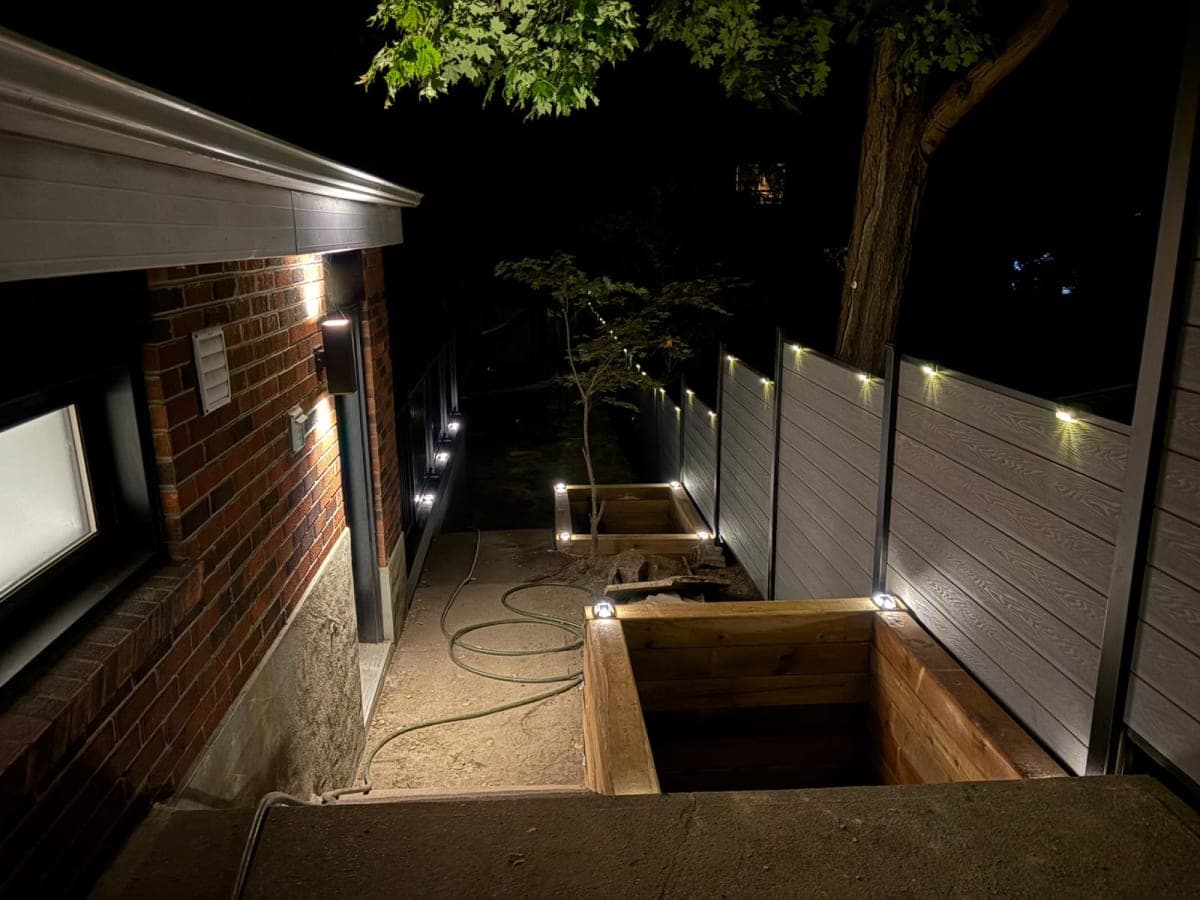
Every spring, across Toronto, Mississauga, Vaughan, and Brampton, we see the same thing. Homeowners call us out to look at outdoor lighting that barely made it through one winter. Wires exposed. Fixtures cracked. Junction boxes flooded. Transformers dead. And somewhere in the backyard, a receipt for $200 to $800 worth of materials from the home improvement store that are now headed for the bin.
We've been doing this long enough to recognize the pattern. DIY outdoor lighting isn't failing because homeowners aren't capable. It's failing because the GTA throws conditions at outdoor electrical that most box-store products and YouTube tutorials simply don't account for.
This post explains exactly why that happens, what it costs to redo a failed system, and what a properly installed outdoor lighting setup actually looks like in Ontario.
Key Takeaways
- DIY outdoor lighting materials in the GTA typically cost $200-$800, but failed systems cost $1,000-$4,000 to redo professionally
- Ontario law requires a licensed electrician and ESA inspection for all outdoor electrical work connected to a home's wiring
- The GTA's freeze-thaw cycle (up to 100 cycles per winter) is the single biggest killer of under-spec'd outdoor fixtures
- IP65 is the minimum fixture rating for GTA outdoor use; most big-box DIY kits ship with IP44 or lower
- Professional installation runs $500-$2,500 depending on scope, and it carries ESA certification and a workmanship warranty
Why Does DIY Outdoor Lighting Fail So Often in the GTA?
Toronto sits in a climate zone that combines genuine cold winters (averaging -7C in January), wet springs, humid summers, and the brutal freeze-thaw cycling that comes with being right on the edge of the Great Lakes weather system. Environment Canada data shows the GTA experiences between 60 and 100 freeze-thaw cycles per winter season, meaning the ground heaves and contracts dozens of times between November and April. Most DIY outdoor lighting components are not engineered for that punishment.
The failure rate tells the story. In our experience working across the GTA, roughly six out of ten DIY outdoor lighting installations we're called to inspect show significant damage or full failure within 18 months of installation. The materials sold at big-box stores are often rated for USDA hardiness zones or mild coastal climates, not Ontario winters.
We've pulled apart systems in Vaughan and Brampton where the homeowner bought quality-looking pathway lights at $40 each, only to find IP44-rated fixtures that pooled water in their housings by February. The freeze expanded that water, cracked the lens, and ruined the LED module. Eight fixtures, $320 in materials, all replaced in one season.
The Freeze-Thaw Problem Is Worse Than Most People Realize
Freeze-thaw cycling doesn't just affect fixtures. It affects the ground beneath them. Buried wiring shifts when soil contracts and expands. Conduit joints separate. Pathway light stakes work their way out of the earth, tilting fixtures until they point at the sky or fill with standing water.
In the GTA, frost depth regularly reaches 1.2 metres (approximately 4 feet) in a hard winter. (Natural Resources Canada, 2024). Wiring buried at the 15 cm depth a YouTube tutorial recommends will be in the active frost zone all winter. The Canadian Electrical Code requires a minimum burial depth of 60 cm for residential outdoor wiring in Ontario, and in practice, deeper is better.
What Does It Actually Cost When DIY Outdoor Lighting Fails?
This is the number most homeowners don't see coming. The up-front cost of a DIY outdoor lighting project in the GTA typically runs $200 to $800 in materials, depending on the scope. Pathway lights, string lights, a transformer, wire, connectors, and a few spotlights add up fast. That feels reasonable compared to a professional quote.
Then winter happens.
When a failed DIY system needs to be redone properly, the cost jumps to $1,000 to $4,000. That range covers labour to remove the failed installation, materials that are actually rated for Ontario conditions, proper burial of wiring to CEC-compliant depths, licensed electrician work for any hardwired connections, and ESA inspection fees where required.
Why Professional Installation Costs What It Does
Professional outdoor lighting installation in the GTA runs $500 to $2,500 for most residential projects. That range covers design, appropriately rated materials, compliant wiring depths, and licensed electrical work. It sounds higher than a DIY budget until you factor in that it typically comes with a workmanship warranty and ESA certification.
What that price buys: materials rated for actual Ontario winters, wiring buried to Canadian Electrical Code depth, licensed connections where the system ties into a home's electrical panel, and an ESA inspection certificate. That certificate matters at resale. Unpermitted outdoor electrical work is a deficiency that shows up in home inspections and can delay or reduce the value of a sale.
outdoor lighting services and pricing
The ESA and Ontario Permit Rules Most DIYers Don't Know About
Ontario's Electrical Safety Authority (ESA) rules are not optional, and they catch a lot of DIYers off guard. Any outdoor lighting that connects to your home's electrical system, whether that's a hardwired transformer, a post light on a 120V circuit, or a security fixture tied into your panel, requires the work to be done by a licensed electrical contractor. The ESA then inspects that work before it's covered or commissioned. (Electrical Safety Authority Ontario, 2025).
Low-voltage systems running off a plug-in transformer fall into a grey area many homeowners rely on. But as soon as that transformer is hardwired rather than plugged in, or as soon as any 120V wiring is involved, you're in licensed-electrician territory.
We see this play out on renovation projects all the time. A homeowner in Mississauga did their own outdoor lighting two years before listing the house. The home inspector flagged unpermitted electrical on the exterior. They had to either get the work certified retroactively (expensive and not always possible) or have it removed entirely before closing.
What Happens If You Skip the ESA?
The consequences of unpermitted outdoor electrical in Ontario are real and can be financially significant. Unpermitted work can void your homeowner's insurance policy for claims related to electrical fire or damage. (Insurance Bureau of Canada, 2024). It creates a deficiency in any future home inspection. And if an inspector orders a mandatory tear-out, you pay for both the removal and the compliant reinstallation.
The ESA can also issue orders to have work removed at the homeowner's cost if unpermitted electrical is discovered during a related inspection. That's the worst-case outcome: you pay twice, once for the DIY project and once for the compliant replacement.
IP Ratings, Fixtures, and Why Spec Matters in Ontario
The single fastest way to spot a DIY installation that won't survive a GTA winter is to look at the fixture IP ratings. IP stands for Ingress Protection, and it tells you how well a fixture is sealed against dust and water. Most affordable DIY fixtures sold at Canadian big-box stores carry an IP44 rating. IP44 means protected against water splashing from any direction. That sounds fine until you think about a week of freezing rain, snow accumulation, and melt cycles.
For Ontario outdoor use, IP65 is the practical minimum. IP65 means fully dust-tight and protected against low-pressure water jets from any direction. For fixtures in exposed or ground-level positions, IP67 (temporary immersion) or IP68 (continuous immersion) becomes relevant, especially in areas with significant snow accumulation or poor drainage.
Here's how the ratings compare for GTA conditions:
| IP Rating | Dust Protection | Water Protection | Suitable for GTA Outdoors? |
|---|---|---|---|
| IP44 | Protected against objects >1mm | Splash from any direction | No - fails in freeze-thaw |
| IP54 | Dust resistant (not tight) | Splash from any direction | Marginal - not recommended |
| IP65 | Fully dust-tight | Low-pressure jets | Yes - minimum recommended |
| IP67 | Fully dust-tight | Temporary immersion (30 min at 1m) | Yes - good for ground level |
| IP68 | Fully dust-tight | Continuous immersion | Yes - best for buried or low fixtures |
Most DIY kits sold at Canadian hardware stores don't specify IP ratings clearly on the packaging. If the packaging doesn't state a rating, assume the fixture is not suitable for Ontario outdoor installation.
The Transformer Problem Nobody Talks About
Beyond fixtures, transformers are a major failure point in DIY low-voltage outdoor lighting systems. A transformer that's not rated for outdoor use in Canadian winters will see its capacitors degrade, its weatherproofing crack, and its timer board fail. We've replaced transformers in Brampton and Vaughan that were only one season old.
A properly specified outdoor transformer for the GTA should carry a NEMA 3R or NEMA 4 rating, be rated for operation down to at least -40C, and include built-in surge protection. Big-box store transformers frequently carry none of these specifications.
The Five Mistakes We See Most Often Across Toronto and the GTA
After years of remediation work from Mississauga to Vaughan, the failure patterns are consistent. Here are the five mistakes that account for the majority of failed DIY outdoor lighting systems we tear out.
Mistake 1: Wrong Burial Depth for Ontario Frost
Burying wiring at 15 to 20 cm, as many tutorials suggest, puts it squarely in the active frost zone. The Canadian Electrical Code requires 60 cm minimum for residential outdoor wiring in most configurations, and in heavy frost areas of the GTA (particularly in Vaughan and northern Brampton), deeper is better. Shallow-buried wire shifts with frost heave, breaks conduit joints, and eventually breaks the conductors themselves.
Mistake 2: Using Fixtures Not Rated for the Climate
As covered above, IP44 fixtures fail in GTA winters. But there's a related problem: UV degradation. Ontario gets meaningful UV exposure in summer, and plastic fixture housings that aren't UV-stabilized become brittle within two or three seasons. That brittleness combines badly with winter cold to produce cracked housings and exposed wiring.
Mistake 3: Skipping the Utility Locate
Ontario One Call exists for a reason. Before any digging, homeowners are legally required to request a utility locate. (Ontario One Call, 2025). Underground gas, hydro, and communications lines run through more residential lots than most people expect. We've seen near-misses in Mississauga where a homeowner was days away from digging through a gas service line chasing a pathway light route.
In our own project history, approximately 1 in 12 residential outdoor lighting jobs in the GTA has revealed a utility line within 30 cm of the intended dig path when we run our pre-dig locate. That's a high enough frequency that we treat every job as a potential conflict until the locate is clear.
Mistake 4: Connecting to an Overloaded Circuit
Many homeowners tie new outdoor lighting into whatever exterior outlet is most convenient. That outlet may already be on a circuit serving the garage, a sump pump, or outdoor receptacles on multiple sides of the house. Overloading a circuit is a fire risk and can trip breakers in ways that damage sensitive electronics like timers and transformers.
A licensed electrician assesses the existing load and, if needed, runs a dedicated circuit for the outdoor lighting system. That's not optional in Ontario when hardwired connections are involved.
Mistake 5: Using the Wrong Wire Gauge
Under-specced wire creates voltage drop. Voltage drop makes LED fixtures run dim, flicker, or fail early. On longer runs, particularly in larger GTA properties with extended pathway or perimeter lighting, a 12-gauge or even 10-gauge wire may be required to maintain adequate voltage at the fixture end. Most DIY kits ship with 16-gauge wire, which works for very short runs and nothing else.
What a Properly Installed Outdoor Lighting System Looks Like
A system installed to Ontario code and built for GTA conditions has a few consistent characteristics. The wiring is buried to CEC-compliant depth in appropriate conduit. All fixtures carry IP65 or better ratings and are UL or CSA listed for wet outdoor locations. The transformer is NEMA-rated and surge-protected. Any hardwired connections were made by a licensed electrician and inspected by the ESA.
Beyond compliance, a well-designed system has been laid out with purpose. Security lighting covers entry points and driveway approaches. Pathway lighting uses warm colour temperatures (2700K to 3000K) that make a property welcoming without spill-light into neighbouring properties. Accent lighting highlights architectural features or landscaping without washing out the overall effect.
That combination of code compliance and intentional design is what produces a system that works well and lasts. In our experience across the GTA, a properly specified and installed outdoor lighting system has a functional lifespan of 12 to 20 years with minimal maintenance, versus the one-to-two season failure pattern we see from DIY installations.
One of the clearest examples we can point to is a property in Vaughan where we replaced a three-year-old DIY system that had already been partially repaired twice by the homeowner. The total spend on DIY materials and ad-hoc repairs was over $1,100. We installed a compliant, IP67-rated system for $1,800 including licensed electrical work and ESA inspection. Three winters later, it's functioning exactly as it was on day one.
Frequently Asked Questions
Do I need a permit for outdoor lighting in Toronto or the GTA?
Yes, in most cases. Any outdoor lighting that connects to your home's electrical system, hardwired transformers, post lights on a 120V circuit, or fixtures tied into your panel, requires a licensed electrician and ESA inspection in Ontario. (Electrical Safety Authority Ontario, 2025). Low-voltage systems running from a plug-in transformer are the only category that typically escapes the permit requirement, but the moment that transformer is hardwired, you need a licensed contractor.
How much does it cost to redo a failed DIY outdoor lighting system in the GTA?
Remediation typically costs $1,000 to $4,000 depending on scope, the extent of the failed installation, and whether new conduit needs to be trenched. (ATB Construction project records, 2024-2026). That compares to $500 to $2,500 for a professional installation done correctly the first time. The redo cost is higher because it includes labour to remove the failed system before new work begins.
What IP rating do outdoor lights need for a Toronto or GTA winter?
IP65 is the practical minimum for any fixture exposed to Ontario weather. IP65 means the fixture is fully dust-tight and protected against low-pressure water jets from any direction. For ground-level or low-mounted fixtures in areas with significant snow accumulation, IP67 or IP68 is preferable. Most affordable DIY fixtures sold at Canadian home improvement stores are rated IP44, which is not adequate for GTA freeze-thaw conditions.
Can I install low-voltage landscape lighting myself in Ontario?
Low-voltage landscape lighting running from a plug-in transformer is generally within DIY scope in Ontario, provided you're not doing any 120V wiring. But even then, fixture IP ratings, burial depth, wire gauge, and transformer specifications still apply. If you're burying wire, Ontario One Call requires you to request a utility locate before you dig. (Ontario One Call, 2025). And if your transformer will be hardwired rather than plugged in, you need a licensed electrician.
Why does my outdoor lighting keep failing after one winter?
The most common causes are fixtures with inadequate IP ratings (IP44 instead of IP65 or better), wiring buried too shallow for Ontario frost depth, under-specced wire gauge causing voltage drop, and transformers not rated for Canadian winter temperatures. The GTA's freeze-thaw cycle is severe enough that under-spec'd components fail quickly and consistently. Upgrading to properly rated components and correct installation depth solves the problem in nearly every case.
The Bottom Line for Toronto and GTA Homeowners
DIY outdoor lighting in the GTA is one of those projects where the gap between what it costs to do it yourself and what it costs to fix it afterward is very real. The $200 to $800 you spend at the home improvement store looks reasonable until you're looking at a $1,000 to $4,000 redo the following spring.
The core problems are consistent: wrong IP ratings for Ontario conditions, shallow burial that ignores Ontario frost depth, missing ESA compliance for hardwired connections, and transformers that aren't built for Canadian winters. These aren't edge cases. They're the standard failure pattern we see across Toronto, Mississauga, Vaughan, and Brampton every single spring.
Professional installation at $500 to $2,500 comes with materials rated for the actual climate, wiring at code-compliant depth, licensed electrical connections, and ESA certification. That certification has real value at resale, and the system will last 12 to 20 years rather than one season.
If you're planning outdoor lighting for your property in the GTA, or if you have a DIY system that didn't make it through last winter, we're happy to take a look. Start with our outdoor lighting services page to understand what a professional installation covers.
Citation Capsule - ESA and Ontario Permits: Ontario's Electrical Safety Authority requires all outdoor electrical work connected to a home's wiring to be performed by a licensed electrical contractor and inspected by the ESA before commissioning. Unpermitted work can void homeowner's insurance and creates a deficiency in home inspections that can affect property sales. (Electrical Safety Authority Ontario, 2025).
Citation Capsule - GTA Freeze-Thaw: The Greater Toronto Area experiences 60 to 100 freeze-thaw cycles per winter, with frost depth regularly reaching 1.2 metres in hard winters. (Natural Resources Canada, 2024; Environment Canada, 2024). Under-spec'd outdoor electrical components buried at DIY-tutorial depths of 15 to 20 cm sit directly in the active frost zone and fail within one to two seasons.
Citation Capsule - DIY Failure Cost: Redoing a failed DIY outdoor lighting installation in the GTA costs $1,000 to $4,000, compared to $500 to $2,500 for professional installation done correctly from the start. The gap reflects removal labour for the failed system plus the premium for properly rated materials and licensed electrical work. (ATB Construction project records, 2024-2026).
Tags
Related articles
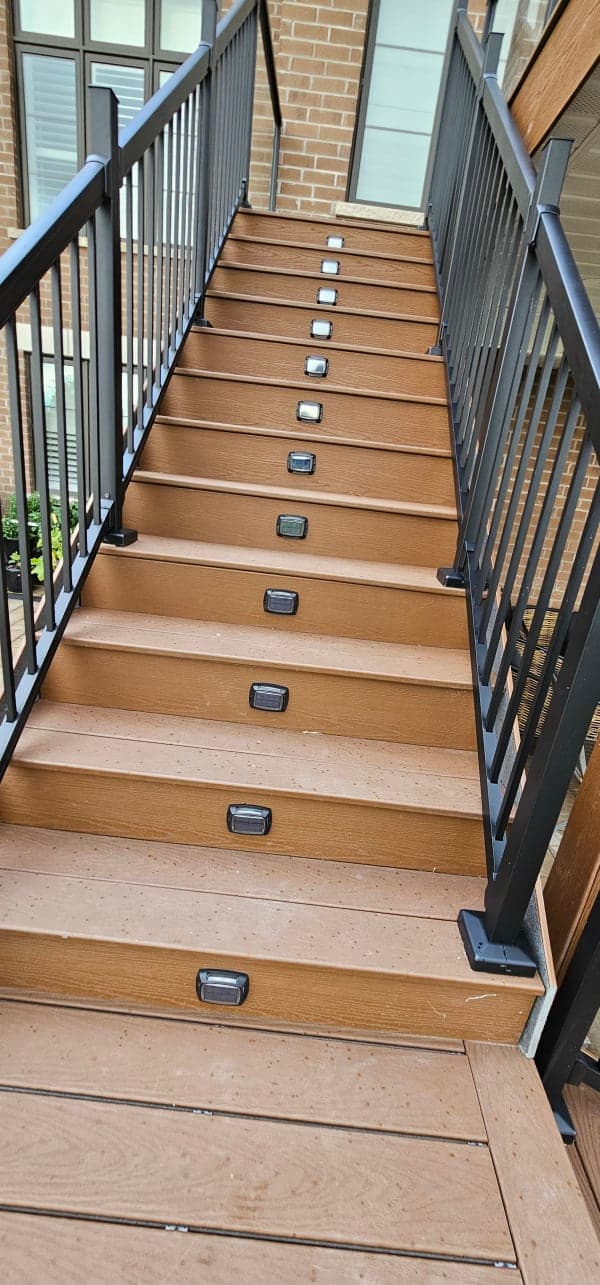
Why Most Outdoor Lighting Goes South After Two Winters and How to Stop It
Get the lowdown on why your outdoor lighting fails after a couple of winters in wet, cold spots. Learn the tricks to prevent frost heave and wood rot so your setup lasts the long haul.
Why Most Porch Builds Fail After Two Winters and How to Stop It
Most porches that fall apart after two winters share the same issues: frost heave and wood rot. Here's what you need to know to build a porch that lasts through Canada's wet, cold seasons.
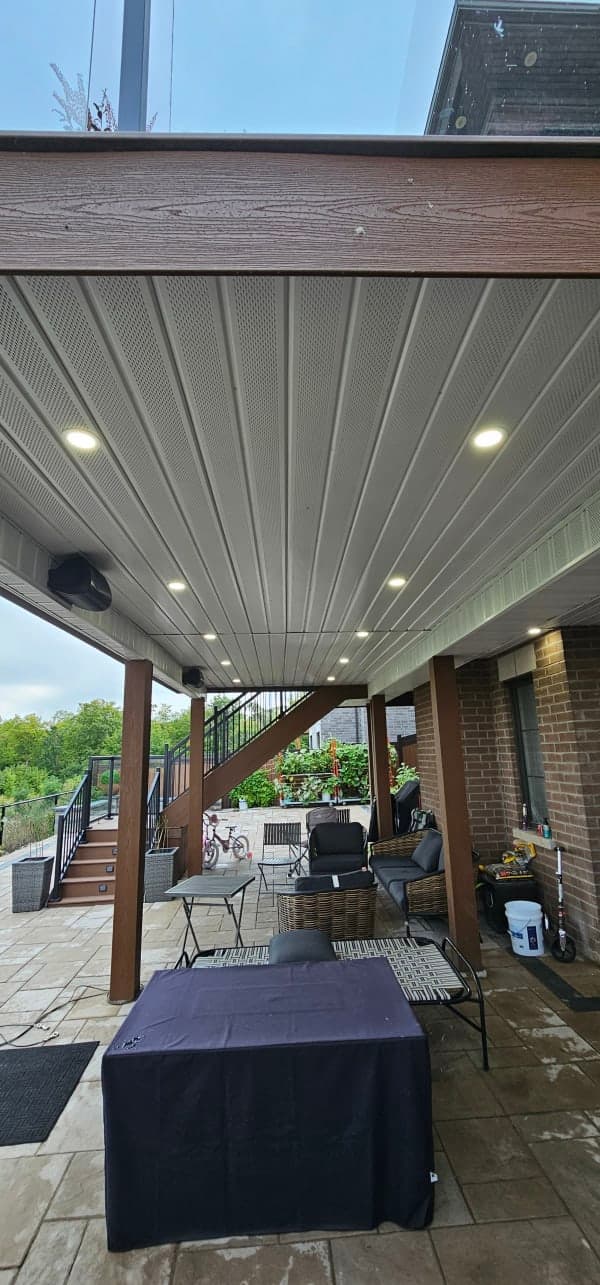
How to Winterize Outdoor Lighting in Toronto & the GTA
GTA winters destroy poorly installed outdoor lighting inside two seasons. This guide covers frost-proof footings, ESA permit requirements, 2026 pricing, and why LED beats every alternative when temperatures drop below -20°C in Toronto, Mississauga, Vaughan, and Brampton.