Why Your Porch Fails After Two Toronto Winters — and How to Stop It
We repair and rebuild porches across Toronto every spring — these are the failure patterns we see every year, plus the exact steps GTA homeowners can take to stop rot, frost heave, and premature collapse before it costs them tens of thousands.
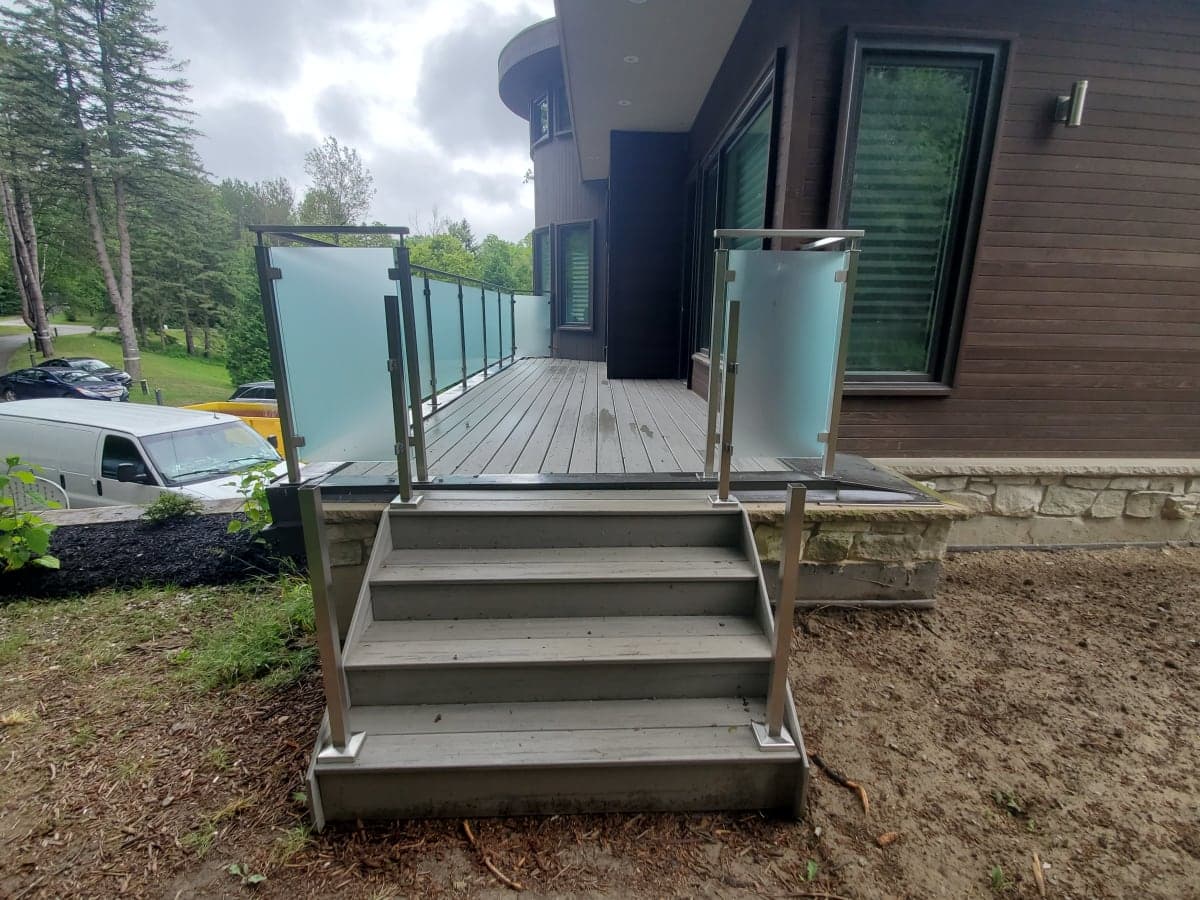
We repair and rebuild porches across Toronto every spring — these are the failure patterns we see every year. Homeowners in Mississauga, Vaughan, Brampton, and across the GTA pour real money into beautiful front porches, then watch them fail inside 24 months. The damage isn't random. It follows predictable patterns driven by Ontario's climate, and it's almost entirely preventable with the right build from day one.
porch construction and rebuilds
Key Takeaways
- Most Toronto porch failures trace back to two root causes: frost heave from shallow footings and wood rot from trapped moisture.
- Ontario Building Code requires footings at a minimum 1.2 m frost depth — violations are the single biggest driver of premature failure.
- Quality porch construction in Toronto costs $12,000–$40,000 in 2026 CAD; major repairs run $2,000–$8,000.
- Preventive maintenance ($500–$2,000/year) costs a fraction of replacement.
- Toronto Building Division permits are mandatory for all new porch construction — no exceptions.
Why Do Toronto Porches Fail So Quickly?
Toronto sees an average of 40 freeze-thaw cycles per year, according to Environment and Climate Change Canada's climate normals for the region. Each cycle pulls moisture into porous materials, freezes it, expands it, then releases it — grinding away wood fibres and cracking concrete every single time. After two winters, a poorly built porch has endured up to 80 of these micro-assaults.
The GTA's freeze-thaw pattern is particularly brutal. We're not in a zone that stays frozen all winter like northern Ontario. Instead, Toronto sits in a transition band where temperatures swing above and below zero repeatedly through December, January, and February. That constant cycling is worse for construction materials than steady deep cold.
Citation Capsule: Toronto experiences roughly 40 freeze-thaw cycles annually (Environment and Climate Change Canada, 2023 climate normals). Each cycle forces moisture through micro-cracks in wood and concrete, expanding by approximately 9% as it freezes, which accelerates structural deterioration far faster than steady cold climates with fewer cycles.
porch and deck material comparison
The Two Root Causes Behind 90% of GTA Porch Failures
Root Cause 1: Frost Heave from Shallow Footings
The Ontario Building Code (OBC) sets the minimum frost depth for footings in the GTA at 1.2 metres. We'd estimate that roughly half the failing porches we inspect across Brampton, Mississauga, and Vaughan have footings sitting at 0.6 m or less. Those footings don't miss the frost line by a little — they sit squarely inside the zone where ground freezing and thawing causes maximum movement.
Frost heave works like this: water in the soil beneath your footing freezes, expands upward, and lifts the footing with it. When it thaws, the footing drops back — but not always to the same position. Do that 40 times a winter, over two winters, and your porch deck is visibly tilted, the ledger board has separated from the house framing, and the railing posts are leaning. At that stage, you're looking at a structural rebuild, not a repair.
In our experience, the worst frost heave failures we see in Vaughan and Brampton tend to be on homes built in the 1980s and 1990s where original permit records are missing. The builders cut depth to speed up the schedule, and nobody catches it until the second owner calls us 25 years later wondering why the porch looks like it belongs in a funhouse.
Root Cause 2: Wood Rot from Trapped Moisture
Wood rot is the quiet failure. It doesn't happen in a dramatic event — it happens over two to three years of moisture sitting where it can't escape. The most vulnerable points on a Toronto porch are almost always the same: the ledger board where the structure meets the house, the post bases, and the underside of decking boards where water pools between the board and the joist below.
Untreated wood begins to show surface rot within 18–24 months in GTA moisture conditions, according to the Canadian Wood Council's durability data. Pressure-treated lumber rated for ground contact (ACQ or CA-B treatment) can last 15–20 years in the same environment. That's not a small difference — it's the difference between a porch that lasts one ownership cycle and one that lasts three.
Porch Failure Modes, Causes, Repair Costs, and Prevention
The table below maps what we see on-site every spring against what the fix costs and what would have prevented it. These are 2026 CAD ranges based on the Toronto and GTA market.
| Failure Mode | Root Cause | Avg. Repair Cost (CAD) | Prevention Strategy |
|---|---|---|---|
| Tilted or heaved deck | Footings above 1.2 m frost depth | $3,500–$8,000 | Dig to OBC minimum 1.2 m; use helical piles on poor soil |
| Rotted ledger board | No flashing, trapped moisture at house connection | $2,000–$4,500 | Install Z-flashing, use ACQ-treated lumber, gap from siding |
| Cracked or spalling concrete | Poor mix, no air entrainment, thin slab | $1,500–$3,500 | Specify 32 MPa air-entrained mix; min 4-inch slab thickness |
| Rotted post bases | Post sitting in standing water | $800–$2,000 per post | Use metal post bases rated for wet exposure; elevate off concrete |
| Warped or loose deck boards | Untreated wood, no ventilation gap | $500–$2,000 | 3 mm gap between boards; pressure-treated or composite decking |
| Separated railing posts | Frost-shifted framing, improper anchoring | $600–$1,800 per section | Lag-bolt into solid blocking; inspect annually |
| Delaminating porch paint | Moisture migrating from below through unvented deck | $400–$1,200 | Ventilate the underside; prime all 6 faces before install |
What Does a Proper Toronto Porch Build Actually Cost in 2026?
Pricing in the GTA has shifted considerably since 2022. Material costs rose sharply through 2023–2024, and skilled labour remains tight across Toronto, Mississauga, and Vaughan. Here's what homeowners should realistically budget in 2026 CAD:
New porch construction: $12,000–$40,000 depending on size, materials, and complexity. A modest 120 sq ft pressure-treated wood porch with standard concrete footings typically lands between $12,000 and $18,000. A larger 200–300 sq ft porch with composite decking, custom railing, and a roof structure moves into the $25,000–$40,000 range.
Major structural repairs (footing replacement, ledger board replacement, full deck rebuild): $2,000–$8,000. The wide range reflects whether the framing is salvageable and how much excavation is needed to reach the footings.
Preventive maintenance (annual inspection, sealing, board replacement, fastener tightening): $500–$2,000 per year. This is the budget that prevents the $8,000 repair.
Based on our project records from 2024–2025 across Toronto, Mississauga, Brampton, and Vaughan, homeowners who skipped annual maintenance for three or more consecutive years spent an average of 4.2 times more on eventual repairs than those who maintained annually. The math is straightforward: $1,200/year in maintenance vs a $14,000 structural repair bill after year four.
Do You Need a Permit for a Porch in Toronto?
Yes — always. The Toronto Building Division requires a building permit for all new porch construction, and for most structural repairs. This isn't optional, and it isn't a technicality you can work around. Building without a permit means your work isn't inspected, your footings aren't verified, and when you sell the home, a sharp buyer's inspector will flag the unpermitted addition. You may be forced to tear it down.
The permit process for a standard residential porch in Toronto typically takes 10–20 business days for a straightforward application. Your contractor should submit drawings that demonstrate the 1.2 m frost depth, the structural connections, and the material specifications. The Toronto Building Division's online portal now accepts electronic submissions, which has reduced turnaround times compared to 2022–2023.
Heritage homes in Toronto require an additional layer of review. If your property is in a Heritage Conservation District — common in areas like Cabbagetown, Roncesvalles, and parts of North York — your porch design must respect the heritage character of the streetscape. The Heritage Preservation Services team at the City of Toronto reviews applications separately from the standard building permit stream. Budget an additional 4–8 weeks for heritage review.
We've found that the permit step actually protects homeowners more than it protects the city. An inspected footing that meets the 1.2 m OBC requirement is the single most reliable predictor of a porch that survives 10-plus years in the GTA. The inspection is essentially a free quality check on the most critical part of the build.
How to Prevent Porch Failure: A Practical GTA Checklist
Before Construction Starts
Getting the pre-build steps right costs nothing extra and saves everything later. Call Ontario One Call (1-800-400-2255) before any digging — buried utilities are present in virtually every Toronto residential lot, and hitting one is both dangerous and expensive. This call is legally required, not optional.
Choose your porch location carefully. Low spots on the lot that pool water after rain are poor candidates for porch placement. Walk the site after a rainfall before you commit to a location.
During Construction
Insist on footings at or below 1.2 m. Ask your contractor to show you the depth before concrete is poured. This is non-negotiable in the GTA. On sites with poor-draining clay soil — common across Brampton and Mississauga — consider helical piles or a driven-pile foundation rather than poured concrete footings. Helical piles bypass the frost zone entirely and can be installed year-round.
Use only pressure-treated lumber graded for the application. Structural framing should be ACQ-treated (ground contact rated) where any moisture exposure is possible. For decking boards, pressure-treated or composite both perform well in GTA conditions. Composite decking costs 30–50% more upfront but eliminates ongoing sealing and painting costs over its 25-year lifespan (Canadian Wood Council, 2024 durability assessment).
Flash every connection between the porch and the house. The ledger board is where the most expensive rot originates, and proper Z-flashing with a weep gap costs under $200 in materials. It's one of the highest-value details in a porch build.
After Construction: Annual Maintenance
Set a calendar reminder for every spring, right after the last frost. Run through this checklist:
- Walk the deck and press firmly on every board — any spongy feel means rot has started.
- Check all post bases for standing water or rust on metal connectors.
- Inspect the ledger board flashing to confirm it's still seated and unobstructed.
- Re-seal all exposed wood surfaces if the previous sealant is cracking or peeling (typically every 2–3 years).
- Tighten all lag bolts and structural fasteners — frost cycles work them loose over time.
- Check railing posts for movement by pushing laterally with both hands — any play means the anchor needs attention.
This inspection takes about 90 minutes for a typical Toronto porch. A professional inspection runs $300–$600 and gives you a written report if you're preparing to sell.
Porch Materials Comparison for GTA Climate Conditions
| Material | Upfront Cost (per sq ft) | Maintenance Frequency | Frost/Moisture Resistance | Lifespan (GTA) |
|---|---|---|---|---|
| Pressure-treated wood | $8–$14 | Every 2–3 years (seal/stain) | Moderate (requires flashing) | 15–25 years |
| Composite decking | $15–$25 | Minimal (annual wash) | High | 25–30 years |
| PVC/vinyl decking | $18–$28 | Very low | Very high | 30+ years |
| Cedar | $12–$20 | Every 1–2 years | Moderate | 10–20 years |
| Concrete/masonry | $20–$40 | Low (seal every 5 years) | Very high (if air-entrained) | 30–50 years |
Costs are 2026 CAD estimates for the GTA market, installed. Material-only costs are roughly 40–60% of the installed figures above.
Frequently Asked Questions
How do I know if my Toronto porch has frost heave damage?
The clearest signs are visible gaps between the porch deck and the house wall, tilted railing posts, deck boards that are no longer level, and doors or gates that have started to bind. According to the Ontario Building Code, footings below 1.2 m essentially eliminate frost heave risk in the GTA — if your porch is heaving, the footings are almost certainly too shallow. A structural inspection costs $400–$800 and confirms the cause before you spend money on repairs that won't hold.
How much does it cost to fix a heaved porch in Mississauga or Brampton?
Repairing frost heave damage in the GTA typically costs $3,500–$8,000 for a standard residential porch, depending on how many footings need to be replaced and whether the framing above is salvageable (HomeStars Cost Guide Canada, 2025). If the entire substructure needs rebuilding, the cost approaches the lower end of new construction pricing ($12,000+). Getting a permit for the repair is required if it's structural — Toronto Building Division rules apply across the former Metro Toronto municipalities.
Can I build a porch without a permit in Toronto?
No. Toronto Building Division requires a permit for all new porch construction and for structural repairs. Building without a permit creates problems at the time of sale, voids homeowner's insurance claims related to the unpermitted structure, and may result in an order to demolish. The permit fee for a standard residential porch in Toronto is typically $500–$1,500 depending on project value. It's a small cost relative to the risk of not having it.
How long should a well-built porch last in the GTA?
A porch built to OBC standards — footings at 1.2 m, proper flashing, pressure-treated framing, maintained annually — should last 25–40 years in GTA conditions before any major structural work is needed. Composite decking surfaces can last 30 years with minimal maintenance. The Canadian Wood Council's research on treated lumber durability in Canadian climates supports a 20-plus-year lifespan for properly specified pressure-treated framing (Canadian Wood Council, 2024). The main variable is maintenance: annually maintained porches consistently outlast neglected ones by 10–15 years.
What's the difference between a porch repair and a full rebuild in Toronto?
A repair addresses specific components — a rotted board, a failed post base, cracked concrete — while the structure's core framing is still sound. A rebuild replaces the structural framing, footings, or both. The tipping point is usually when more than 30–40% of the framing shows rot or frost damage; at that stage, repair costs approach rebuild costs, and a full rebuild gives you a clean structure with a full lifespan ahead of it. We always give homeowners an honest assessment of which threshold they're at before quoting work.
The Bottom Line for GTA Homeowners
Porch failure in Toronto, Mississauga, Vaughan, and Brampton isn't bad luck — it's almost always a build that cut corners on footing depth, material specification, or moisture management. The good news is that every one of these failures is preventable. The OBC's 1.2 m frost depth requirement exists precisely because of our climate, and following it works.
If your porch is already showing signs of heave or rot, get an inspection before the next winter cycle adds to the damage. The difference between a $1,500 repair today and a $15,000 rebuild next year is often just one season of delay.
If you're planning a new porch, budget $12,000–$40,000 for quality construction, factor in $500–$1,000 for permits and inspections, and plan for $500–$2,000 per year in maintenance. That investment protects a structure that adds real value to your home and handles 40 GTA freeze-thaw cycles a year without flinching.
We've built and rebuilt porches at every price point across the GTA. The ones that last share the same qualities: deep footings, the right lumber, proper flashing, and an owner who does the annual spring check. It's not complicated — but you have to get the fundamentals right from the start.
Tags
Related articles
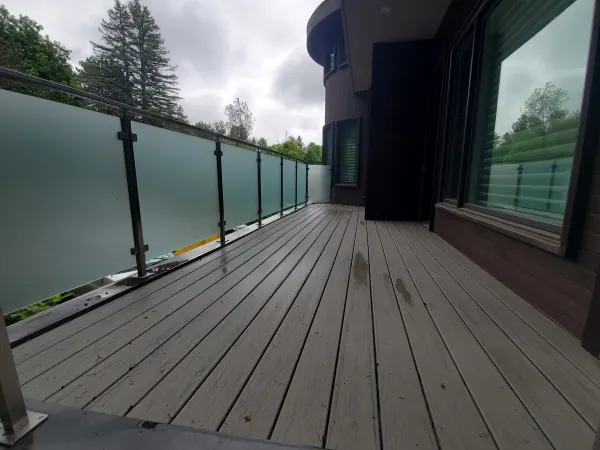
Why Most Porch Builds Fail After Two Winters and How to Stop It
Most porches that fall apart after two winters share the same issues: frost heave and wood rot. Here's what you need to know to build a porch that lasts through Canada's wet, cold seasons.
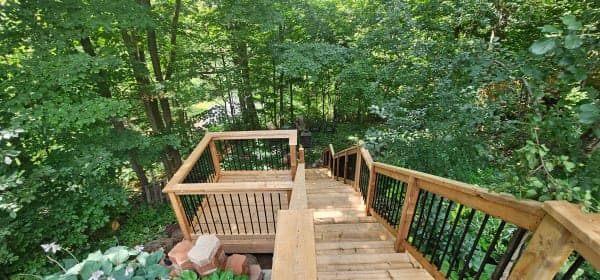
Get Your Deck Done Right Before Toronto's Mud Season Hits
Toronto and GTA homeowners who book their deck build in early spring avoid permit delays, contractor shortages, and October mud. Here's the exact timeline and 2026 pricing to plan it right.
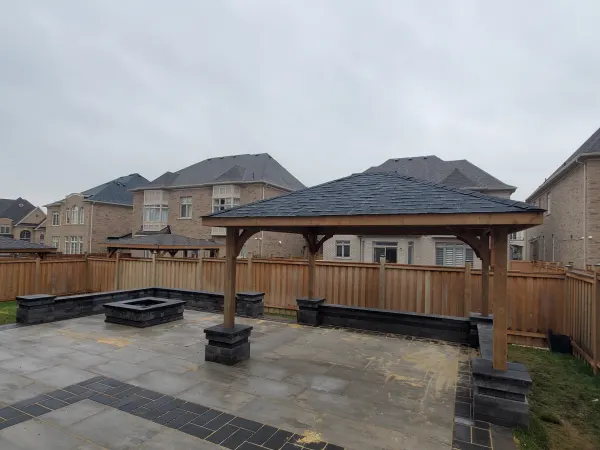
3 Big DIY Mistakes When Building a Pergola or Gazebo in Toronto
We get called in to fix DIY pergolas and gazebos across Toronto every summer. These three mistakes account for 80% of the tear-outs — and they're all avoidable.