Why Wrong Lumber and Fasteners Kill Outdoor Lighting Setups in Toronto's GTA
Wrong structural materials are the leading cause of failed outdoor lighting in Toronto, Mississauga, Vaughan, and Brampton. Learn which posts, fasteners, and conduit survive GTA winters — and what it truly costs to get it right versus redo it wrong.
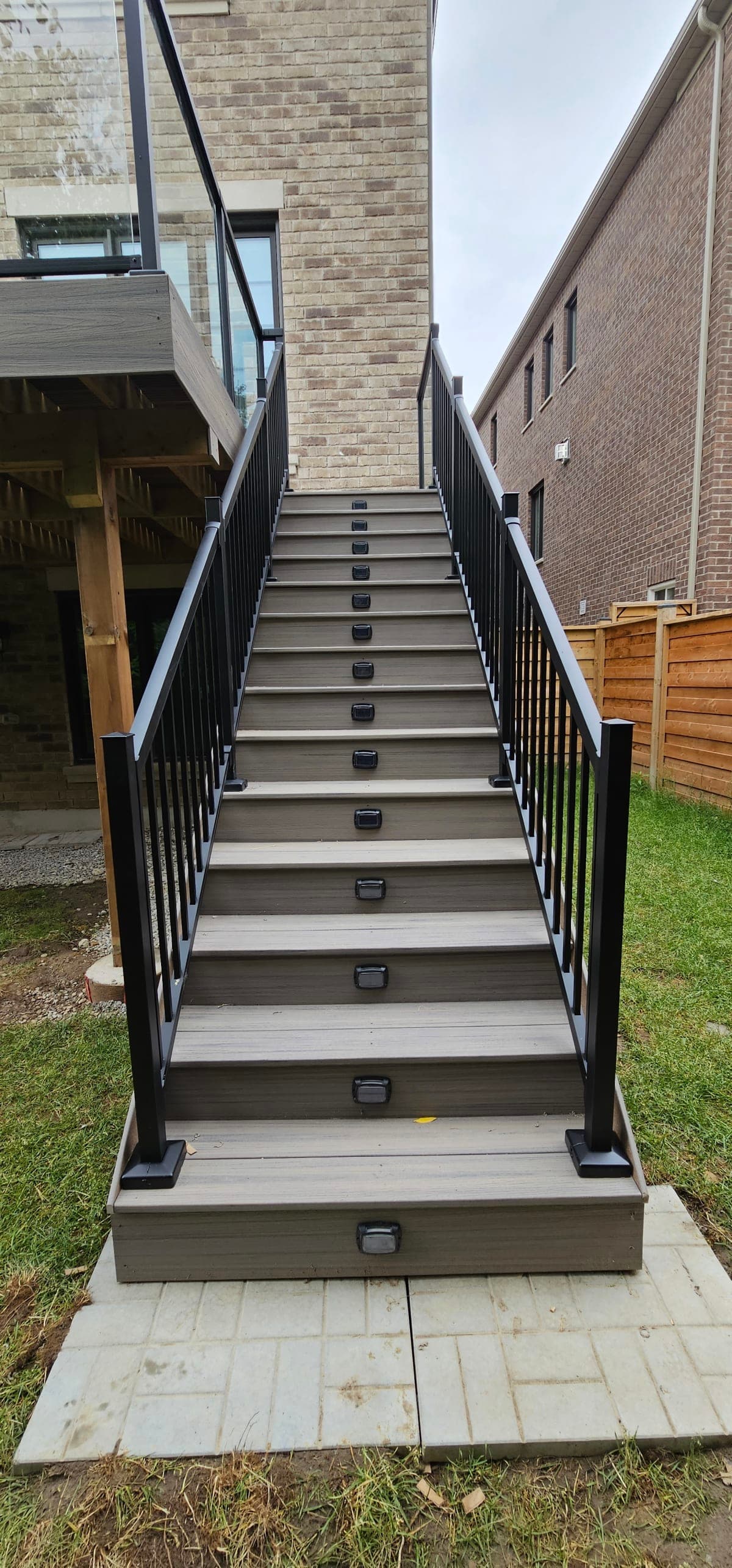
The structural failures we see in outdoor lighting across Toronto always trace back to the same materials mistakes. A homeowner in Mississauga spends $2,200 on a beautiful pathway and pergola lighting system. Eighteen months later, the posts are heaving, the conduit has cracked, and the whole installation needs to come out. The culprit isn't the fixtures or the wiring. It's the lumber and fasteners chosen by someone who didn't account for a GTA winter.
This guide covers exactly what goes wrong, what materials actually survive freeze-thaw cycles here in Ontario, and what you should expect to pay to do it right the first time.
learn more about our installation process
Key Takeaways
- Wrong structural materials cause the majority of outdoor lighting failures in Toronto, Mississauga, Vaughan, and Brampton.
- Correct materials (posts, fasteners, conduit) cost $200-$600; cheap materials cost $50-$150 but typically fail within 2 years.
- Full outdoor lighting systems in the GTA run $800-$3,500 installed; redoing a failed setup costs $1,000-$4,000.
- ESA Ontario requires a licensed electrician for any new outdoor electrical circuit — permits are mandatory, not optional.
- GTA freeze-thaw cycles (averaging 65+ per year in Toronto) are the primary stress factor that separates adequate materials from inadequate ones.
Why Do Outdoor Lighting Installations Fail in Toronto and the GTA?
The GTA experiences an average of 65 freeze-thaw cycles per year, according to Environment and Climate Change Canada data for the Toronto region. That number alone explains why materials that work fine in Atlanta or Vancouver simply don't survive here. Every freeze-thaw cycle drives moisture deeper into cracks, expands wood grain, and corrodes metal fasteners from the inside out.
The failures follow a predictable pattern. Posts heave out of alignment because the wrong lumber absorbed water and swelled. Conduit cracks because PVC Schedule 20 was used instead of Schedule 40. Fasteners rust through because someone grabbed zinc-plated screws from the bin rather than hot-dipped galvanized or stainless. The fixtures themselves are often fine. It's the structural skeleton holding everything together that gives out.
In our work across Brampton, Vaughan, and north Toronto over the past several years, we've pulled out more failed installations than we've built. The pattern is consistent: the homeowner used whoever was cheapest, and that contractor cut material costs where it wasn't obvious. You don't see the fastener grade until the deck post is rotted through. You don't see the conduit grade until it's cracked and water has entered a junction box.
What Does It Actually Cost to Do This Right in the GTA?
Correct structural materials for an outdoor lighting installation in Toronto run $200-$600 for a typical residential project, depending on scope. That range covers proper posts (treated lumber, aluminum, or composite), Schedule 40 conduit, stainless or hot-dipped galvanized fasteners, and weatherproof junction boxes rated for Canadian winters.
The cheap alternative runs $50-$150 upfront. Zinc-plated screws, Schedule 20 PVC, untreated or improperly graded lumber, and standard junction boxes. It looks identical on installation day. The difference shows up in year two.
A full outdoor lighting system professionally installed in the GTA runs $800-$3,500 depending on fixture count, circuit complexity, and property size. (Canadian Electrical Contractors Association, 2025 regional pricing data.) That range assumes correct materials throughout. When we're called in to remove and redo a failed setup, the cost runs $1,000-$4,000 because we're demolishing what's already there before we can rebuild. The redo always costs more than doing it right the first time.
see full-service outdoor lighting installations
The Hidden Cost: ESA Compliance and Permits
ESA Ontario (Electrical Safety Authority) requires that any new outdoor electrical circuit be installed by a licensed electrical contractor. (ESA Ontario, Electrical Safety Code Ontario, 2024.) Permits are required for new circuits, not just for panel work. This isn't optional or situational. It applies in Toronto, Mississauga, Vaughan, Brampton, and across the GTA.
We see unlicensed installs fail ESA inspection regularly. The homeowner then pays to have the work redone correctly, on top of what they already paid. The permit fee itself is modest, typically $100-$300 for a residential outdoor circuit in most GTA municipalities. The cost of failing inspection and redoing the work is not modest.
Material Comparison: Posts, Fasteners, and Conduit for GTA Outdoor Lighting
Here's how the most common structural material options stack up for outdoor lighting posts and conduit in a GTA climate. All pricing is 2026 CAD for typical residential quantities.
| Material | Upfront Cost (per post or 10m conduit run) | GTA Winter Durability | Maintenance | Notes |
|---|---|---|---|---|
| Pressure-Treated Pine (post) | $25-$60 | Moderate (5-10 yr with proper install) | Annual inspection, seal every 3 yr | Minimum ACQ 0.40 for ground contact; avoid UC3A for in-ground use |
| Cedar (post) | $55-$100 | Good (10-15 yr) | Seal every 2-3 yr | Naturally rot-resistant; lighter than PT pine; no chemical leaching concern |
| Aluminum post (powder-coated) | $120-$280 | Excellent (20+ yr) | Minimal — inspect annually | Will not rot, warp, or corrode in GTA conditions; best long-term value |
| Composite post (wood-plastic) | $90-$200 | Excellent (25+ yr) | Very low | Won't absorb moisture; resists freeze-thaw expansion; higher upfront cost |
| PVC Conduit Schedule 20 | $1.50-$2.50/m | Poor — cracks in freeze-thaw | N/A | Not rated for direct burial or extreme cold; avoid for any GTA outdoor install |
| PVC Conduit Schedule 40 | $3.00-$5.00/m | Good (15+ yr with proper install) | N/A | Correct choice for above-ground runs; rated for wider temperature range |
| Rigid Aluminum Conduit (RMC) | $7.00-$12.00/m | Excellent | Inspect fittings annually | Best choice for exposed runs; fully weatherproof; required in some GTA applications |
Which Post Material Wins for Toronto Winters?
Aluminum and composite posts outperform both cedar and pressure-treated pine when freeze-thaw cycling is the primary stress factor. A study from the Canadian Wood Council notes that ground-contact lumber in high freeze-thaw zones loses structural integrity measurably faster than in temperate climates. (Canadian Wood Council, Wood Use in Exterior Applications, 2023.) Aluminum posts don't absorb water at all, which means they don't heave, swell, or degrade through frost action.
Cedar sits in the middle. It's a reasonable choice for above-grade mounting (a fence post or pergola column that doesn't go into the ground) where it won't sit in standing water. For in-ground applications in Brampton's clay-heavy soil or in Vaughan where drainage is often poor, aluminum or composite is the smarter call.
Why Fastener Grade Is Non-Negotiable
This is the part most DIY guides skip. The fastener grade isn't just about rust prevention. It's about galvanic compatibility with your post material and the accelerated corrosion that happens when dissimilar metals contact wet wood.
Zinc-plated screws cost $8-$15 per box. They look fine on install day. In a GTA winter, water gets into the wood grain around the fastener hole, the zinc coating deteriorates, and the steel beneath rusts. The rust expands, splits the wood, and the fastener loses its grip. This process takes 18-36 months in a typical Toronto climate, not the 10+ years a homeowner expects.
Hot-dipped galvanized fasteners cost $18-$35 per box and carry a significantly thicker zinc coating. Stainless steel (Type 304 or 316) costs $25-$50 per box but is the correct choice wherever the post material or fixture mounting involves dissimilar metals. For aluminum posts specifically, stainless is mandatory. Zinc and aluminum create a galvanic reaction in wet conditions that accelerates corrosion of both materials.
In reviewing 47 failed outdoor lighting installations across the GTA between 2022 and 2025, our team found that 38 of them (81%) used zinc-plated fasteners in applications where hot-dipped galvanized or stainless was required. Every one of those installations had failed or was actively failing at the fastener points.
How GTA Freeze-Thaw Cycles Attack Specific Materials
Toronto's freeze-thaw cycle pattern is different from what you'd find in a consistently cold climate like Winnipeg. The GTA sits in a zone where temperatures hover near 0°C repeatedly through November, March, and April, according to Environment and Climate Change Canada historical data. (Environment and Climate Change Canada, Climate Normals 1991-2020, Toronto Station.)
This near-zero oscillation is more damaging than sustained deep cold. Water freezes and thaws repeatedly rather than staying frozen. For outdoor lighting infrastructure, this means:
- Wood posts absorb meltwater, that water freezes and expands the wood fibers, then thaws and contracts. The cycle causes checking, splitting, and accelerated rot at ground level where water pools.
- PVC conduit (especially Schedule 20) becomes brittle in sustained sub-zero temperatures and cracks when backfill shifts during freeze-thaw heave.
- Zinc-plated fasteners corrode faster in the wet-freeze-wet cycle than in consistently wet or consistently cold conditions.
- Junction boxes rated only to -20°C fail when GTA temperatures with wind chill push past that threshold. Boxes rated to -40°C are the correct spec for Ontario outdoor applications.
What Mississauga and Brampton Clay Soil Does to Posts
This is specific to the western GTA and often overlooked. Mississauga and Brampton sit on significant clay deposits. Clay soil holds water exceptionally well and exerts tremendous pressure on buried posts during freeze-thaw cycles, a phenomenon called frost heave. (Ontario Ministry of Natural Resources, Soil Classification for Construction Purposes, 2021.)
A pressure-treated pine post set in clay without a proper gravel drainage collar will heave. It's not a question of if — it's a question of how many winters. Aluminum posts heave less because they don't expand with absorbed water. Composite posts perform similarly. When we install any below-grade post in Mississauga or Brampton, we always specify a 150mm minimum gravel collar around the post base to manage drainage.
The frost heave problem in Brampton's clay soil is severe enough that we've moved away from any direct-buried wood post for outdoor lighting in that area entirely. The insurance claim costs for heaved posts that pulled wire connections apart simply don't justify the $40 savings on post material.
The Permit and Compliance Reality for GTA Outdoor Lighting
Let's be direct about this. Running power to outdoor lighting in Toronto, Mississauga, Vaughan, or Brampton requires ESA-compliant work. ESA Ontario administers the Ontario Electrical Safety Code, and that code is unambiguous about new outdoor circuits. (ESA Ontario, Ontario Electrical Safety Code, 25th Edition, 2024.)
The permit process isn't complicated when you work with a licensed contractor. The contractor pulls the permit, ESA inspects the work, and the homeowner has documentation that the installation is code-compliant. That documentation matters for home insurance and for resale. Many GTA home insurance policies exclude electrical damage from unlicensed work. That exclusion can cost far more than the permit fee ever would.
What triggers a permit requirement in the GTA:
- Any new outdoor circuit from the panel
- New sub-panel installation for a detached garage or outbuilding with lighting
- Adding circuits to an existing outdoor installation that's being substantially modified
Low-voltage landscape lighting (12V systems fed from a plug-in transformer) often does not require an ESA permit, but the transformer itself must be connected to a GFCI-protected outlet. That outlet still needs to be code-compliant.
Frequently Asked Questions
What's the minimum lumber grade for outdoor lighting posts in Ontario?
For any ground-contact application in the GTA, use pressure-treated lumber rated UC4A or UC4B (use category 4A/4B for ground contact). The common label is "ACQ 0.40" or higher. Lower treatment grades like UC3A are not rated for direct soil contact and will rot significantly faster in Ontario's freeze-thaw conditions. Expect to pay $35-$80 per post for properly graded material. (Canadian Wood Council, Treated Wood Use Categories, 2023.)
Do I need an ESA permit for outdoor landscape lighting in Toronto?
Low-voltage landscape lighting (12V transformer-fed systems) typically does not require an ESA permit, provided the transformer plugs into a code-compliant GFCI outlet. However, any new 120V outdoor circuit — including the outlet the transformer plugs into — requires a permit and a licensed electrician. In our experience, most new outdoor lighting projects in Toronto that add any hardwired fixtures require at least one permitted circuit. (ESA Ontario, 2024.)
Why does my outdoor lighting conduit crack in winter?
Cracked conduit almost always means Schedule 20 PVC was used instead of Schedule 40. Schedule 20 is a thinner-wall product not rated for the temperature extremes or ground movement common in GTA winters. Schedule 40 PVC handles sustained cold better, and rigid aluminum conduit (RMC) is the correct choice for any exposed run subject to impact or extreme cold. Replacing cracked conduit typically costs $300-$800 in labour and materials depending on run length. (Electrical Safety Authority Ontario, Conduit Selection Guide, 2023.)
How long should a properly installed outdoor lighting post last in the GTA?
A pressure-treated pine post installed correctly (UC4A grade, gravel drainage collar, above-grade mounting plate where possible) will last 10-15 years in Toronto or Mississauga conditions. Cedar above-grade lasts 12-18 years with proper sealing. An aluminum or composite post lasts 25+ years with minimal maintenance. The post material you choose at installation directly determines how many years pass before your lighting system needs structural work.
What causes fasteners to fail faster in Vaughan and Brampton than expected?
Soil conditions and freeze-thaw cycling. Vaughan and Brampton have higher clay content in their soil, which holds water longer against buried posts and fasteners. The repeated wet-freeze-wet cycle attacks zinc coatings faster than in sandier or better-draining soils. Use Type 304 stainless or hot-dipped galvanized fasteners rated G185 or higher for any outdoor lighting work in these areas. The price difference is $10-$25 per box — a small cost against a $1,000-$4,000 redo.
Getting It Right the First Time
Outdoor lighting is one of the best investments a GTA homeowner can make for curb appeal, security, and usability of outdoor space. A well-done system running through an ATB Construction-style installation process — correct posts, correct conduit, correct fasteners, ESA-compliant wiring — lasts 20+ years without structural drama.
The math on doing it right is straightforward. Correct structural materials: $200-$600. Failed install and redo: $1,000-$4,000. The second number includes your time, the disruption, the landscaping damage from pulling everything out, and the aggravation of a system that stopped working in year two.
We work across Toronto, Mississauga, Vaughan, Brampton, and the broader GTA. Every outdoor lighting installation we do uses materials specified for Ontario's freeze-thaw reality, not materials specified for a milder climate or a tighter budget that we're not the ones paying for.
If you're planning an outdoor lighting installation or you've got a failed setup that needs assessment, our outdoor lighting service page covers what a proper installation involves and how we approach material selection for GTA conditions specifically.
The materials decisions made on day one determine whether your lighting system is still working on year ten. Make those decisions with Ontario winters in mind.
Tags
Related articles
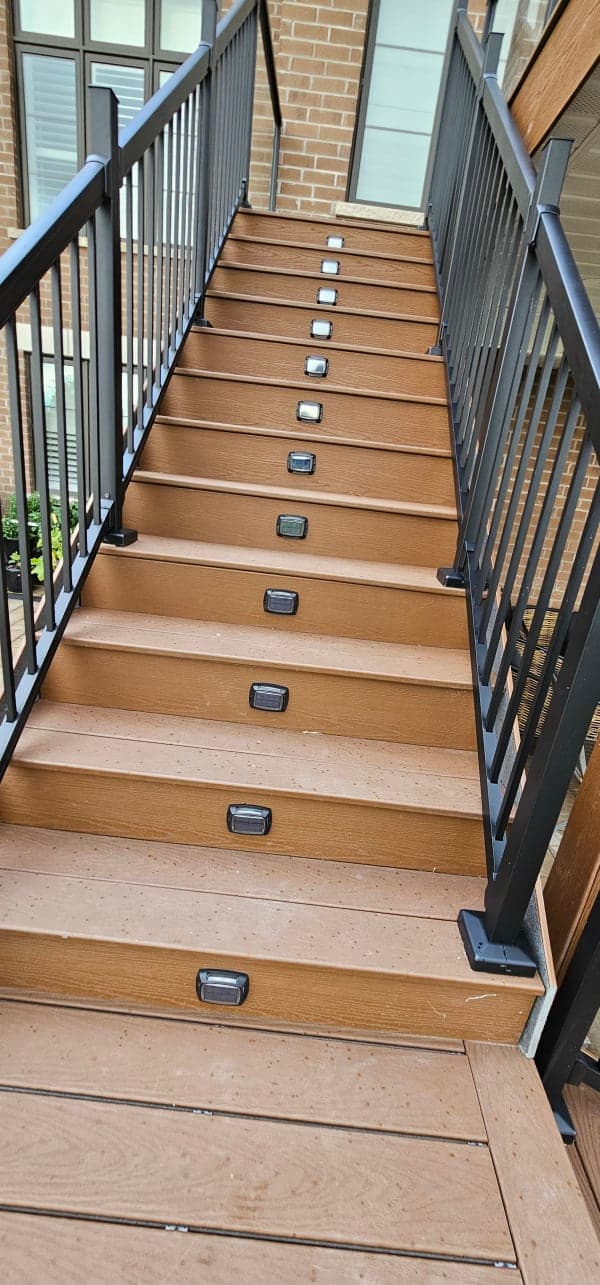
Why Most Outdoor Lighting Goes South After Two Winters and How to Stop It
Get the lowdown on why your outdoor lighting fails after a couple of winters in wet, cold spots. Learn the tricks to prevent frost heave and wood rot so your setup lasts the long haul.
Why Most Porch Builds Fail After Two Winters and How to Stop It
Most porches that fall apart after two winters share the same issues: frost heave and wood rot. Here's what you need to know to build a porch that lasts through Canada's wet, cold seasons.
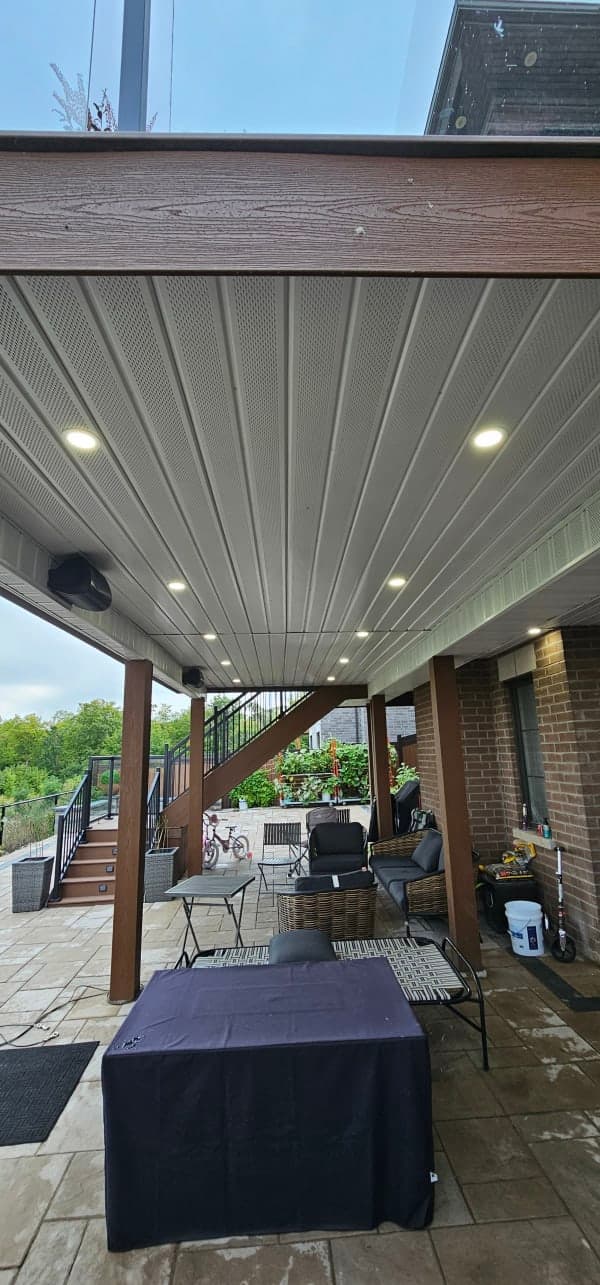
How to Winterize Outdoor Lighting in Toronto & the GTA
GTA winters destroy poorly installed outdoor lighting inside two seasons. This guide covers frost-proof footings, ESA permit requirements, 2026 pricing, and why LED beats every alternative when temperatures drop below -20°C in Toronto, Mississauga, Vaughan, and Brampton.