Gate Installation in Toronto & GTA: What Homeowners Need to Know in 2026
Planning a gate in Toronto, Mississauga, Vaughan, or Brampton? Get 2026 pricing, permit rules, material comparisons, and contractor tips from ATB Construction.
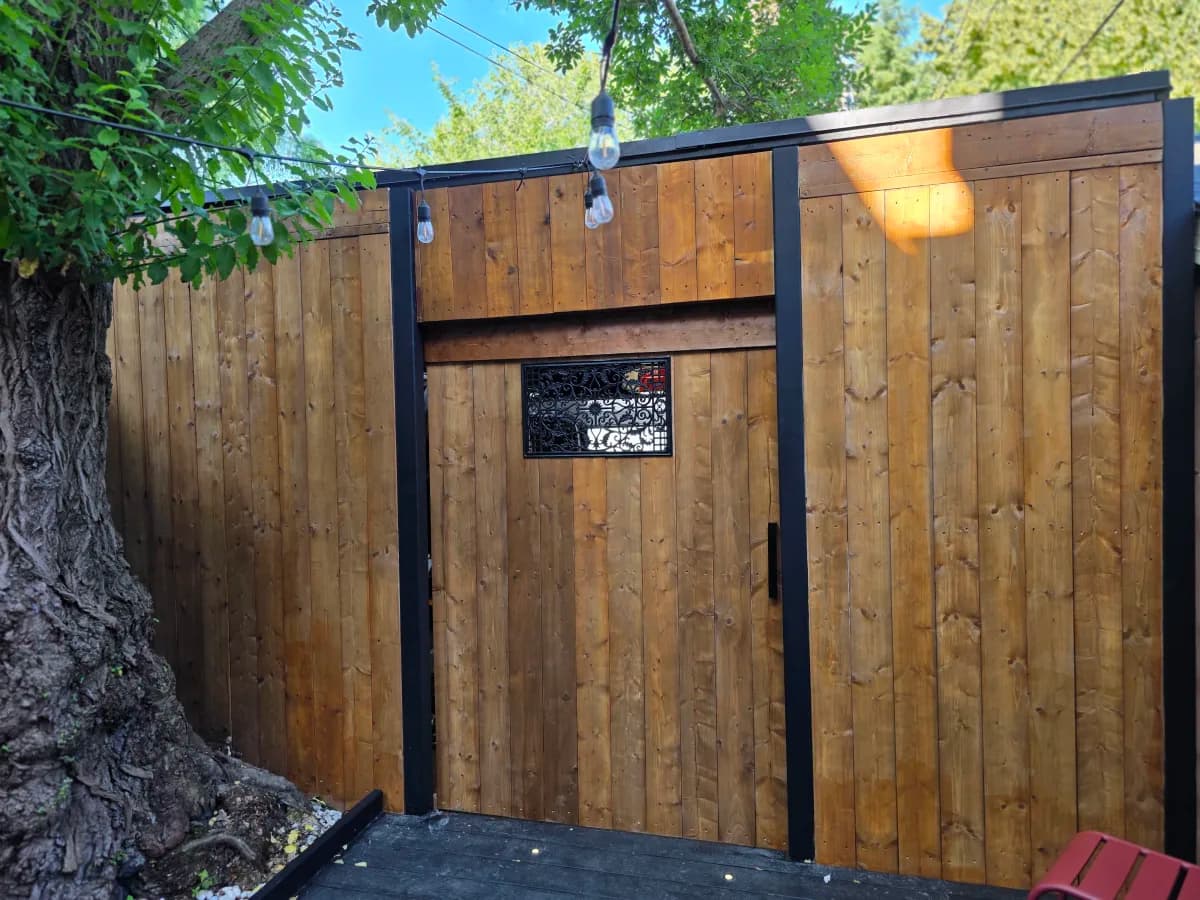
We install gates across Toronto and the GTA every week, and the same mistakes keep showing up on job sites in Mississauga, Vaughan, Brampton, and right here in the city. Homeowners pick the wrong material, skip the permit check, or hang a gate on a post that won't survive one freeze-thaw cycle. This guide cuts through the confusion so you end up with a gate that actually lasts.
Key Takeaways
- Wood gate installation in Toronto runs $800-$2,500; metal and wrought iron runs $1,500-$4,500 (HomeStars Canada, 2025)
- Toronto bylaws cap rear-yard gates and fences at 2m; front-yard structures max out at 1m
- Cedar and pressure-treated lumber suit GTA winters, but galvanized hardware is non-negotiable in our climate
- Always call Ontario One Call (1-800-400-2255) before digging post holes anywhere in the GTA
- A diagonal cross-brace is the single most impactful fix for a sagging gate
Why Do GTA Gates Fail So Fast?
Gates installed in Toronto and the surrounding GTA cities fail faster than anywhere else in Ontario, and freeze-thaw cycles are the main reason. The City of Toronto records an average of 40-plus freeze-thaw cycles per year (Environment and Climate Change Canada, 2024), and every one of those cycles stresses your posts, hardware, and boards. A gate that looks solid in October can be sagging by March if the materials and installation weren't right.
We've torn out gates in Mississauga that were less than two years old. The post was wrong, the hinges were residential-grade interior hardware, and nobody had put a brace in the frame. The homeowner thought they saved money going DIY. They ended up paying us more to fix it than a proper install would have cost.
The good news is that a well-built gate will serve a GTA home for 15-25 years with basic annual maintenance. Getting there means making the right calls on materials, post depth, and hardware from the start.
What Does Gate Installation Cost in Toronto in 2026?
According to HomeStars Canada's 2025 contractor pricing data, gate installation in Toronto and the broader GTA ranges from $800 to over $4,500, depending on material and complexity (HomeStars Canada, 2025). Most single-gate installs we complete in Vaughan and Brampton land between $1,200 and $2,800 for wood, and $2,000 to $4,000 for metal, once labour and materials are factored in.
Here's a realistic 2026 price breakdown for GTA homeowners:
| Gate Type | Material Cost (Supply) | Installed Cost (Labour + Materials) | Expected Lifespan |
|---|---|---|---|
| Pressure-treated wood | $300 - $700 | $800 - $1,800 | 10 - 15 years |
| Cedar wood | $450 - $900 | $1,000 - $2,500 | 15 - 20 years |
| Vinyl / PVC | $500 - $1,100 | $1,100 - $2,800 | 20 - 25 years |
| Aluminum | $600 - $1,400 | $1,500 - $3,200 | 20 - 30 years |
| Steel / wrought iron | $900 - $2,200 | $1,500 - $4,500 | 30 - 50 years |
| Custom ornamental iron | $1,500 - $4,000 | $3,000 - $7,000+ | 30 - 50 years |
Prices reflect Toronto and GTA labour rates as of spring 2026. Mississauga and Vaughan projects come in near the Toronto average. Brampton can run slightly lower, though material costs are consistent across the region.
What Drives the Price Up?
Several factors push a gate project beyond the base estimate. A double driveway gate costs significantly more than a single pedestrian gate, both in materials and the labour required to hang two heavy panels accurately. Automation adds $800-$2,500 for a basic swing-arm opener, and ornamental ironwork or custom designs can double the fabrication cost.
Post replacement is another hidden cost. If your existing fence posts are rotted or undersized, we need to replace them before a new gate can be hung. Concrete removal and new post setting in the GTA typically adds $200-$600 per post to a project.
Wood vs. Metal vs. Vinyl: Which Gate Material Wins in the GTA?
After installing hundreds of gates across Toronto, Mississauga, Vaughan, and Brampton, we've found that no single material is universally best. The right choice depends on your fence style, your budget, and how much annual maintenance you're willing to do. Vinyl wins on maintenance. Cedar wins on curb appeal. Steel wins on longevity when properly coated.
Here's how the three main material categories stack up specifically for GTA conditions:
| Category | Wood (Cedar / PT) | Vinyl / PVC | Metal (Aluminum / Steel) |
|---|---|---|---|
| Upfront cost | Lowest | Mid-range | Mid to high |
| Maintenance | High (annual seal/stain) | Very low | Low to medium (inspect for rust) |
| Freeze-thaw performance | Moderate (needs gaps for expansion) | Good (UV can yellow over time) | Excellent (no swelling) |
| Repair ease | Easy (replace boards) | Moderate (panel sections) | Harder (welding or full panel swap) |
| Curb appeal | Warm, natural look | Clean, consistent | Formal, high-end |
| Best for | Privacy fences, cottage style | Low-maintenance families | Security gates, driveways |
Cedar vs. Pressure-Treated: What's the Real Difference?
Both cedar and pressure-treated (PT) lumber survive GTA winters when installed correctly. Cedar is naturally rot-resistant and doesn't need chemical treatment, which makes it a popular choice in older Toronto neighbourhoods where aesthetics matter. PT lumber is denser and generally cheaper, but it contains preservative chemicals and requires a longer drying period before painting or staining.
In our experience, cedar holds its shape better in the first five years, especially on gates that get a lot of sun exposure in south-facing yards. PT lumber can twist as it dries if boards weren't properly kiln-dried before installation. We've seen PT gates in Vaughan develop a noticeable bow within 18 months when the lumber was still green at install.
For longevity in the GTA, we recommend cedar for anything facing the street and PT for posts and ground-contact framing where pressure treatment's chemical resistance matters most.
When Does Metal Make Sense?
Metal gates are the right call for driveways, high-security applications, or anywhere you want a gate that simply doesn't need seasonal upkeep. Aluminum doesn't rust, which makes it well-suited for Toronto's road-salt environment. Steel is stronger but needs a quality powder coat and annual inspection for chips that let moisture in.
We install a lot of steel and aluminum driveway gates in Mississauga and Brampton where larger lot sizes mean wider openings and heavier panels. The weight demands robust posts, typically 4x4 steel or 6x6 pressure-treated set 4 feet deep in concrete.
Do You Need a Permit for a Gate in Toronto?
Toronto's fence and gate bylaws catch a lot of homeowners off guard. Under Toronto Municipal Code Chapter 447, fences and gates in the rear yard can reach a maximum height of 2 metres (roughly 6.5 feet). Front yard fences and gates are capped at 1 metre (about 3.3 feet) (City of Toronto Building Division, 2024).
A gate itself typically doesn't require a separate building permit if it's part of a standard fence within those height limits. However, if the gate is attached to a structure, exceeds the height limits, or involves an automated system connected to electrical, the Toronto Building Division may require a permit. The fee starts at around $188 for a basic fence permit in 2026.
Permit Rules Across the GTA
The rules shift slightly across the GTA. Mississauga, Vaughan, and Brampton each have their own fence bylaws, though most follow the same general principle of 2m rear and 1m front yard maximums.
- Mississauga: Fence bylaw 0021-2011 mirrors Toronto's height limits. Gates in corner lots face stricter visibility triangle rules near intersections.
- Vaughan: Gates attached to pools must meet Ontario Building Code pool enclosure requirements, including self-closing and self-latching hardware.
- Brampton: Similar to Mississauga. Always check with the City of Brampton's Building Division before starting, as secondary suites and recent lot severances can affect setback requirements.
When we pull permits for clients across these cities, we typically advise adding 2-3 weeks to the project timeline. The permit process isn't complicated, but it runs on its own schedule.
How to Build a Gate That Survives GTA Winters: Step by Step
Getting a gate right in Toronto means thinking about the installation the same way you'd think about a small structure. The post is your foundation. The frame is your structure. The hardware is your building envelope. Every element needs to be sized for the loads it will carry.
Step 1: Set Posts That Won't Heave
Post depth is the single most important factor in gate longevity in the GTA. Ontario's frost depth reaches 1.2 to 1.5 metres in most of the region (National Building Code of Canada, 2020). Your gate posts need to be set at or below that depth in concrete. A post set at only 600mm will heave every spring without fail.
We use 6x6 posts for any gate wider than 4 feet. Concrete should extend to the full post depth, and we slope the top of the concrete collar away from the post to shed water. Before digging, always call Ontario One Call at 1-800-400-2255. Buried utilities are everywhere in established Toronto and Mississauga neighbourhoods.
Step 2: Build a Frame That Won't Sag
A gate frame without diagonal bracing will sag. This isn't a maybe; it's physics. The diagonal brace runs from the bottom hinge corner to the top latch corner, carrying the compression load that keeps the frame square. Without it, the gate's own weight pulls the latch corner down over time.
Use metal tension rods or a solid timber diagonal. For wood gates, a 2x4 diagonal set inside the frame works well. For heavier wood or metal-clad gates, a steel tension rod with turnbuckle lets you re-tension the brace after the first winter.
Step 3: Choose Hardware That Handles the Climate
This is where we see the most budget cutting, and it's always a mistake. Use heavy-duty galvanized or stainless steel hinges rated for the gate's full weight. A standard cedar gate panel runs 30-60 lbs; a double driveway gate can weigh 150-300 lbs per panel.
Residential interior hinges have no place on an exterior GTA gate. Exterior strap hinges rated at 100 lbs per pair are the minimum for a single wood gate. The gate latch should be a dedicated exterior latch with a UV-stable finish. Cheap zinc latches corrode within two winters in the salt-and-freeze environment around Toronto.
Step 4: Leave Room for Wood Movement
Wood moves. Cedar and pressure-treated lumber both absorb moisture and expand in humid GTA summers, then contract in the dry winter cold. A gate built with no clearance gaps will bind in August and rattle in February.
Leave a minimum 5mm gap around all four sides of the gate when hanging. At the base, we target 50-75mm clearance to account for snow and ice buildup, particularly for rear yard gates in Vaughan and Brampton where snow can drift.
Step 5: Seal and Protect Before Winter
A quality exterior sealant or penetrating oil applied before the first winter dramatically extends the life of any wood gate. We use a two-coat system: a penetrating oil base coat to feed the wood, followed by a UV-blocking topcoat. This matters most in south-facing installations that get direct sun all day.
Reapply every 2-3 years in the GTA, or whenever water stops beading on the surface. Metal gates need an inspection for paint chips or rust spots each fall, with touch-up paint applied before freeze-up.
The Five Mistakes We See Every Week in Toronto and the GTA
Based on our project intake assessments across Toronto, Mississauga, Vaughan, and Brampton from 2023 to 2025, we categorized the primary failure points in DIY and under-spec'd contractor gate installations. Post failure and hardware corrosion account for over 60% of premature gate replacements we're called in to fix.
1. Posts set too shallow. We see this constantly in older Toronto neighbourhoods. The post was set at 2 feet, which worked fine until the first hard winter. Frost heave does the rest. Fix: 4-5 feet deep, concrete, full frost-depth set.
2. No diagonal brace. A square frame is only stable when it's supported. Without bracing, gravity and the weight of the boards pull the latch corner down within months. This is the easiest fix and the most commonly skipped step.
3. Interior or light-duty hardware. We once replaced a gate in North York where the homeowner had used door hinges from a hardware store's interior door aisle. They were corroded through after one winter. Always spec exterior-rated, galvanized or stainless hardware.
4. Untreated wood in contact with soil or concrete. Even PT lumber needs to be rated for ground contact (UC4B rating) when it's touching concrete or soil. General-purpose PT lumber is rated for above-ground use only and will rot at the base within a few years.
5. Ignoring municipal bylaws. We're called in regularly to tear down gates that exceeded height limits or violated setback rules in Mississauga and Vaughan. The cost of removal, permits, and reinstallation always exceeds what a permit application would have cost upfront.
Frequently Asked Questions
How much does a gate installation cost in Toronto in 2026?
A basic wood gate installation in Toronto runs $800-$2,500 installed, including labour and materials (HomeStars Canada, 2025). Metal and wrought iron gates range from $1,500-$4,500 for standard sizes. Double driveway gates and automated systems add cost. Mississauga and Vaughan pricing lands in a similar range, with Brampton projects sometimes coming in 5-10% lower on labour.
Do I need a permit to install a gate in Toronto?
A standalone gate within Toronto's height limits (2m rear yard, 1m front yard) typically doesn't need a separate building permit. However, gates attached to structures, automated systems with electrical connections, or any installation exceeding height limits require a permit from the Toronto Building Division (City of Toronto, 2024). When in doubt, call the Building Division before you dig.
What's the best gate material for GTA winters?
Cedar and aluminum both perform well in GTA winters for different reasons. Cedar is naturally rot-resistant and handles freeze-thaw cycles well when properly sealed. Aluminum doesn't rust, won't swell or warp, and is essentially maintenance-free. For driveways and high-traffic applications, aluminum or powder-coated steel gives you the best longevity. For privacy fences in residential yards, cedar gives the best combination of cost, looks, and performance (Natural Resources Canada, 2023).
How deep do gate posts need to be in Toronto?
Ontario's frost line sits between 1.2 and 1.5 metres in the GTA (National Building Code of Canada, 2020). Gate posts should be set at minimum 1.2 metres (4 feet) deep, in concrete, to prevent frost heave. For heavy gates, driveway gates, or installations on clay-heavy soils common in parts of Mississauga and Brampton, we go to 1.5 metres (5 feet) for added stability.
How long will a properly installed gate last in the GTA?
A cedar gate installed correctly in Toronto should last 15-20 years with annual maintenance. Aluminum and steel gates last 25-50 years with periodic inspection and touch-up. The biggest variable is post integrity. A gate with a failing post won't make it 5 years regardless of how good the panel is. We've seen well-built cedar gates in Vaughan still going strong after 18 years. We've also seen cheap installs fail in under 18 months.
What to Do Before You Call a Contractor
Getting a few things in order before you call makes the whole process faster. Know your fence line and approximate gate width before your first conversation. If you have a survey, pull it out. Check your municipality's online bylaw portal to confirm height limits, and look at your existing posts to assess whether they'll need replacement.
Take photos of the area where the gate will be installed, including the fence panels on either side and the ground at the post locations. A good contractor will ask for these anyway. The more you have ready, the faster you'll get an accurate quote.
If you're in Toronto, Mississauga, Vaughan, or Brampton, the ATB Construction team does free on-site assessments. We'll tell you exactly what the project needs, what it will cost, and what the permit situation looks like for your specific address. No obligation, no pressure.
request a free gate installation quote
Key Takeaways Before You Start
Building or replacing a gate in Toronto and the GTA isn't complicated when you know the rules. Set your posts below the frost line. Brace your frame. Use exterior-rated hardware. Check your municipality's height bylaw before you build. And price for quality materials: the difference between a $400 and a $900 gate kit is usually 10 years of lifespan.
We've seen every variation of what goes right and what goes wrong across thousands of GTA gate and fence installations. The homeowners who end up happy are the ones who spent a bit more time on the planning side. Get the post depth right, get the brace in, and the rest is straightforward.
For gates across Toronto, Mississauga, Vaughan, Brampton, and the surrounding GTA, ATB Construction offers full supply-and-install service with transparent 2026 pricing and free site assessments.
Tags
Related articles
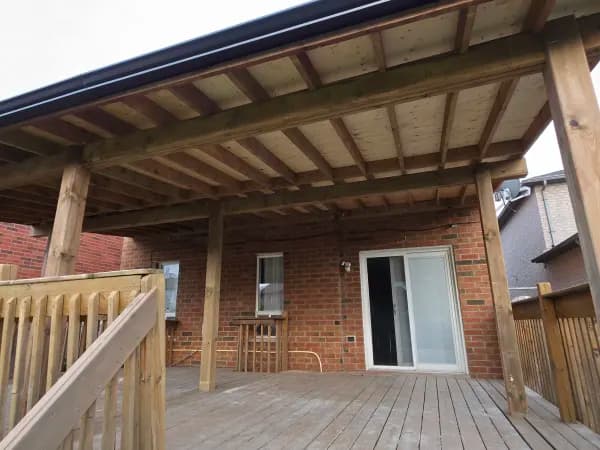
Covered Decks & Patio Roofs in Toronto: The 2026 GTA Guide
What a covered deck actually costs you in design decisions: lean-to vs gable vs roofed pergola, why the house connection is where they fail, snow load, and when a GTA permit is required.
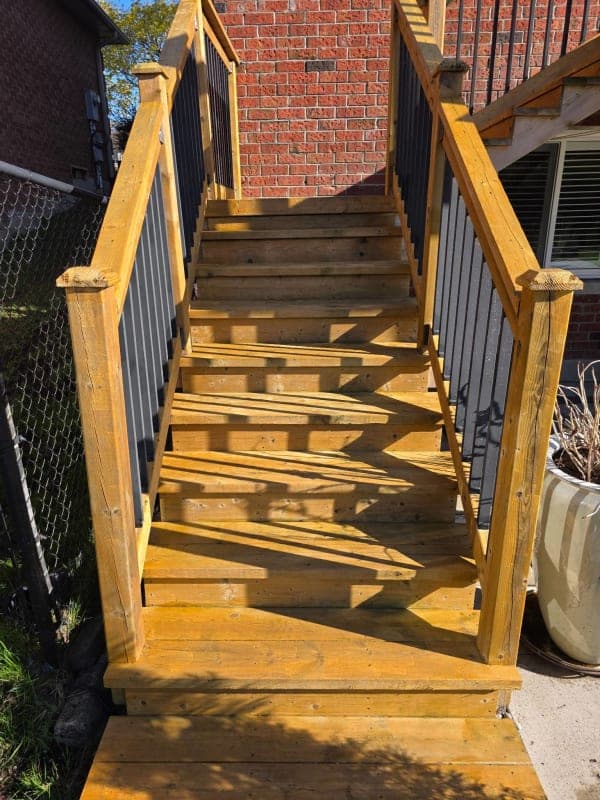
Why Most Outdoor Structures Fail After Two GTA Winters — And How to Stop It
After two winters in Toronto, the same failure patterns show up on decks, fences, and retaining walls across the GTA. Frost heave and wood rot are the culprits — and both are preventable with the right materials and build practices.
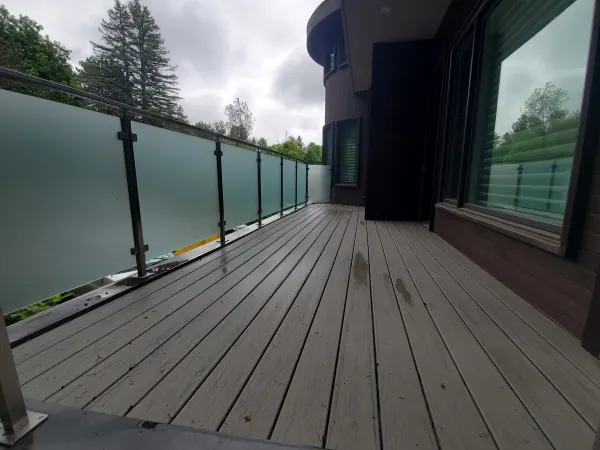
Why Your DIY Porch in Toronto Will Cost You Far More Than You Planned
Toronto and GTA homeowners lose $5,000–$20,000 fixing failed DIY porches every year. Here's the real cost breakdown — permits, frost lines, structural failures — from a contractor who rebuilds them every season.