Why Most Outdoor Structures Fail After Two GTA Winters — And How to Stop It
After two winters in Toronto, the same failure patterns show up on decks, fences, and retaining walls across the GTA. Frost heave and wood rot are the culprits — and both are preventable with the right materials and build practices.
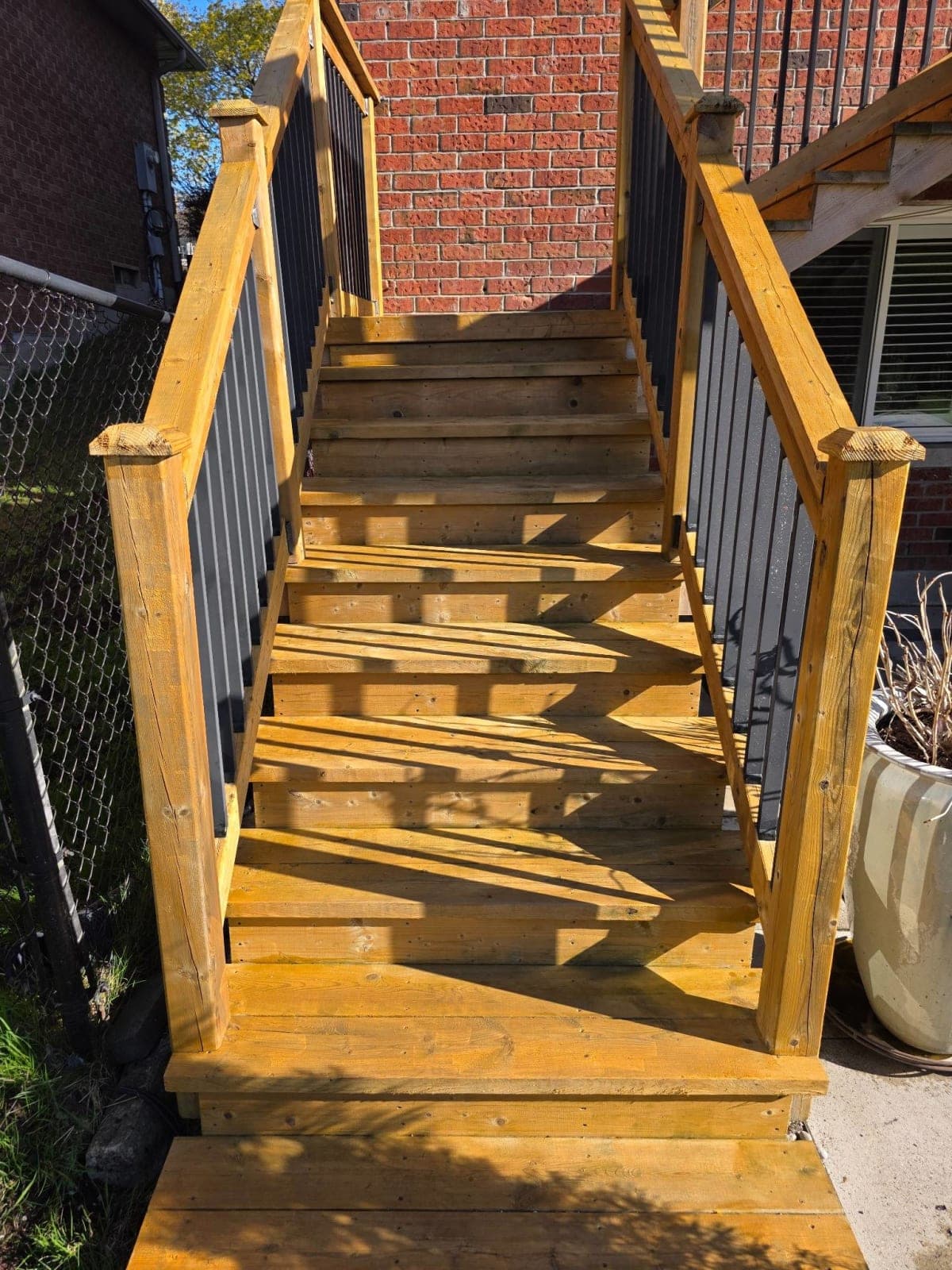
After two winters in Toronto, we see the same failure patterns on decks, fences, and retaining walls across the GTA. A structure looks solid in year one. Then spring of year two arrives — and posts are leaning, boards are rotted, and concrete footings have cracked. According to Environment and Climate Change Canada, the Toronto region experiences an average of 130 freeze-thaw cycles per year, and that relentless thermal movement is what breaks outdoor structures down.
This post explains exactly why it happens, what it costs to fix each structure type in 2026 CAD, and what you can do during the build to prevent it entirely.
Key Takeaways
- The Toronto region averages 130 freeze-thaw cycles per year (Environment and Climate Change Canada), making local winters uniquely destructive to outdoor structures.
- Frost heave and wood rot account for the majority of deck, fence, and retaining wall failures we see across Toronto, Mississauga, Vaughan, and Brampton.
- The Ontario Building Code requires footings at a minimum depth of 1.2 m (approximately 4 feet) to sit below the frost line.
- Repair costs in 2026 range from $500 for basic fence fixes to $10,000 for retaining wall reconstruction.
- Permits are required for structural repairs and any new construction — Toronto Building Division approvals can take 10 to 20 business days.
deck construction and repair services
Why Does the GTA Freeze-Thaw Cycle Destroy Outdoor Structures?
The Toronto freeze-thaw cycle is the root cause of most outdoor structure failures we handle in the GTA. The Ontario Building Code mandates a minimum footing depth of 1.2 m because soil above that depth routinely freezes solid between November and March. When soil freezes, it expands. When it thaws, it contracts. Any structure whose footings sit too shallow moves with that cycle — cracking, tilting, and separating from its attachments.
Toronto gets more of these cycles than colder, consistently frozen climates like Winnipeg. The real damage isn't from sustained cold — it's from the constant back-and-forth. A week of -15°C followed by a weekend of +4°C, then back to -10°C: that is the pattern that destroys posts, heaves concrete, and splits wood grain from the inside out.
Why Year Two Is the Critical Year
Most homeowners see no problems after the first winter. That's actually expected. The first freeze-thaw season compresses fill soil, shifts gravel bases, and begins the slow process of working footings upward. By spring of year two, that cumulative movement becomes visible. Boards separate. Gate posts lean. Retaining wall blocks shift out of alignment. We get calls in March and April, almost like clockwork.
In our experience working across Toronto, Mississauga, Vaughan, and Brampton, the most common call we get in spring is from homeowners whose deck felt perfectly fine all of last year. The structure looked good right through January. Then they noticed a post had shifted 2 cm in March — and when we inspect it, the footing is sitting at 60 cm depth instead of the required 1.2 m.
What Are the Most Common Failure Modes by Structure Type?
Different structures fail in different ways, though frost heave and moisture are the underlying cause in nearly every case. Decks fail at their post-to-footing connections. Fences fail at the post base. Retaining walls fail at the base course and drainage layer. Gates fail at their hinge posts, which carry concentrated load and are especially vulnerable to lateral frost pressure.
Understanding the specific failure mode for each structure type helps you catch problems early and choose the right repair strategy before a $2,000 fix becomes a $10,000 rebuild.
Deck Failures
Decks in the GTA most often fail at the post base and the ledger-to-house connection. Pressure-treated posts set into concrete tubes without adequate drainage collect standing water at the base, which accelerates rot even in ground-contact-rated lumber. According to the Canadian Wood Council, moisture content above 19% is sufficient to initiate wood decay — and post bases in clay-heavy GTA soil commonly reach that threshold within 18 months.
Fence Failures
Fence posts are the most vulnerable element in any fence system. A standard 1.8 m privacy fence post in Toronto should be buried at least 90 cm deep (half its height plus 15 cm), yet we regularly find posts set at 45 to 60 cm. That shallow depth puts the entire post base in the active frost zone. In Brampton and Mississauga, where clay-dominant soil is widespread, frost pressure can exert upward force of 50 to 150 kPa on a shallow post — more than enough to push it above grade over two winters.
Retaining Wall Failures
Retaining walls manage both structural load and hydrostatic pressure from retained soil. When the drainage layer behind the wall — typically 300 mm of clear gravel — is absent or undersized, water accumulates. In winter, that water freezes and expands, pushing wall blocks or poured concrete sections outward. A wall that was plumb in October can be visibly bowing by April. The Canadian Precast/Prestressed Concrete Institute notes that inadequate drainage is the leading cause of premature retaining wall failure in Canadian climates.
Gate Failures
Gates concentrate load on two hinge posts, which makes them the first element to show frost heave effects. A leaning hinge post throws the entire gate out of square — and once the gate sags, it puts lateral stress on the latch post as well. We see this across Vaughan and North Toronto, where lot grading often directs water toward fence lines.
How Much Does It Cost to Repair Each Structure Type in 2026?
Repair costs in 2026 vary significantly based on how far the damage has progressed and whether you're dealing with a targeted fix or a full rebuild. The table below gives honest ranges based on what we quote across the GTA — Toronto, Mississauga, Vaughan, and Brampton — factoring in current lumber prices, concrete costs, and labour.
The cost ranges below are drawn from ATB Construction's 2025-2026 project estimates across the GTA. They reflect actual quoted scopes, not published averages.
| Structure Type | Common Failure Mode | Repair Cost (2026 CAD) | Rebuild Cost (2026 CAD) | Prevention Strategy |
|---|---|---|---|---|
| Deck | Rotted posts, heaved footings, ledger separation | $1,500 - $8,000 | $12,000 - $35,000+ | Frost-depth footings (min. 1.2 m), post bases, annual inspection |
| Fence | Leaning/heaved posts, rotted bases | $500 - $3,000 | $4,000 - $15,000 | Proper burial depth, concrete collars, gravel drainage |
| Retaining Wall | Bowing face, base course displacement, drainage failure | $2,000 - $10,000 | $8,000 - $40,000+ | 300 mm drainage layer, weep holes every 1.5 m, geotextile barrier |
| Gate | Hinge post lean, sagging, latch misalignment | $400 - $1,800 | $1,500 - $5,000 | Heavy-gauge hinge post, concrete footing, adjustable hinges |
Repairs make sense when failure is isolated — one post, one section of wall, one gate post. When failure is systemic (multiple points, widespread rot, heaved slabs), rebuild is almost always the better investment. Patching a heaved foundation is rarely permanent.
retaining wall services and repair
When Do Repairs and Rebuilds Require a Permit in Toronto?
Permit requirements catch many GTA homeowners off guard, especially for work that feels like straightforward maintenance. The Toronto Building Division enforces the Ontario Building Code on all structural work — and "structural" has a broader definition than most people expect.
Generally, you need a permit in Toronto for:
- Any new deck over 600 mm above grade
- Deck replacement that changes the structural footprint or increases height
- Retaining walls over 1.0 m in retained height
- Fence construction over 2.0 m in height (per Toronto Municipal Code Chapter 447)
- Any work that alters a structure's foundation or footing system
Repairs that swap like-for-like components — replacing one rotted board with an identical board, resetting a single fence post to its original position — typically do not require a permit. But replacing all footings on a deck or rebuilding a retaining wall from the base up is a structural alteration and triggers permit requirements.
How Long Does the Toronto Permit Process Take?
Toronto Building Division permit timelines for residential projects currently run 10 to 20 business days for straightforward applications. More complex projects — larger decks, retaining walls over 1.2 m, structures in flood-plain or heritage zones — may require additional review. Starting work without a permit can result in a Stop Work Order, mandatory demolition of non-compliant work, and fines under the Building Code Act.
We handle permit applications for all structural projects we build in Toronto, Mississauga, Vaughan, and Brampton. Each municipality has its own building department, and requirements vary slightly — Vaughan, for example, requires site-plan approval for retaining walls over 0.6 m adjacent to property lines.
One pattern we've noticed is that homeowners who skip permits on a repair often face larger permit issues when they try to sell the property. A buyer's home inspector flags the unpermitted deck; the seller then has to either pull a permit retroactively — which may require tearing into finished work for inspection access — or negotiate a price reduction. The cost of avoiding a $200 permit application can easily become a $5,000 problem at closing.
How Do You Prevent Frost Heave and Wood Rot From the Start?
Prevention is significantly cheaper than repair. The structural decisions made during the build — footing depth, drainage, material selection — determine whether you're calling a contractor in year two or year twelve.
Set Footings Below the Ontario Frost Line
The Ontario Building Code specifies 1.2 m as the minimum footing depth for the Toronto region. This is not a suggestion. Footings set at 60 to 90 cm are in the active freeze-thaw zone and will move. For deck posts, we use concrete tube footings or helical piers driven to at least 1.2 m depth. For fence posts in high-movement clay soil (common in Brampton and north Mississauga), we go to 1.0 m with a concrete collar and gravel base.
Solve Drainage Before You Build
Water sitting against a footing, post base, or retaining wall is the accelerant for every frost and rot failure. On sloped lots — common in Vaughan and the Humber Valley areas of Toronto — we install perforated pipe wrapped in geotextile fabric at the base of retaining walls and along fence lines. The gravel drainage layer behind a retaining wall should be a minimum of 300 mm wide. Weep holes through the face of the wall, spaced every 1.5 m, allow that water to exit before it builds hydrostatic pressure.
Choose the Right Materials for GTA Conditions
Pressure-treated lumber is not all equal. For ground-contact applications — fence posts, deck posts, any wood within 150 mm of soil — specify ACQ or CA-B treatment rated to 0.4 pounds per cubic foot (pcf) retention. Standard above-ground-rated lumber (0.15 pcf) will rot in ground contact within three to five years in GTA conditions. For composite decking, specify a product with a solid core rather than hollow boards; hollow composite traps moisture in the channel and fails at connection points.
For retaining walls, concrete block systems outperform natural stone in freeze-thaw resistance. Engineered block systems (like Unilock or Belgard products) are designed with a batter angle that compensates for soil pressure and are manufactured to meet Canadian climate standards.
Protect Wood at Every Cut and Connection
Every cut into pressure-treated lumber exposes untreated wood fibers. Every drill hole creates a moisture entry point. Field-cut ends should be treated immediately with an end-cut wood preservative. Connections should use hot-dipped galvanized or stainless steel fasteners — standard zinc-plated screws corrode in treated lumber within two to three years, loosening connections and allowing water infiltration.
What Should You Inspect Every Spring?
A spring inspection takes less than an hour and catches problems when they're still minor repairs rather than full rebuilds. We recommend checking every outdoor structure in March or April, once the ground has thawed but before the spring rain season is fully underway.
Deck Inspection Checklist
- Check each post at grade level: look for soft wood, dark staining, or any gap between the post and its footing.
- Test all ledger connections by applying lateral pressure at the rim joist: movement means fasteners have corroded or the ledger flashing has failed.
- Walk the entire deck surface and probe soft spots with a screwdriver — a screwdriver that sinks more than 6 mm into a board indicates active rot.
- Check all stair stringers at the bottom cut, where they contact the landing: this is the most common rot point on exterior stairs.
Fence Inspection Checklist
- Push each post firmly from both sides: any rocking or movement indicates a heaved or rotted base.
- Inspect the top of each post cap: missing or cracked caps allow water to sit on the end grain and accelerate decay.
- Check gate hinges for rust and the hinge post for plumb: more than 5 mm out of plumb typically means the footing has moved.
Retaining Wall Inspection Checklist
- Stand back and sight down the wall face: any bowing or bulging indicates drainage failure or base course displacement.
- Check weep holes for blockage: clogged weep holes mean water is building behind the wall.
- Look for horizontal cracks in mortar joints or concrete walls: horizontal cracks (as opposed to vertical or diagonal) indicate soil pressure exceeding design load.
Frequently Asked Questions
How deep do fence posts need to be in Toronto to prevent frost heave?
Toronto's frost line sits at approximately 1.2 m per the Ontario Building Code, but fence posts don't need to reach that depth for standard installations. For a 1.8 m (6-foot) privacy fence, bury the post at least 900 mm (roughly one-third of total post length, plus 150 mm). Set the base in concrete with a gravel drainage layer beneath — this prevents both frost movement and water pooling at the base. In clay-heavy soil common to Brampton and Mississauga, we often go to 1.0 m.
Do I need a permit to repair a deck in Toronto?
Like-for-like repairs — replacing individual boards, resetting a single post, repairing a stair tread — generally don't require a permit. Structural changes do. Replacing all footings, changing the deck height, extending the footprint, or replacing the ledger board are all structural alterations that trigger Toronto Building Division permit requirements. When in doubt, call 311 or visit the Toronto Building Division portal before starting work. Unpermitted structural work can complicate property sales and require costly retroactive compliance.
What is the difference between frost heave repair and a full retaining wall rebuild?
Frost heave repair addresses the symptom — resetting displaced blocks, injecting grout beneath a settled base, repairing weep holes — without replacing the wall structure. Repair costs range from $2,000 to $10,000 depending on the extent of displacement. A rebuild strips the wall to grade, installs a proper drainage layer, and reconstructs from a new base course. Rebuild costs run $8,000 to $40,000+ depending on wall height and length. If more than 30% of a wall's face area has moved, or if the base course has shifted, a rebuild almost always delivers better long-term value.
How long should a properly built deck last in the GTA?
A deck built to Ontario Building Code standards — footings at 1.2 m, ground-contact-rated pressure-treated lumber, galvanized hardware, proper flashing at the ledger — should last 25 to 30 years before major structural work is needed. Decking surfaces (boards) typically need replacement at 15 to 20 years depending on species and maintenance. Composite decking can extend surface life to 25 years. The key variable is the footing and post system: when that's done right, everything above it holds. When it's done wrong, no amount of deck board maintenance compensates.
Can I repair a leaning fence post myself, or do I need a contractor?
Resetting a single leaning fence post is a manageable DIY project if the post itself is structurally sound (not rotted). Dig out the concrete base, re-plumb the post, repack with a fast-setting concrete mix, and allow 24 to 48 hours to cure before attaching fence panels. If the post is soft, spongy, or dark at the base, replace the post entirely — resetting a rotted post is a temporary fix. For gate posts and corner posts, which carry more load, we recommend professional inspection before any DIY reset.
The Real Cost of Doing Nothing
Deferred maintenance on outdoor structures in the GTA has a compounding cost. A $400 fence post reset ignored for one winter becomes a $1,200 fence section replacement the following spring, and potentially a $6,000 full-fence project the year after if the rot spreads to adjacent posts. The freeze-thaw cycle doesn't pause while you're deciding.
We've seen this pattern across Toronto, Mississauga, Vaughan, and Brampton consistently over the years we've been building and repairing outdoor structures in the GTA. The homeowners who spend $800 on a spring inspection and minor repairs never spend $15,000 on emergency rebuilds. The homeowners who skip the inspection often do.
The prevention steps aren't complicated: proper footing depth, drainage, the right materials, and an annual look at each structure every spring. Build it right the first time, inspect it every year, and repair small issues before the next freeze-thaw season locks in the damage.
fence installation and repair services
If you're seeing signs of frost heave or wood rot on a deck, fence, retaining wall, or gate in the GTA — or if you're planning a new structure and want to build it to last — we're available for inspections and quotes across Toronto, Mississauga, Vaughan, and Brampton.
Tags
Related articles
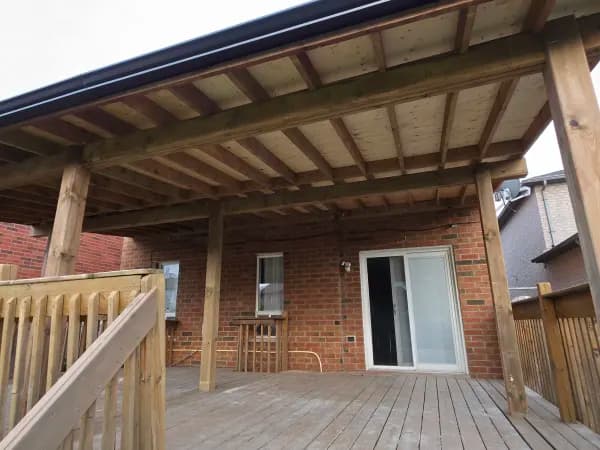
Covered Decks & Patio Roofs in Toronto: The 2026 GTA Guide
What a covered deck actually costs you in design decisions: lean-to vs gable vs roofed pergola, why the house connection is where they fail, snow load, and when a GTA permit is required.
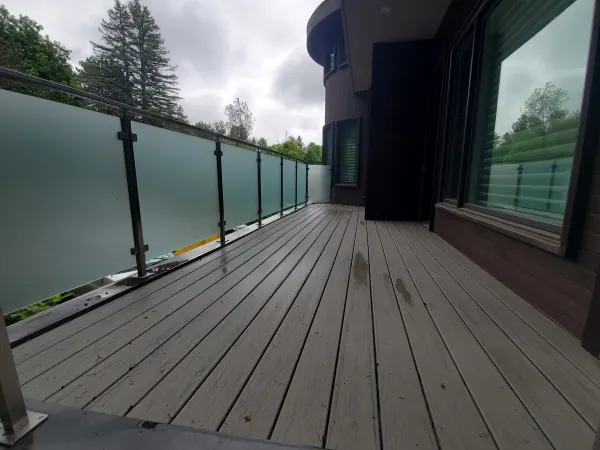
Why Your DIY Porch in Toronto Will Cost You Far More Than You Planned
Toronto and GTA homeowners lose $5,000–$20,000 fixing failed DIY porches every year. Here's the real cost breakdown — permits, frost lines, structural failures — from a contractor who rebuilds them every season.
Interior Renovations in Toronto: Beat the Mud Season in 2026
Planning a kitchen, bathroom, or basement reno in Toronto or the GTA? Here are 2026 CAD pricing, permit requirements from Toronto Building Division, and the spring scheduling strategy GTA contractors use to finish before October mud season.