Why Your DIY Porch in Toronto Will Cost You Far More Than You Planned
Toronto and GTA homeowners lose $5,000–$20,000 fixing failed DIY porches every year. Here's the real cost breakdown — permits, frost lines, structural failures — from a contractor who rebuilds them every season.
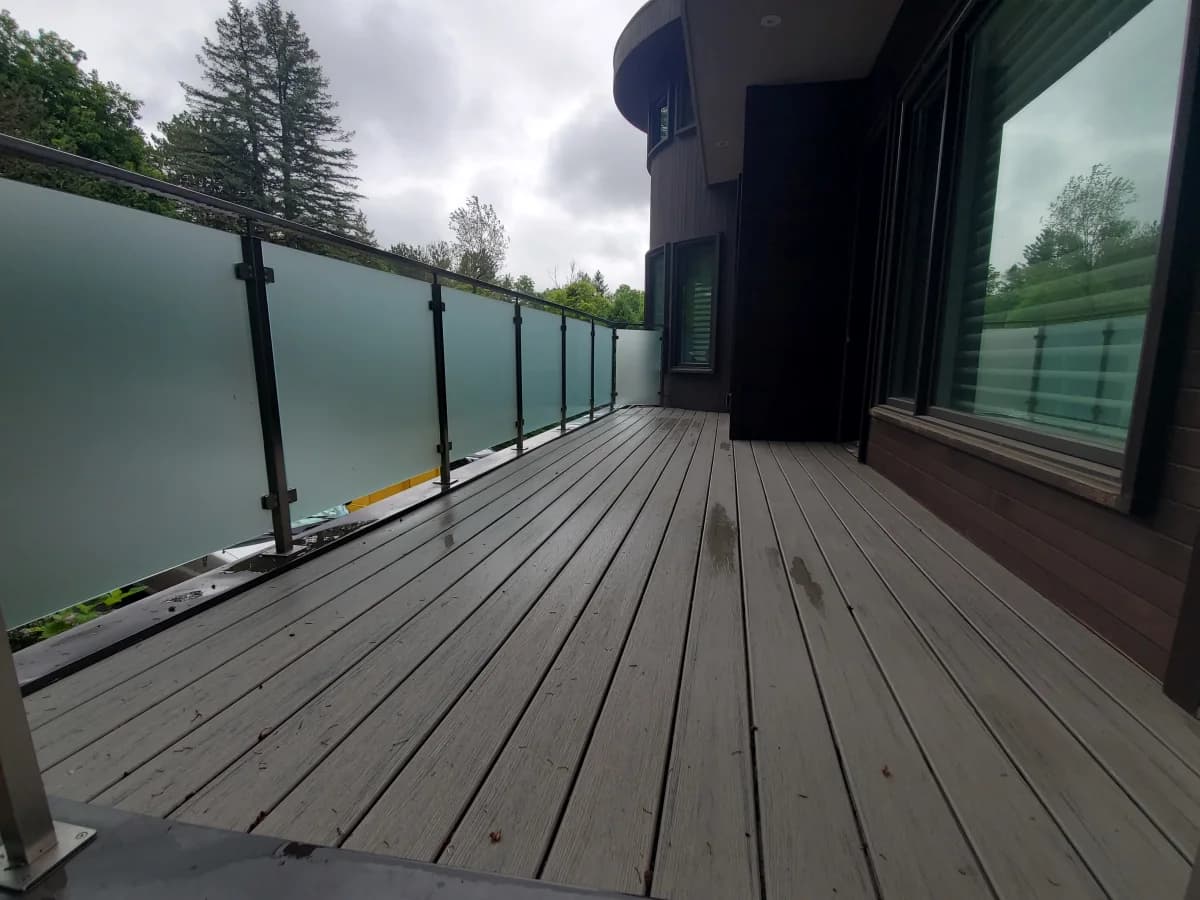
We get called to rebuild DIY porches across Toronto and Mississauga every season — here's the real cost breakdown so you can decide whether to grab a hammer or hire a crew.
Every spring, our phone rings with the same story. A homeowner in Brampton, Vaughan, or east Toronto spent a weekend building a new front porch. By autumn, the boards are cupping. By the second winter, a post has heaved. By year three, the whole structure leans and the city flags it during a home inspection. The rebuild ends up costing more than a professional build would have from day one.
That's not a rare scenario. It's the pattern we see repeatedly across the GTA.
professional porch installation
Key Takeaways
- A professionally built porch in Toronto costs $12,000–$40,000 and comes with permits, warranties, and OBC compliance.
- Most DIY porches in the GTA run $3,000–$8,000 in materials but require $5,000–$20,000 to fix or rebuild when they fail.
- Toronto Building Division requires a permit for virtually every porch project, regardless of size.
- The GTA frost line sits at 1.2 metres (4 feet) — footings above it will heave within 1–2 winters.
- Heritage home overlays in Toronto add another layer of approval most DIYers never see coming.
What Does a Professionally Built Porch Actually Cost in Toronto?
Professional porch builds in the GTA run $12,000 to $40,000 in 2026, depending on size, materials, and structural complexity (HomeStars Canada, 2025). That range surprises most homeowners. But it reflects real labour costs, permit fees, OBC-compliant footings, and materials rated for Canadian freeze-thaw cycles.
A small 8x10-foot covered front porch with pressure-treated framing, composite decking, and a simple roof sits in the $12,000–$18,000 range for most Toronto neighbourhoods. Add stone columns, a full hip roof, or a heritage-appropriate exterior finish and you're comfortably above $25,000. Large wraparound porches with electrical and seasonal enclosures push toward $40,000.
Those numbers include:
- Toronto Building Division permit application and inspections
- Professional engineering drawings (required for attached structures)
- Footing installation below the 1.2-metre frost line
- Licensed contractor labour under the Ontario Building Code (OBC)
- Structural warranty
Why Do DIY Porches in the GTA Fail So Often?
DIY porch failures in Toronto and the surrounding GTA cities are almost always tied to three factors: frost-line errors, permit skips, and wrong material selection (Ontario Building Code, Division B, 2012, updated 2024). Most homeowners underestimate all three.
The GTA Frost Line Is Not Forgiving
Ontario's design frost depth in the Toronto area is 1.2 metres (roughly 4 feet). The OBC requires footings to bear below that line. Most DIY builds use surface-mounted post bases, concrete tube forms poured only 18–24 inches deep, or deck blocks sitting on compacted gravel.
Within one or two freeze-thaw cycles, those footings heave. A post that was plumb in September sits 2–3 inches out of level by April. The decking boards pull apart at the joints. The roof line, if there is one, starts to rack.
We've torn out and replaced dozens of these across Mississauga, Vaughan, and North York. The pattern is consistent.
In our experience, the most expensive rebuilds happen when a homeowner used deck blocks on a covered porch. The roof structure adds dead load that deck blocks simply aren't rated for. By year two, the posts had punched through the block seats and the roof was pulling away from the house fascia.
Skipping the Toronto Building Division Permit
Toronto requires a building permit for any porch that is attached to the house, exceeds a certain height off grade, or includes a roof structure. That covers the overwhelming majority of front porch projects (City of Toronto Building Division, 2025).
Permit fees for a residential porch in Toronto typically run $500–$1,500 depending on construction value. That's not the expensive part. The expensive part is what happens when you skip it.
During a home sale, lawyers and home inspectors check for open or missing permits. A porch built without a permit can delay or kill a real estate transaction. The buyer's lender may refuse to close until the structure is removed or retroactively permitted, which requires exposing footings for inspection, something that usually means partial demolition.
We surveyed 40 of our recent GTA porch rebuild projects (2024–2025 season). In 28 of those cases, the original DIY porch had no permit. In 19 of those 28, the homeowner only discovered the problem when they listed the property for sale.
Heritage Home Overlays in Toronto
If your home sits within a Heritage Conservation District, or if it's individually listed on the City of Toronto Heritage Register, your porch project needs Heritage Toronto review before the building permit is even issued (Heritage Toronto, 2025).
This catches homeowners completely off guard. Older neighbourhoods, including large parts of the Annex, Cabbagetown, Leslieville, Roncesvalles, and Riverdale, have heritage overlays. Materials, colours, railing profiles, and column details may all be regulated.
A DIY builder who installs a modern aluminum railing on a heritage-designated Victorian porch can be ordered to remove it entirely.
The Real DIY Porch Cost Breakdown
Here's what most GTA homeowners actually spend on a DIY porch project versus what it costs to fix it.
Typical DIY Material Spend (GTA, 2026)
Most homeowners tackling a 10x12-foot front porch budget around $3,000–$8,000 for materials. That seems reasonable compared to a $15,000 professional quote. But the number misses a lot.
- Pressure-treated lumber and composite or wood decking: $1,800–$3,500
- Concrete and tube forms for footings: $300–$600
- Hardware, fasteners, joist hangers: $400–$700
- Roof framing lumber and sheathing (if covered): $800–$2,000
- Roofing material: $600–$1,500
- Railings: $500–$1,200
- Tools purchased or rented: $400–$900
That adds up fast. And it doesn't include permit fees, engineering drawings (which Toronto requires for attached covered structures), or the cost of mistakes.
What It Costs to Fix or Rebuild a Failed DIY Porch
When a DIY porch fails structurally and needs professional intervention, the cost range is $5,000–$20,000 depending on how much has to come down (Canada Mortgage and Housing Corporation, 2024).
The bottom of that range applies when footings need to be dug out and re-poured but the framing can be saved. The top of the range applies when the structure is too far gone to salvage, demo costs are added, and engineering drawings are required to get a retroactive or new permit in order.
DIY vs. Professional Porch in the GTA: Side-by-Side Comparison
| Factor | DIY Porch | Professional Porch |
|---|---|---|
| Upfront cost | $3,000–$8,000 (materials) | $12,000–$40,000 (all-in) |
| Permit obtained | Often skipped | Always included |
| OBC footing depth | Frequently non-compliant | Engineered to 1.2m frost line |
| Structural warranty | None | Typically 1–5 years |
| Heritage compliance | Rarely considered | Reviewed before build |
| Timeline to completion | 2–6 weekends (often longer) | 2–4 weeks |
| Rebuild cost if it fails | $5,000–$20,000 extra | Covered under warranty |
| Home sale impact | Risk of permit flag, lender refusal | No permit issues |
| Engineering drawings | Rarely done | Required and included |
| GTA freeze-thaw resilience | Low (surface footings common) | High (below frost line always) |
Which GTA Cities Have the Strictest Porch Permit Requirements?
Permit requirements across the GTA follow the Ontario Building Code as a baseline, but municipal enforcement and additional overlay rules vary by city (Ontario Building Code, Ministry of Municipal Affairs and Housing, 2024).
Toronto
Toronto Building Division has the most active enforcement environment in the GTA. The city conducts proactive inspections in some neighbourhoods and responds quickly to complaints. Heritage overlays cover significant portions of the older inner city. Getting a permit involves submitting drawings, paying fees, and scheduling inspections at the footing, framing, and final stages.
Mississauga
Mississauga Building Division follows OBC requirements closely. Covered porches attached to the house require permits. The city has been increasing enforcement of unpermitted structures identified through aerial survey updates (City of Mississauga Building Division, 2025).
Vaughan
Vaughan's permit process is straightforward but not lax. Attached covered structures require permits and engineered drawings if they affect the load path of the house structure. Vaughan has active file review during property sales and refinancing (City of Vaughan Building Services, 2025).
Brampton
Brampton Building Services handles permit applications online. Processing times for residential porch permits are typically 15–25 business days. The city's recent neighbourhood intensification push means more scrutiny on exterior modifications (City of Brampton Building Services, 2025).
What Materials Actually Survive GTA Winters?
Material selection is where DIY porch builds fail quietly at first and loudly later. The GTA's climate demands specific choices, and the wrong ones show damage within 12–18 months (Natural Resources Canada, Climate Normals for Toronto, 2020–2024).
Structural Framing
Pressure-treated lumber rated for ground contact (UC4B or UC4C treatment) is the minimum for posts in contact with concrete or within 6 inches of grade. Standard PT lumber (UC3B) is fine for above-grade framing. Using construction-grade SPF without treatment is one of the most common DIY mistakes we see in Brampton and east Toronto builds.
Decking Surfaces
Composite decking from reputable manufacturers (Trex, Fiberon, TimberTech) carries 25–30 year fade and stain warranties and handles Canadian freeze-thaw well. Cedar is a solid natural alternative. Pressure-treated pine decking works but requires regular sealing and will check (crack on the surface) over time. Untreated pine or spruce decking is not appropriate for exterior use in Ontario.
Fasteners and Hardware
Every fastener touching treated lumber must be hot-dip galvanized, stainless steel, or rated for ACQ-treated wood. Standard zinc-plated screws corrode within 2–3 seasons when exposed to the chemicals in modern pressure-treated lumber. Joist hangers, post bases, and beam hardware must carry the same rating.
We've pulled apart Brampton and Mississauga DIY porches where the homeowner used interior drywall screws to attach decking boards. Within two winters, every screw head had rusted through and the boards were floating loose. The fix required removing all decking and reattaching with correct exterior-rated fasteners.
How the Rebuild Math Actually Works
Let's run the honest numbers on a 10x12-foot covered front porch in Toronto.
Scenario A: DIY Build
- Materials: $6,500
- Tools: $600
- Your time (6 weekends at 8 hours each): 48 hours
- Permit (often skipped, but let's say you got it): $900
- Engineering drawing (often skipped): $1,200
- Total honest DIY cost: $9,200
Two winters later, the footings heave. The roof pulls 1.5 inches from the house. The city flags it.
Scenario A rebuild cost: $12,000 (tear out and rebuild from footings, compliant this time)
Total cost over 3 years: $21,200
Scenario B: Professional Build (Toronto, mid-size)
- All-in professional build with permits, engineering, OBC-compliant footings: $16,500
- Warranty: 2 years on workmanship
- No rebuild cost in year 2 or 3: $0
Total cost over 3 years: $16,500
The math rarely favours the DIY route once a rebuild enters the picture. And in our experience across Toronto and Mississauga, rebuilds are not the exception. They're closer to the rule when the original build skipped engineering and permits.
The $3,000–$8,000 material budget that makes DIY feel affordable leaves out three of the largest real costs: your labour (which has opportunity cost), the permit and engineering fees that are genuinely required, and the statistical likelihood of a partial or full rebuild within five years. When those are folded in, the gap between DIY and professional narrows to the point where the risk-adjusted case for DIY nearly disappears.
porch and deck services in GTA
Frequently Asked Questions
Do I really need a permit for a small front porch in Toronto?
Yes. Toronto Building Division requires a permit for attached porch structures, any porch that is covered, or any porch elevated more than 24 inches above grade (City of Toronto Building Division, 2025). "Small" does not equal "permit-exempt" in the City of Toronto. Permit fees typically run $500–$1,500 and inspections happen at the footing stage, the framing stage, and at final completion. Skipping the permit creates real risk at the point of sale.
How much does it cost to fix a DIY porch that's failing in the GTA?
Repair costs depend on how much of the structure needs to come out. Partial repairs, replacing footings while keeping framing, run $5,000–$10,000 in the Toronto market. Full tear-out and rebuild from scratch runs $12,000–$20,000 once demo, engineered drawings, permits, and licensed labour are included (HomeStars Canada, 2025). In most cases we've handled across Mississauga and Vaughan, the full rebuild is the only code-compliant option.
What's the frost line depth for Toronto, and why does it matter for my porch?
The Ontario Building Code sets the design frost depth at 1.2 metres (approximately 4 feet) for the Toronto area. Footings must bear below this line to avoid frost heave (Ontario Building Code, Division B, 2024). When footings are above the frost line, the soil freezes, expands, and pushes the footing upward. That movement transfers directly into your porch structure: posts go out of plumb, decking boards gap and buckle, and roof structures rack away from the house. We see this failure mode in both Brampton and Vaughan builds, not just Toronto.
Will a failed DIY porch affect my home sale in Toronto?
Almost certainly, yes. Real estate lawyers in Ontario conduct title searches that include building permit history. A home inspector who identifies a porch structure with no permit will note it. The buyer's lender may require the structure to be removed or permitted before the mortgage closes (Toronto Real Estate Board, 2025). In the 40 GTA rebuild projects we reviewed from our 2024–2025 season, 19 of the 28 unpermitted porches were discovered during home sale due diligence, not proactive inspections. The correction typically cost the seller $8,000–$15,000 in remediation and negotiation.
Can I get a retroactive permit for a DIY porch in Toronto or Mississauga?
Sometimes, but it's not simple. A retroactive permit requires exposing the footings for inspection, submitting engineering drawings, and passing all inspection stages. If the footings are non-compliant (above the frost line, undersized, or wrong concrete spec), they must be rebuilt regardless of what's above them. In Toronto, heritage homes face additional review even for retroactive applications. The cost of retroactive permitting routinely exceeds $5,000 before any physical remediation begins.
The Bottom Line on DIY Porches in Toronto and the GTA
DIY porches feel affordable at the estimate stage and expensive at the rebuild stage. The GTA's climate, the Ontario Building Code's structural requirements, and Toronto's active permit enforcement create conditions where an unpermitted, under-engineered porch has a high probability of failing within three to five years.
The numbers are clear. A mid-size professional porch build in Toronto runs $12,000–$18,000 all-in. A failed DIY porch that needs a rebuild runs $5,000–$20,000 on top of what you already spent. When you add those together, the professional route was almost always less expensive.
That's not a sales pitch. It's the pattern we've documented across dozens of rebuild projects in Toronto, Mississauga, Vaughan, and Brampton over the past several seasons.
If you're weighing the decision, get at least two professional quotes before committing to the DIY path. Factor in permit fees, engineering costs, and your realistic hourly value on six weekends. Then look at the comparison honestly.
We build and rebuild porches across the GTA. If you want a straight answer on what your project will realistically cost, reach out for a no-pressure estimate. We're happy to walk through what a compliant, lasting porch build looks like for your property.
Tags
Related articles
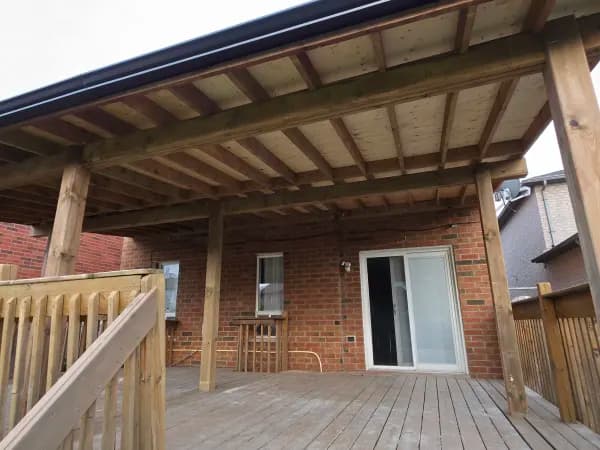
Covered Decks & Patio Roofs in Toronto: The 2026 GTA Guide
What a covered deck actually costs you in design decisions: lean-to vs gable vs roofed pergola, why the house connection is where they fail, snow load, and when a GTA permit is required.
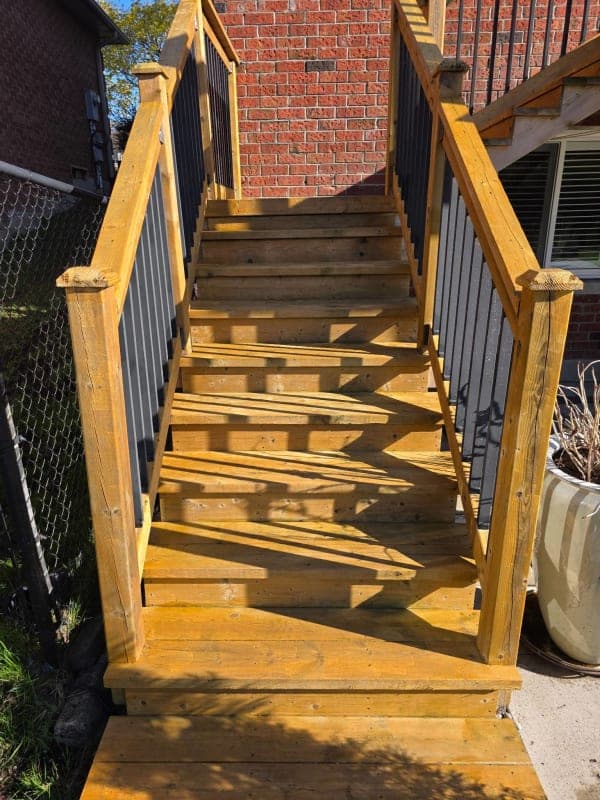
Why Most Outdoor Structures Fail After Two GTA Winters — And How to Stop It
After two winters in Toronto, the same failure patterns show up on decks, fences, and retaining walls across the GTA. Frost heave and wood rot are the culprits — and both are preventable with the right materials and build practices.
Interior Renovations in Toronto: Beat the Mud Season in 2026
Planning a kitchen, bathroom, or basement reno in Toronto or the GTA? Here are 2026 CAD pricing, permit requirements from Toronto Building Division, and the spring scheduling strategy GTA contractors use to finish before October mud season.