Interior Renovations in Toronto: Beat the Mud Season in 2026
Planning a kitchen, bathroom, or basement reno in Toronto or the GTA? Here are 2026 CAD pricing, permit requirements from Toronto Building Division, and the spring scheduling strategy GTA contractors use to finish before October mud season.
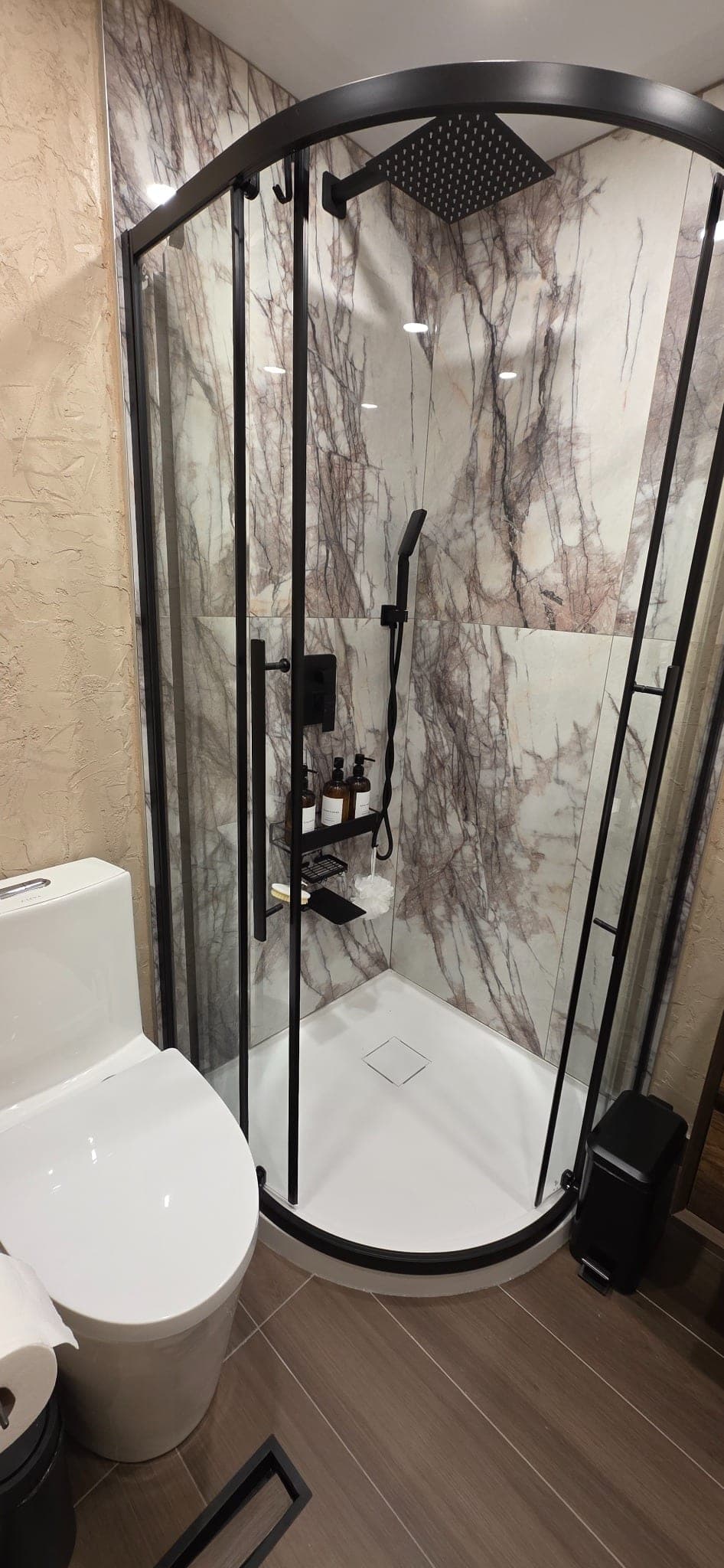
We run interior renos across Toronto and the GTA all winter and spring, and the rhythm here is unlike anywhere else in Canada. The freeze-thaw window that opens in late March gives you a hard deadline: finish the heavy structural work before October mud makes site access miserable and material deliveries unreliable. We've watched homeowners in Mississauga, Vaughan, and Brampton misjudge this window by weeks, and it always costs them, either in rushed finishes or a project that drags through the following winter. This guide tells you exactly what interior renovations cost in 2026, what permits you need from the City of Toronto, and how to schedule your project so you're done before the mud flows.
Key Takeaways
- Kitchen renovations in Toronto run $25,000-$75,000 in 2026 CAD depending on scope and finishes
- Structural changes, electrical upgrades, and plumbing moves all require permits from Toronto Building Division
- The optimal window for GTA interior renos runs from late March through September, roughly 24 usable weeks
- Permit approval for straightforward interior work currently takes 4-8 weeks through Toronto Building Division
- Brampton, Vaughan, and Mississauga have their own building departments with similar but not identical permit timelines
interior renovation and finishing services
Why Does the Spring Window Matter for Interior Renos in Toronto?
Interior renovations aren't weather-dependent the way a deck or foundation pour is, but the GTA spring window still matters. According to Environment and Climate Change Canada, Toronto averages its last hard frost between late March and early April, with fall freeze events returning by mid-October. (Environment and Climate Change Canada, 2025) That creates roughly 24 usable weeks for the heaviest trade coordination.
The spring timing matters for two specific reasons. First, trade availability tightens sharply from May onward. Electricians, plumbers, and HVAC contractors in the GTA are in high demand all summer, and booking them in February for an April start is far easier than trying to slot them in June. Second, material deliveries in wet fall conditions are genuinely harder. Flooring, drywall, and cabinetry need to arrive dry and in sequence. When site access turns muddy and delivery windows shrink, even an interior project slows.
We've found that Toronto homeowners who submit their permits in February and book trades by March consistently finish their projects by late September, well before the October rain-and-freeze that makes every job harder.
What Does an Interior Renovation Actually Cost in Toronto in 2026?
Labour costs in the GTA run 30-40% above the Ontario provincial average, driven by a skilled trades shortage that Statistics Canada pegged at over 80,000 unfilled construction positions province-wide as of Q1 2025. (Statistics Canada, 2025) That gap hasn't closed, and 2026 pricing reflects it. The ranges below are realistic for Toronto, Mississauga, Vaughan, and Brampton based on projects we've completed in the past 18 months.
| Renovation Type | Low Estimate (2026 CAD) | High Estimate (2026 CAD) | Key Cost Drivers |
|---|---|---|---|
| Kitchen renovation (mid-range) | $25,000 | $50,000 | Cabinetry, countertops, appliance package |
| Kitchen renovation (high-end) | $50,000 | $75,000 | Custom millwork, stone counters, layout changes |
| Bathroom renovation (standard) | $12,000 | $22,000 | Tile, fixtures, vanity, basic plumbing moves |
| Bathroom renovation (full gut) | $22,000 | $35,000 | Layout change, heated floor, full waterproofing |
| Basement finishing (open plan) | $30,000 | $55,000 | Egress windows, insulation, drywall, flooring |
| Basement finishing (suite with bath) | $55,000 | $80,000 | Full bathroom, kitchen rough-in, separate entrance |
| Main floor open-concept conversion | $15,000 | $40,000 | Structural beam, load-bearing wall removal, finish |
| Whole-home interior refresh | $60,000 | $150,000+ | All rooms, HVAC, electrical panel upgrade |
These figures include materials, labour, permit fees, and standard finishing. They exclude custom millwork beyond standard cabinet lines, radiant floor heating, and smart home wiring, each of which can add $3,000-$15,000 depending on scope.
In our experience on Toronto and Vaughan projects, the biggest budget surprises come from walls. Specifically, from discovering what's inside them once demolition starts. Knob-and-tube wiring, galvanized plumbing, or asbestos-wrapped pipes in older Toronto homes can add $5,000-$20,000 to a scope once uncovered. We always recommend a 10-15% contingency buffer on any interior project in a home built before 1980.
Do You Need a Permit for Interior Renovations in Toronto?
The short answer is yes, for anything beyond cosmetic work. Toronto Building Division requires permits for structural changes, electrical work beyond minor repairs, plumbing moves, and HVAC modifications. (Toronto Building Division, 2025) Skipping permits on interior work creates real problems at sale and can void your home insurance coverage on a claim.
Based on permit applications we've filed through Toronto Building Division over the past two years, standard interior renovation permits, covering structural, electrical, and plumbing, are currently taking 4-8 weeks for approval under standard review. Complex applications touching heritage properties or requiring zoning variances routinely run 10-16 weeks. We build that lead time into every project schedule we provide.
Here's how permit requirements break down by common scope:
| Work Type | Permit Required | Issuing Authority | Typical Timeline |
|---|---|---|---|
| Structural wall removal (load-bearing) | Yes | Toronto Building Division | 4-8 weeks |
| Structural wall removal (non-load-bearing) | No | N/A | No permit needed |
| Electrical panel upgrade or new circuits | Yes | Toronto Building Division + ESA | 4-6 weeks |
| Plumbing relocation or new drain/supply | Yes | Toronto Building Division | 4-8 weeks |
| Basement finishing (new rooms) | Yes | Toronto Building Division | 4-8 weeks |
| Egress window installation | Yes | Toronto Building Division | 4-6 weeks |
| Bathroom addition | Yes | Toronto Building Division | 4-8 weeks |
| Kitchen renovation (no layout change) | No | N/A | No permit needed |
| Flooring replacement | No | N/A | No permit needed |
| Painting and drywall repair | No | N/A | No permit needed |
Electrical: ESA Is Separate from the Building Permit
One point that catches Toronto homeowners off guard: electrical work requires sign-off from both Toronto Building Division and the Electrical Safety Authority (ESA). The ESA operates independently of the city building department, and their inspection must happen before walls are closed. (Electrical Safety Authority, 2025) Budget for ESA inspection fees of $150-$400 depending on panel size and circuit count.
Permits in Mississauga, Vaughan, and Brampton
If your property sits in Mississauga, Vaughan, or Brampton, permits go through different municipal building departments, not Toronto Building Division. The Ontario Building Code requirements are identical across all four municipalities, but application forms, fee schedules, and review timelines differ. Mississauga Building Services currently reviews straightforward interior permits in 3-6 weeks. Vaughan Building Standards and Brampton Building Services run similar timelines. We always confirm the specific requirements for the municipality before submitting.
What's the Right Sequence for an Interior Reno?
Poor sequencing is the most common reason interior renovations run over budget and past deadline. Trades stepping on each other's work costs money in rework, and it frustrates everyone on site. Here's the order we follow on GTA interior projects.
Phase 1: Planning and Permits (8-12 Weeks Before Start)
Submit your permit application as early as possible. Finalize your design drawings and specifications before submitting, because revisions after submission restart the review clock. Book your trades for the planned start date at permit submission time, not after approval. In the GTA, electricians and plumbers book 4-6 weeks out in spring.
Phase 2: Demolition (Week 1-2)
Strip the space to structure. Remove cabinets, flooring, drywall, and fixtures in sequence. Protect adjacent finished areas with proper hoarding. Utility locates matter even for interior work: water lines, gas lines, and electrical runs aren't always where you expect in a 50-year-old Toronto semi-detached. Arrange debris removal ahead of demo day, not on the day itself.
Phase 3: Rough-In Trades (Weeks 2-5)
Plumbing rough-in comes first, followed by electrical rough-in, then HVAC rough-in. Each requires its own inspection before walls close. Don't rush this phase. Closed-in deficiencies are expensive and slow to correct. This is the phase most vulnerable to trade scheduling delays in a hot GTA market.
Phase 4: Framing and Insulation (Weeks 3-5, Parallel to Rough-In)
New partition walls, structural beam installations, and blocking for fixtures all happen here. Insulation follows rough-in inspections. Vapour barrier goes on before drywall. Don't skip the vapour barrier in a Toronto basement finish: moisture management is the single biggest long-term durability factor in below-grade spaces.
Phase 5: Drywall and Painting (Weeks 5-7)
Board, tape, mud, sand, prime, paint. Each coat needs drying time, and rushing it shows in the finish. We recommend at least 24 hours between mud coats and 48 hours before painting in spring, when humidity in GTA homes can be high from rain and construction moisture.
Phase 6: Finishing and Final Inspections (Weeks 7-10)
Flooring, cabinetry, countertops, fixtures, and trim all come in sequence during this phase. Final inspections from Toronto Building Division and the ESA close out the permit. Don't skip the final inspection: an open permit on record at the city is a problem that surfaces at every property sale. We've seen home sales delayed or renegotiated because of open permits from work done years earlier.
We've noticed a clear pattern across our GTA projects: the jobs that stay on schedule are almost always the ones where the homeowner made all material selections, cabinetry, countertops, tile, fixtures, before demolition started. Change orders mid-project are the single largest source of cost overruns and timeline extensions we see. Locking in your selections before the hammer swings is the most effective budget control tool available.
DIY vs. Hiring a Contractor: What Makes Sense in Toronto?
The appeal of DIY interior renovation is real. Material costs are the same, and labour savings look significant on paper. But the calculation changes when you factor in permit complexity, trade licensing requirements, and the cost of mistakes. (Canada Mortgage and Housing Corporation, 2024)
| Factor | DIY | Licensed GTA Contractor |
|---|---|---|
| Permit applications | Homeowner can apply | Contractor handles and tracks |
| Structural work | Requires engineer sign-off | Included in contractor scope |
| Electrical work | Must be done by licensed electrician (ESA rules) | Subcontracted to licensed trade |
| Plumbing moves | Must be done by licensed plumber (Ontario) | Subcontracted to licensed trade |
| Timeline | Typically 2-3x longer than professional crew | Scheduled and sequenced |
| Material waste | Higher (learning curve) | Lower (experienced purchasing) |
| Warranty | None | Usually 1-2 years on workmanship |
| Resale documentation | Limited | Permits, inspections, records |
| Realistic labour savings | 20-30% on cosmetic work | Not applicable |
| Risk on structural and mechanical work | High | Managed by licensed professionals |
The honest take: DIY makes sense for cosmetic work like painting, flooring, and hardware swaps. Anything that touches structure, electrical panels, or plumbing in a Toronto home should be licensed and permitted. Insurance companies in Ontario are increasingly scrutinizing unpermitted work on claims, and an unlicensed electrical installation that causes a fire is grounds for claim denial.
How to Pick the Right Contractor for a GTA Interior Reno
Toronto's renovation market is crowded, and not every contractor operating in the GTA carries the licenses and insurance your project requires. The Ontario College of Trades licenses carpenters, electricians, plumbers, and HVAC technicians separately. A general contractor coordinating your project should carry WSIB coverage and minimum $2 million in general liability insurance. (Ontario College of Trades, 2025)
What to verify before signing any contract:
- HST registration number (projects over a few thousand dollars)
- WSIB clearance certificate (request directly from WSIB, not from the contractor)
- General liability insurance certificate (named as additional insured)
- References from projects completed within the past 12 months in your municipality
- Written scope of work with permit responsibility clearly defined
Don't skip the written scope. Verbal agreements on renovation contracts are unenforceable in Ontario and almost always result in disputes over what was included.
Learn more about ATB Construction's renovation services and approach
Frequently Asked Questions
How long does an interior renovation take in Toronto?
Timeline depends on scope. A bathroom renovation in Toronto typically runs 3-5 weeks from demolition to final inspection. A full kitchen renovation runs 6-10 weeks. A basement finish runs 8-14 weeks. Add 4-8 weeks before any of those figures for permit approval through Toronto Building Division. Starting your permit in February for a March or April renovation start is the most reliable way to finish before fall in the GTA.
Do I need a permit to remove a wall in my Toronto home?
It depends on whether the wall is load-bearing. Non-load-bearing partition walls generally don't require a permit in Toronto. Load-bearing wall removal always requires a building permit and typically requires a structural engineer's drawings showing the new beam specification and connection details. Submitting without complete engineering drawings slows the review. We recommend getting the engineer involved before the permit application, not after.
What permits does electrical work require in Ontario?
Electrical work in Ontario requires two separate authorizations. Toronto Building Division issues the building permit covering the scope of work. The Electrical Safety Authority (ESA) conducts its own inspections of the electrical rough-in and final connections, separate from the city building inspection. Both must be completed and signed off before you close walls. ESA inspections cost $150-$400 depending on scope. Budget for both when planning your reno.
How do renovation costs in Mississauga and Vaughan compare to Toronto?
Material costs are essentially identical across the GTA in 2026, since most suppliers draw from the same regional distribution network. Labour rates in Mississauga and Vaughan run roughly 5-15% below Toronto rates for equivalent trades, reflecting lower overhead and slightly less competitive demand. Permit fee structures differ: Mississauga and Vaughan calculate fees using their own schedules, which can run slightly lower than Toronto on mid-range projects. The Ontario Building Code requirements are identical in all three cities.
What happens if I renovate without a permit in Toronto?
The City of Toronto has the authority to order unpermitted work to stop, require the removal of work already completed, or require walls to be opened for retroactive inspection. Beyond city enforcement, unpermitted structural or electrical work creates problems at every property sale: lawyers conduct title searches, and open or missing permits surface. Home insurers can deny claims related to unpermitted work. The cost of retroactive permitting, which involves opening walls for inspection, almost always exceeds the original permit fee many times over.
Plan Before March, Build Through Summer, Finish Before the Mud
Interior renovations in Toronto and the GTA have one reliable enemy: time pressure created by a short, busy construction season. The homeowners and investors who get their projects done right are almost always the ones who treated February and March as active planning months, not waiting months.
If you're targeting a 2026 kitchen, bathroom, or basement project in Toronto, Mississauga, Vaughan, or Brampton, the most valuable thing you can do right now is get your design finalized and your permit application submitted. Everything downstream, trade scheduling, material orders, delivery coordination, flows from that permit approval date.
We're happy to walk through your scope before you commit to anything. A conversation about what your project actually involves, permits, sequence, realistic pricing, costs nothing and saves you from the surprises that push projects past the mud season deadline every year.
Explore interior renovation services in Toronto and the GTA
Contact ATB Construction to discuss your 2026 renovation project
Tags
Related articles
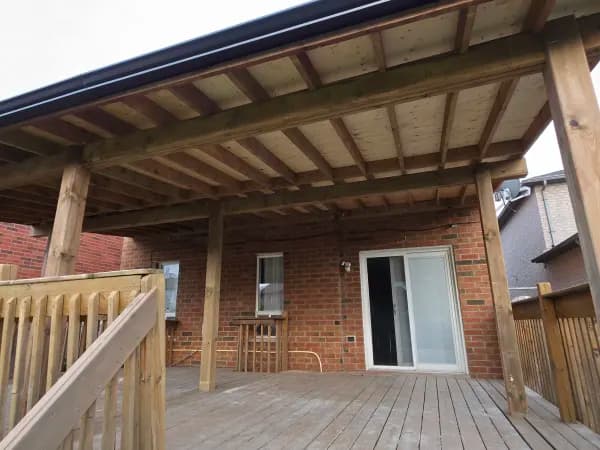
Covered Decks & Patio Roofs in Toronto: The 2026 GTA Guide
What a covered deck actually costs you in design decisions: lean-to vs gable vs roofed pergola, why the house connection is where they fail, snow load, and when a GTA permit is required.
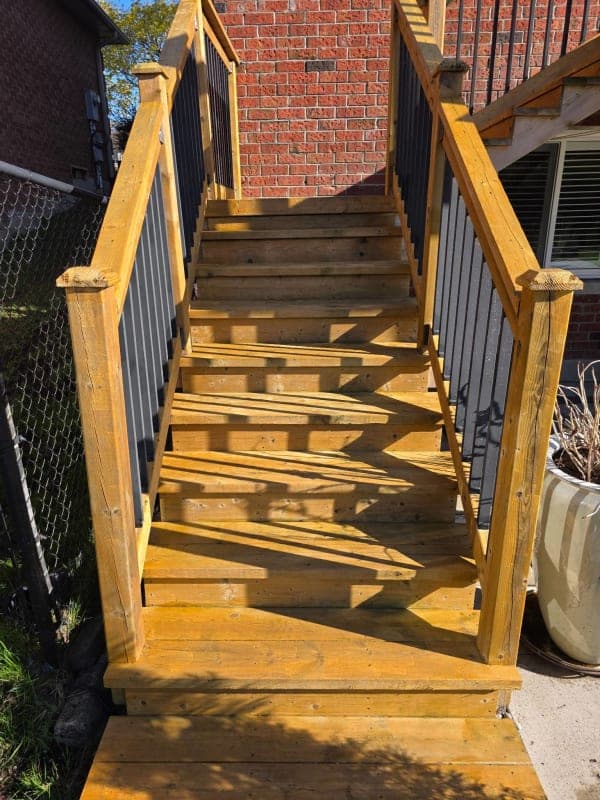
Why Most Outdoor Structures Fail After Two GTA Winters — And How to Stop It
After two winters in Toronto, the same failure patterns show up on decks, fences, and retaining walls across the GTA. Frost heave and wood rot are the culprits — and both are preventable with the right materials and build practices.
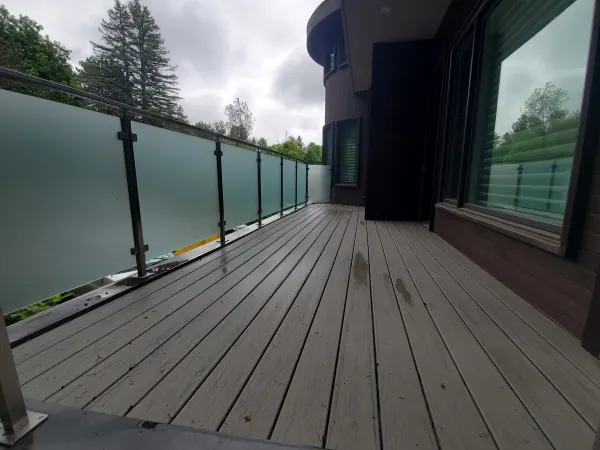
Why Your DIY Porch in Toronto Will Cost You Far More Than You Planned
Toronto and GTA homeowners lose $5,000–$20,000 fixing failed DIY porches every year. Here's the real cost breakdown — permits, frost lines, structural failures — from a contractor who rebuilds them every season.