Get Your Deck Done Right Before Toronto's Mud Season Hits
Toronto and GTA homeowners who book their deck build in early spring avoid permit delays, contractor shortages, and October mud. Here's the exact timeline and 2026 pricing to plan it right.
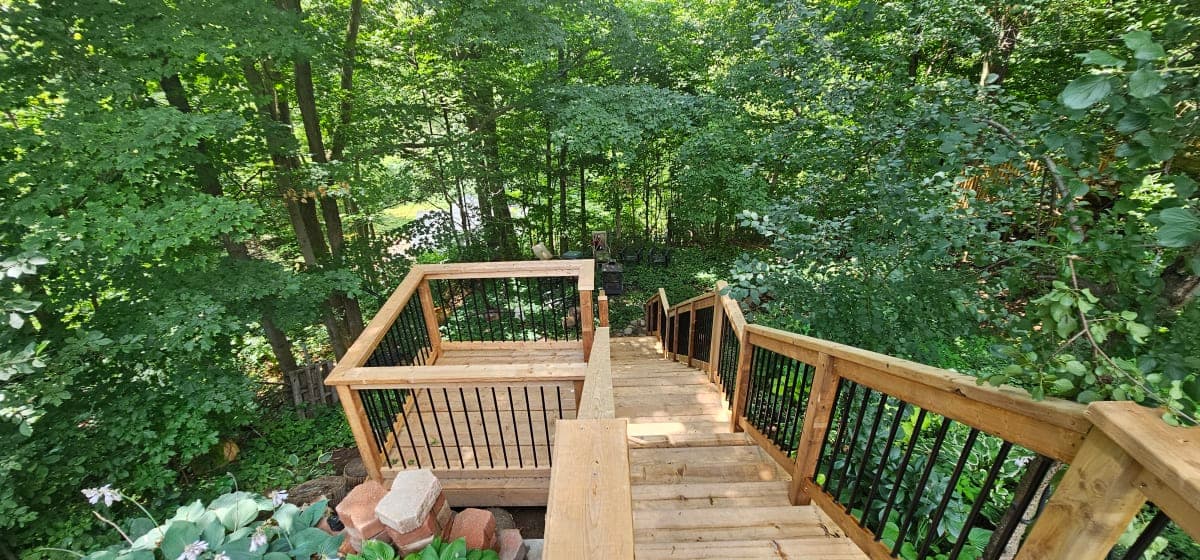
Every spring across Toronto and Mississauga, we see the same pattern unfold. Homeowners who waited too long call us in late May, frustrated that every decent deck contractor is booked solid until August. The mud is already thick, the ground is still soft in spots, and the window for a clean, well-timed build has quietly closed.
We've been building decks across the GTA for years. What we've learned is simple: the homeowners who end up with the best decks, built on time and on budget, started planning in February or early March. The ones who call in June are the ones who end up rushing, overpaying, or settling for whoever is still available.
This guide walks you through the exact spring timeline, 2026 pricing in Canadian dollars, Toronto permit requirements, and the material decisions that actually matter for GTA winters.
learn more about our deck building services
Key Takeaways
- Book your GTA deck contractor by late February to lock in a May or June build start.
- Toronto deck builds in 2026 typically cost $8,000–$25,000 depending on size and materials.
- The City of Toronto Building Division requires permits for most decks; approval takes 2–6 weeks.
- Ontario frost depth is 1.2 m (roughly 4 ft) — posts must go deeper than most DIY guides suggest.
- Composite decking costs more upfront but saves significantly on maintenance over a GTA winter cycle.
Why Does Spring Timing Matter So Much for Toronto Deck Builds?
According to the Ontario Construction Secretariat, residential deck and outdoor structure projects in the Greater Toronto Area spike by 60–70% between April and June each year, creating a contractor availability crunch that drives up wait times and, in some cases, prices (Ontario Construction Secretariat, 2024). The math is straightforward: if you want a quality crew, you need to get in line before everyone else decides to do the same thing on the first warm weekend.
The GTA's spring mud season typically runs from mid-March through late April. Ground that was frozen solid all winter starts to thaw unevenly, and the top layer turns soft before the deeper soil catches up. Building post footings in that window is possible with proper technique, but working on saturated ground slows every stage of the project.
The ideal start window is early May in most Toronto and Mississauga neighbourhoods. By then, the ground has had three to four weeks to drain and firm up after the deep thaw. You're also ahead of the June rush, which means material delivery times are shorter and crew schedules are still flexible.
spring construction planning tips
What Happens If You Wait Until June?
Waiting until June isn't a disaster, but it costs you. Contractors who are still taking bookings in June are often doing so because they have gaps in their schedule, not because they're the most in-demand crews. Material lead times on composite decking, in particular, stretch to three to five weeks during peak season from suppliers like TimberTech and Trex, according to their 2024 dealer distribution data.
If you're targeting a Labour Day finish, June is your hard deadline for starting the permit process. Any later and you're looking at a mid-October completion, which is exactly when GTA mud season returns.
What Does a Toronto Deck Build Actually Cost in 2026?
A deck build in Toronto or the surrounding GTA municipalities in 2026 ranges from $8,000 to $25,000 for most residential projects, based on current labour rates, material costs, and permit fees in the region (HomeStars Cost Guide Canada, 2025). That's a wide range, and it reflects real differences in deck size, material choice, and site complexity.
Here's a realistic breakdown of where your money goes on a typical 300-square-foot deck in Toronto:
- Labour: $4,500–$10,000 depending on crew size, project complexity, and whether stairs or a pergola are included
- Materials (pressure-treated lumber): $2,500–$5,000 for framing, decking boards, and hardware
- Materials (composite decking upgrade): Add $1,500–$4,500 over pressure-treated for composite boards
- Concrete for footings: $400–$900 depending on number of posts and soil conditions
- City of Toronto Building Permit: $200–$500 for most residential decks (fee schedule published annually by Toronto Building Division)
- Site prep, grading, and cleanup: $500–$1,500
In our experience, the projects that come in under $12,000 are typically smaller ground-level decks with pressure-treated lumber and a simple railing system. Projects pushing $20,000 or more usually involve multiple levels, composite or hardwood decking, a built-in pergola or privacy wall, and a staircase with landing.
How Does Deck Size Affect the Per-Square-Foot Price?
Per-square-foot pricing is a useful starting point, but it doesn't tell the whole story. In 2026, GTA deck contractors are pricing pressure-treated builds at roughly $25–$45 per square foot installed, and composite builds at $45–$75 per square foot installed. Smaller decks often cost more per square foot because mobilization costs, permit fees, and minimum labour charges are spread across fewer boards.
A 200-square-foot deck might run $55 per square foot all-in. The same crew building a 500-square-foot deck for the same homeowner might bring that number down to $35 per square foot. Scale matters.
How Do Toronto Building Permits Work for Decks?
The City of Toronto Building Division requires a building permit for any deck that is attached to the house, elevated more than 600 mm (roughly 24 inches) above grade, or larger than 10 square metres (about 108 square feet) (City of Toronto Building Division, 2025). In practice, most backyard decks in Toronto need a permit.
The permit process in Toronto typically runs 2–6 weeks for straightforward residential deck applications. Here's what affects that timeline:
- Complete application: Submitting accurate site plans and structural drawings on the first attempt avoids correction requests, which can add 2–3 weeks.
- Time of year: Applications submitted in March or April are processed faster than those filed in May or June when volume peaks.
- Zoning complexity: Properties in flood plains, ravine lots, or heritage districts face additional review steps from Toronto and Region Conservation Authority (TRCA) or Heritage Planning.
Based on projects we've managed across Toronto, Mississauga, and Vaughan, permit approvals for standard backyard decks take an average of 18 business days when the initial application is complete and accurate. Applications with missing structural drawings or incorrect lot coverage calculations average 31 business days.
The permit fee itself is calculated based on the value of construction. For a deck valued at $15,000, the City of Toronto fee is typically $250–$400. Mississauga, Brampton, and Vaughan each have their own fee schedules, but most fall in the $200–$500 range for residential decks under $30,000 in construction value.
Do You Need a Permit in Mississauga and Brampton Too?
Yes. Mississauga, Brampton, and Vaughan follow the Ontario Building Code and have their own municipal permit offices. The requirements are similar to Toronto but the processing timelines differ. Mississauga Building Division typically processes complete residential deck applications in 10–15 business days. Brampton runs slightly slower at 15–25 business days during peak spring season.
Regardless of which municipality you're in, never start excavating for footings before your permit is issued. Inspectors in the GTA can and do stop work on unpermitted projects, and the fines for building without a permit start at $500 and can reach $50,000 for repeat or deliberate violations under the Ontario Building Code Act.
understanding GTA building permits
Which Decking Material Is Right for a GTA Winter Cycle?
Ontario's freeze-thaw cycle is hard on outdoor materials. The GTA sees average winter temperatures dipping to -10°C to -15°C and can drop below -20°C during cold snaps, while summer humidity regularly pushes above 70% (Environment and Climate Change Canada, 2024). A material that handles one extreme but not the other will show wear within three to five years.
Here's a structured comparison of the four materials we install most often across Toronto and Mississauga:
| Material | Upfront Cost (per sq ft installed) | Lifespan (GTA climate) | Maintenance | Best For |
|---|---|---|---|---|
| Pressure-Treated Lumber | $25–$45 | 15–25 years | Annual sealing or staining | Budget-conscious builds, first homes |
| Composite Decking | $45–$75 | 25–30 years | Annual cleaning only | Low-maintenance preference |
| Cedar | $35–$60 | 15–20 years | Biannual staining | Aesthetics, mid-budget |
| Hardwood (Ipe/Cumaru) | $70–$110 | 30–40 years | Annual oiling | Premium, long-term investment |
What this table doesn't show is replacement cost sequencing. Pressure-treated lumber is cheaper upfront, but the majority of Toronto homeowners who chose it for a 2010-era deck are now replacing boards or entire sections. Composite decking installed at the same time is mostly still performing. Over a 20-year ownership horizon, the total cost of a composite deck often comes out lower than a pressure-treated one when you factor in restaining, board replacement, and contractor labour for repairs.
What Is Ontario's Frost Depth Requirement for Deck Posts?
Ontario frost depth in the GTA is 1.2 metres (approximately 4 feet) below finished grade. This is specified in the Ontario Building Code and reflects the depth at which soil in the Toronto region remains consistently above freezing during a typical winter (National Building Code of Canada, Ontario Edition, 2024).
Footings that don't reach below frost depth will heave. When the ground freezes and expands, it pushes posts upward. When it thaws, posts can settle unevenly. Over two or three winters, a deck built on shallow footings develops a visible tilt and gaps between boards. We see this regularly on DIY decks and on decks built by contractors who skipped proper inspections.
Helical piles are an alternative to poured concrete footings that some GTA contractors prefer. They're driven mechanically to depth, require no concrete curing time, and can be installed even in early spring when the ground is still partially frozen. They cost more per footing ($300–$600 each compared to $80–$150 for a poured concrete footing), but they cut installation time significantly.
What's the Ideal Week-by-Week Spring Build Timeline?
A well-run deck project in Toronto follows a predictable sequence. The window from permit submission to first-summer enjoyment is typically 10–14 weeks if you start in late February. Here's how that timeline breaks down:
| Week | Stage | Key Tasks |
|---|---|---|
| 1–2 (late Feb) | Planning and Quotes | Get 3 contractor quotes, finalize design, select materials |
| 3–4 (early Mar) | Permit Application | Submit drawings to Toronto Building Division or local municipality |
| 5–8 (mid Mar–early Apr) | Permit Review | Respond to any correction requests; arrange utility locate (Ontario One Call) |
| 9 (late Apr) | Site Prep | Clear site, mark post locations, confirm soil conditions |
| 10–11 (early May) | Footings | Dig post holes to 1.2 m, pour concrete or install helical piles |
| 12 (mid May) | Framing | Install beams, joists, and blocking |
| 13 (late May) | Decking and Railings | Install decking boards, railing system, and stair stringers |
| 14 (early June) | Final Inspection and Cleanup | Book Building Division inspection, site cleanup, final touches |
This is the schedule we follow on most Toronto and Mississauga projects that kick off in late winter. Projects starting in April can still finish before July, but the permit window tightens and there's less buffer for weather delays.
What Can Push the Timeline Off Track?
Three things derail more GTA deck projects than anything else. First, incomplete permit applications are the most common delay. Missing structural drawings or a wrong lot coverage calculation sends the file back to the beginning of the review queue.
Second, wet May weather. If the ground is still saturated in early May, concrete poured into wet post holes will have a higher water-to-cement ratio than specified, which weakens the footing over time. Good contractors wait for drainage. Rushed ones pour anyway.
Third, material backorders. Composite decking from major brands books up during peak season. If you've decided on a specific colour or profile, order it before your permit is even approved. Most suppliers hold material for 30 days with a deposit.
How Do You Choose the Right GTA Deck Contractor?
The GTA has no shortage of deck builders, but the quality range is significant. According to HomeStars, roughly 40% of negative reviews for deck contractors in Ontario mention either permit-related problems or structural issues discovered during or after construction (HomeStars Review Data, 2024). That number tells you something important: the cheapest quote often skips the steps that protect you.
When you're comparing contractors in Toronto or the surrounding municipalities, ask these specific questions:
- Do you pull permits, or do you expect us to? (A contractor who won't pull their own permits is a red flag.)
- Can you provide a reference from a project where the building inspector signed off on the final?
- What is your footing depth and concrete specification for GTA frost conditions?
- Do you carry WSIB clearance and $2 million liability insurance? (Both are required by reputable GTA contractors.)
We've walked through dozens of "completed" decks that another contractor built for a homeowner who wanted to save money. The most common problems we find are footings poured above frost depth, framing lumber that's either undersized or has been allowed to rot at the ledger board connection, and railings that don't meet the 107 mm (4.2 inch) baluster spacing requirement under the Ontario Building Code. None of these are visible until you look for them.
Frequently Asked Questions
How early should I start planning a Toronto deck build to have it ready for summer?
Start your planning and contractor search in February if you want a June completion. Allow 2–4 weeks to get quotes and finalize a design, 2–6 weeks for the Toronto Building Division to process your permit, and 4–6 weeks for the actual build. Starting in March is workable but leaves no buffer for permit corrections or weather delays.
What is the permit cost for a deck in Toronto in 2026?
Toronto Building Division permit fees for residential decks typically range from $200 to $500 in 2026, calculated based on the declared construction value of the project. A $15,000 deck generally lands in the $250–$400 range. Mississauga, Brampton, and Vaughan have separate fee schedules but similar ranges for typical residential projects.
Can I build a deck in Toronto without a permit?
Technically, small freestanding decks under 10 square metres (108 sq ft) and less than 600 mm (24 inches) above grade may not require a permit in Toronto. In practice, most backyard decks exceed at least one of these thresholds. Building without a required permit risks stop-work orders, fines up to $50,000 under the Ontario Building Code Act, and complications when you sell the property, as unpermitted structures must be disclosed.
Is composite decking worth the extra cost in the GTA's climate?
Yes, for most homeowners who plan to stay in the home more than 7–10 years. Composite decking installed in 2026 at $45–$75 per square foot installed will likely outlast two cycles of pressure-treated lumber with no staining, no sealing, and no board replacement. The total 20-year cost of ownership is lower for composite in most GTA climate scenarios, despite the higher upfront price.
How deep do deck footings need to be in Toronto?
Ontario Building Code requires footings to extend below the frost depth, which is 1.2 metres (approximately 4 feet) below finished grade across the Greater Toronto Area. This prevents frost heaving, the seasonal movement caused by ground freezing and expanding below the post. Footings poured above this depth will shift within a few winters, causing structural problems that require expensive correction.
composite vs pressure-treated decking comparison
Plan Now, Build in May, Enjoy All Summer
The case for planning your Toronto deck build in early spring isn't complicated. Contractors are available, permits move faster, material lead times are shorter, and the ground is in the best condition it'll be all year by early May. Wait until June and all of those advantages flip the other way.
The 2026 cost range for a well-built deck in Toronto or the GTA runs $8,000–$25,000 depending on size and materials. That's a significant investment. It deserves a permit pulled properly, footings poured to Ontario's 1.2 m frost depth, and materials chosen for the freeze-thaw cycle your deck will face every winter.
If you're already thinking about this in spring, you're in the right mindset. Now's the time to act on it. Get your quotes now, submit your permit application this month, and you'll be hosting your first backyard gathering before the June long weekend.
get a free deck quote from ATB Construction
ATB Construction builds decks, fences, pergolas, and outdoor structures across Toronto, Mississauga, Vaughan, and Brampton. Contact us for a free site assessment and quote.
Tags
Related articles
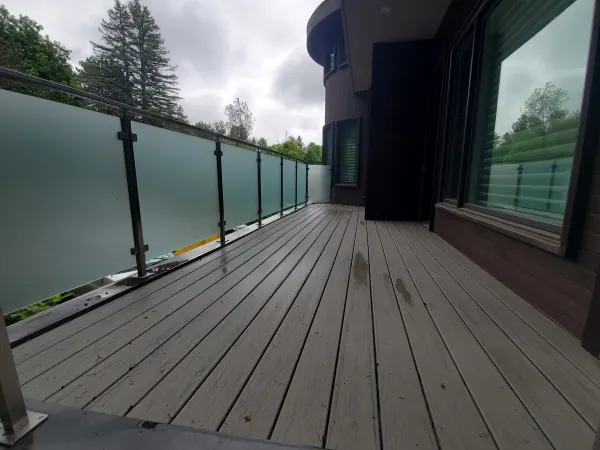
Why Most Porch Builds Fail After Two Winters and How to Stop It
Most porches that fall apart after two winters share the same issues: frost heave and wood rot. Here's what you need to know to build a porch that lasts through Canada's wet, cold seasons.
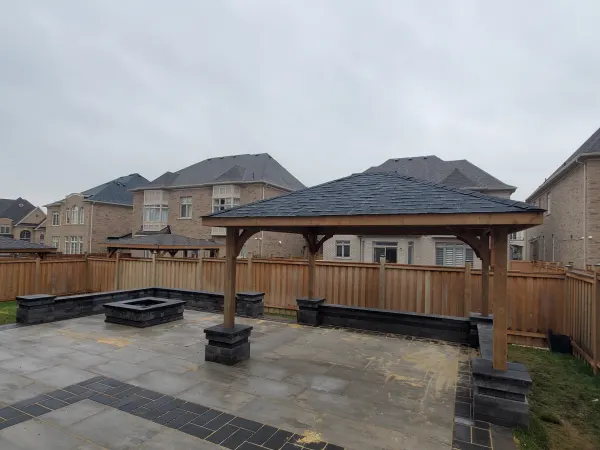
3 Big DIY Mistakes When Building a Pergola or Gazebo in Toronto
We get called in to fix DIY pergolas and gazebos across Toronto every summer. These three mistakes account for 80% of the tear-outs — and they're all avoidable.
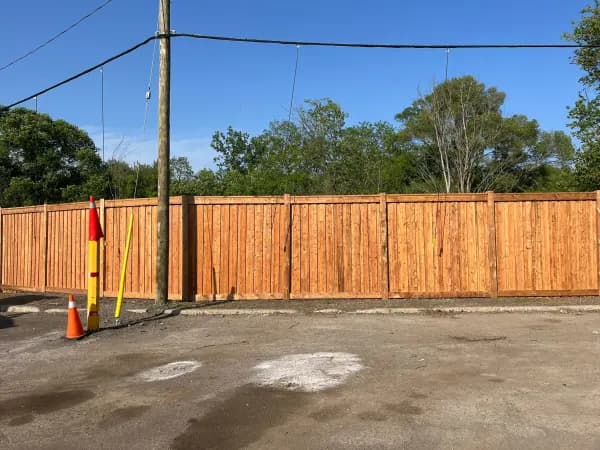
How to Get Your Commercial Site Ready for Fall in Toronto and the GTA
A practical guide for GTA business owners and property managers on preparing commercial construction and renovation sites before Toronto's October freeze. Covers 2026 costs, permits, inspections, and a week-by-week timeline.