Gate Installation Timing in Toronto: Beat the Fall Mud Season
Fall is actually our busiest gate installation season in the GTA — and the homeowners who book early get cleaner installs, better pricing, and no October mud delays. Here's the contractor-side timeline you need.
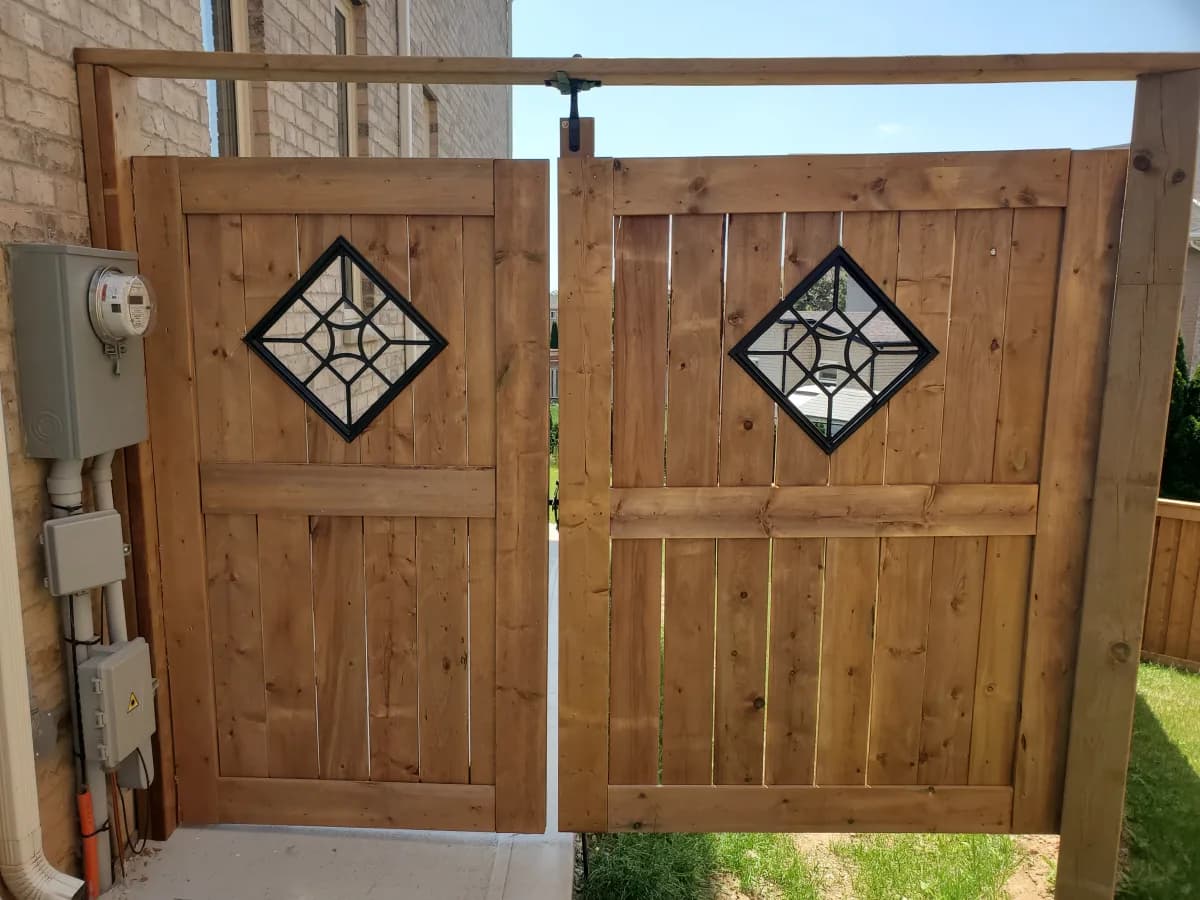
Fall is actually our busiest gate installation season in Toronto — here's why booking early matters more than most homeowners realize.
Every September, our phones start ringing from Vaughan to Brampton: homeowners who left their gate project for "later in the season" and are now watching the ground turn soft. By mid-October, the GTA clay soil that stretches across Mississauga and North York becomes a legitimate construction obstacle. Post holes fill with water. Concrete cures unevenly. Hardware goes on crooked because footings have shifted. What should be a clean, two-day install drags into a frustrating week.
We've installed hundreds of gates across the GTA over the years, and the pattern is consistent: the homeowners who plan their gate project for late summer or early fall — not after Thanksgiving — get better results, faster timelines, and usually spend less fixing problems.
This guide gives you the contractor-side view of how to time your gate project right.
Key Takeaways
- Book your gate install between August and late September to avoid GTA clay mud season
- Toronto Municipal Code Chapter 447 caps rear yard gate/fence height at 2 metres; front yard at 1 metre
- 2026 material costs range from $800-$2,500 (wood) to $3,000-$8,000 (automated gate)
- Utility locates in Ontario take 5 business days minimum — request them before you do anything else
- Automated gate permits in Toronto require electrical inspection on top of fence/gate permits
Why Does Fall Mud Cause So Many Gate Problems in the GTA?
Toronto and the surrounding municipalities sit on a thick band of Leda clay and glacial till that behaves dramatically differently from typical sandy soils. According to the Ontario Ministry of Natural Resources, Leda clay — the same soil that causes foundation issues across the region — can absorb up to 50% more water than standard loam during wet seasons. (Ontario Ministry of Natural Resources, 2023)
That soil type is what makes fall timing so critical for gate installations in Mississauga, Brampton, and Vaughan. Gate posts need a stable footing. When the ground is saturated, post holes collapse before concrete goes in, concrete mixes absorb ground moisture and cure weaker, and post alignment shifts as soil moves. We've pulled and reset posts installed in October mud that were visibly tilted within one winter.
The GTA typically sees its wettest September-October conditions starting around the second week of October. The practical window for clean gate work closes fast.
What Happens When You Install in Wet Conditions
Post holes become moats. We've drilled 24-inch holes in Mississauga backyards in late October and had them half-full of water within an hour. Pumping them out, lining with gravel, and using fast-set concrete helps — but it adds cost and time, and the result is never as solid as a dry-weather pour.
Hardware rust starts on day one. Gate hinges and latch hardware installed in wet, muddy conditions pick up surface oxidation before the gate is even hung. On a $2,000 wrought iron gate, that's a problem you're fixing every spring instead of never.
What Does Gate Installation Actually Cost in Toronto in 2026?
Pricing is the question we get most often, and the range in the GTA is wide because material choice, gate size, and automation all swing costs significantly. Based on our 2026 project pricing across Toronto, Mississauga, Vaughan, and Brampton, here's what homeowners are realistically paying.
These are actual ranges from completed projects, not industry estimates. Material costs shifted upward 8-12% in 2025-2026 due to lumber tariff pressure and steel pricing, so older online quotes are typically low.
Gate Material Cost Comparison (2026 GTA Pricing)
| Gate Type | Material Cost | Installed Cost (Labour + Material) | Typical Lifespan | Maintenance Level |
|---|---|---|---|---|
| Pressure-Treated Wood | $300-$700 | $800-$2,500 | 10-20 years | Medium (annual sealing) |
| Cedar Wood | $500-$1,000 | $1,200-$3,000 | 15-25 years | Low-Medium |
| Vinyl / PVC | $400-$800 | $500-$1,200 | 20-30 years | Very Low |
| Steel / Wrought Iron | $800-$2,500 | $1,500-$4,500 | 30-50+ years | Medium (rust treatment) |
| Aluminum | $600-$1,800 | $1,200-$3,500 | 25-40 years | Low |
| Automated Gate System | $1,500-$4,000 | $3,000-$8,000 | 15-25 years | Medium-High |
Prices include standard residential single or double swing gate, post setting in concrete, and basic hardware. Chain-link and split-rail gates run on the lower end. Custom ornamental iron work with decorative panels, powder coating, or motorized operators pushes into the higher ranges.
Why Wood Gates Cost More in 2026 Than You Expect
Lumber pricing in Ontario has been volatile. A standard cedar fence board that cost $4.50 in 2020 was running $7-$9 in early 2026. (Statistics Canada, Building Construction Price Index, Q1 2026) That increase flows directly into wood gate costs. A mid-size cedar driveway gate that was $1,800 installed in 2022 is closer to $2,400-$2,800 today.
Pressure-treated pine is cheaper but heavier, which stresses hinges faster. Cedar holds up better with less maintenance in the GTA's freeze-thaw climate and is what we recommend for most residential wood gate projects in Toronto.
What Are Toronto's Rules on Gate and Fence Height?
Toronto's regulations on gate and fence height are among the most frequently misunderstood aspects of residential gate projects. Getting this wrong means a compliance order from the city — and we've seen homeowners tear out gates they just paid to install.
Under Toronto Municipal Code Chapter 447 (Fences), maximum permitted heights are: 2.0 metres for fences and gates in rear yards and interior side yards, and 1.0 metre for fences and gates in front yards and exterior side yards. (City of Toronto Municipal Code, Chapter 447) These limits apply to the finished height from grade, not from the top of a foundation or post cap.
What "From Grade" Actually Means
Grade means the average ground level on either side of the fence line. This trips up a lot of DIYers who measure from their patio or from the top of a retaining wall. The city inspector measures from finished grade, which can mean a gate you measured at 1.8m is actually 2.2m from grade on the lower neighbour's side. We survey grade before any gate goes in.
Permit Requirements by Municipality in the GTA
Requirements vary slightly across the GTA:
- Toronto: Gates and fences within permitted height limits generally don't require a building permit, but automated (motorized) gates always require an electrical permit and inspection through Toronto Building.
- Mississauga: Fence permits are required for any fence/gate over 2.4m, and for any gate along a flankage lot line.
- Vaughan: Building permit required for automated gates; standard swing gates under 2m typically exempt.
- Brampton: Similar to Toronto — height compliance required; motorized gate operators need electrical permit.
Call your local building department before starting. Permit timelines range from 3-10 business days for standard applications in the GTA. (City of Toronto Building Division, 2024)
fence installation services and permit support
How Should You Time a GTA Gate Project to Avoid the Mud?
The ideal window for gate installation in Toronto is a 10-week stretch from early August through late September. This timing gives you dry, warm ground for concrete curing, predictable weather for hardware installation, and enough lead time to clear the permit and utility locate steps before you're racing the first frost. (Environment and Climate Change Canada, Average Precipitation Data for Toronto, 2023)
Based on our project scheduling data from 2022-2025, gate installs completed before September 30 had a re-visit (deficiency correction) rate of 4%. Installs completed after October 15 had a re-visit rate of 23% — mostly for post re-setting or hardware adjustments caused by freeze-thaw movement in fresh concrete.
The Week-by-Week Contractor Timeline
Use this as your planning skeleton. It assumes a standard residential gate (single or double swing, non-automated) in Toronto or one of the surrounding municipalities.
8 Weeks Before Install: Utility Locates Ontario One Call is the starting point. Call 1-800-400-2255 or submit online at ontarioonecall.ca. Locates take a minimum of 5 business days, but complex properties or busy seasons can stretch to 10-14 days. Do not skip this step — a gas line strike in Brampton or Mississauga carries serious legal and safety consequences.
6-7 Weeks Before Install: Permit Application If your gate requires a permit (automated gate, flankage lot, or over-height), submit your application now. Gather a plot plan or survey showing fence line location, gate dimensions, and any relevant distance from property lines. Toronto Building accepts online submissions through their portal.
4-5 Weeks Before Install: Material Selection and Order Order your gate materials with lead time. Custom iron work from local fabricators in the GTA typically takes 3-4 weeks. Even stock wood and vinyl materials can have 1-2 week delays when fall demand peaks. Confirm delivery timing before locking in your install date.
2-3 Weeks Before Install: Site Preparation Clear the gate zone. Remove overgrown shrubs, old fence sections, and surface debris. If you have a slope, plan your grade leveling. Our crews in Vaughan and Brampton regularly spend half a day on site prep before a single post goes in, especially on properties with established gardens along fence lines.
Install Week: Posts, Concrete, Hardware Post holes go in first — minimum 36-42 inches deep in the GTA to get below the frost line (which Environment and Climate Change Canada puts at approximately 1.2m for the Toronto area, though local clay conditions warrant deeper). Concrete gets poured and needs 24-48 hours minimum before gate hanging begins. Hardware goes on in dry conditions.
1 Week After Install: Final Adjustment Even with perfect conditions, gates need a small adjustment after the first few temperature swings. Hinges settle slightly. We include this in our standard install, but if you're DIYing, plan to come back with a wrench a week later.
Fall vs. Spring Installation: Which Is Actually Better for GTA Gates?
This comes up constantly. Spring feels logical — you're thinking ahead for the summer. But spring in Toronto brings its own serious obstacles. March and April soil is frost-saturated and often legally a problem for excavation until May. May and June bring the GTA's heaviest rainfall (an average of 73mm in June alone, per Environment and Climate Change Canada). July is often workable but books fast.
Fall vs. Spring Gate Installation Comparison
| Factor | Late Summer / Early Fall (Aug-Sept) | Spring (May-June) |
|---|---|---|
| Soil Condition | Dry, stable, ideal for concrete | Frost-saturated to wet |
| Contractor Availability | High (if booked early) | Low (peak season) |
| Material Lead Time | 2-4 weeks | 4-8 weeks (peak demand) |
| Concrete Cure Quality | Excellent | Variable (rain risk) |
| Permit Processing Time | 5-10 business days | 10-20 business days (busy) |
| Post-Install Frost Risk | Low (concrete cures before freeze) | None |
| Cost | Standard | Often 5-10% higher (demand) |
Spring's reputation as the "right" time to install is largely a consumer assumption, not a contractor reality. Most GTA contractors are booked through May and June by February. Homeowners who wait for spring routinely end up with July installs — missing the summer entirely — or rushed October installs that perform worse. Late August is genuinely the sweet spot.
The one advantage spring has: if you're doing significant landscaping alongside your gate project (new sod, garden beds, grading), it can make sense to coordinate both. Even then, we typically recommend completing gate posts in fall and finishing surface work in spring.
DIY vs. Professional Gate Installation in the GTA
Should you install your gate yourself? The honest answer depends on the gate type and your specific site. (We've re-done enough DIY gate installs to have a clear picture of where the work goes wrong.)
DIY vs. Professional Installation Comparison
| Factor | DIY | Professional |
|---|---|---|
| Cost | $400-$1,500 (materials only) | $800-$8,000 (materials + labour) |
| Timeline | 1-3 weekends | 1-3 days |
| Permit Responsibility | Homeowner | Contractor |
| Frost-Line Depth Knowledge | Often missed | Standard practice |
| Post Alignment | Common issue point | Laser-levelled |
| Hardware Warranty | Manufacturer only | Labour + hardware |
| Risk of Re-do | Moderate-High | Low |
Simple wood or vinyl gates on flat ground with no automation are reasonable DIY projects for a competent homeowner. If you're comfortable digging to 42 inches, mixing and pouring concrete, and setting posts plumb, you can save $600-$1,200 in labour on a basic gate.
The situations where we consistently recommend professional installation: any automated gate (electrical permit and inspection required), any gate on a sloped lot in Vaughan or north Brampton where grading matters, any ornamental iron gate over $2,000 in material cost (you don't want to risk it), and any project requiring a permit where code compliance is part of the scope.
Frequently Asked Questions
How long does gate installation take in Toronto?
A standard residential swing gate — wood, vinyl, or aluminum, non-automated — takes 1-2 days for a professional crew from post-setting through hardware installation. The 24-48 hour concrete cure falls in the middle, so many installs span two days. Automated gate systems typically take 2-3 days including electrical work. (HomeStars Canada, Average Contractor Time Estimates, 2024)
Do I need a permit for a gate in Mississauga or Toronto?
For most standard swing gates under 2 metres high, no building permit is required in Toronto or Mississauga. The exception is automated (motorized) gates, which require an electrical permit in both cities. Any gate exceeding the height limits under Toronto Municipal Code Chapter 447 requires a variance or permit. Call your local building department before starting — regulations have been updated as recently as 2023. (City of Toronto Building Division, 2024)
What is the best gate material for Toronto winters?
Aluminum and vinyl are the most winter-resilient options in the GTA's freeze-thaw climate. Aluminum doesn't rust, expands minimally, and holds its shape through temperature cycling. Vinyl is completely rot-proof and needs almost no maintenance. Cedar is the best wood choice if you prefer a natural look — it handles freeze-thaw far better than pressure-treated pine. Wrought iron is beautiful and extremely durable but requires annual rust treatment in Toronto's humid summers. (Canada Mortgage and Housing Corporation, Residential Exterior Guide, 2022)
How far in advance should I book a gate installation in the GTA?
For late summer or early fall installs, book 6-8 weeks ahead. Our schedule at ATB Construction typically fills for the August-September window by mid-July. Spring installs should be booked by February. Last-minute bookings (less than 3 weeks out) are possible but rarely at your preferred date — and rushing a gate project to beat the mud is exactly how you end up in the mud. If you're reading this in September and haven't booked, call this week.
Can gate posts be installed after the first frost in the GTA?
Yes, but with significant qualifications. Ground that has frozen to the surface is actually more stable than saturated fall clay, and experienced crews work through light frosts. The real problem is concrete curing below 5°C, which slows dramatically and weakens the final result. If you're pouring post concrete in sub-5°C conditions, heated enclosures and accelerated concrete mixes are required — both add cost. We generally close our concrete pour season by November 1 in Toronto. (Portland Cement Association, Cold Weather Concreting Guidelines, 2023)
The Bottom Line: Book Your Toronto Gate Install Before Labour Day
The math on gate installation timing is straightforward. A gate booked and installed between August 1 and September 30 in Toronto or the GTA has better concrete, better post alignment, no weather delays, and a far lower chance of needing a re-visit before winter. The same gate booked in October costs the same or more, takes longer, and starts its life in compromised conditions.
Fall is busy in our industry. The homeowners who call us in July and August get their preferred installation date and their first-choice materials. The ones who call in October get whatever's left — or they wait until spring and miss a whole season.
If you're planning a gate project for your Toronto, Mississauga, Vaughan, or Brampton property, now is the time to get it moving. Pull your survey or plot plan, call Ontario One Call for utility locates, and reach out to get a quote before the schedule closes.
A well-installed gate, properly timed, lasts 15-50 years depending on material. A rushed October install costs you $300-$800 in repairs in year one. The planning work is worth it. Don't let the mud win.
Tags
Related articles
Three Big Mistakes to Dodge When DIYing Your Gazebo or Pergola
Taking on a gazebo or pergola project yourself can save money but easily turns ugly fast. Avoid these three common mistakes that can kill your build before it starts.
How to Build Your Deck Right in Toronto: Spring Timing, Permits, and What It Costs in 2026
The window between spring thaw and October mud is the best time to build a deck in Toronto and the GTA — but only if you plan ahead. This guide covers the exact timing, permit process, material costs, and scheduling steps GTA contractors use to get decks done right.
Wrong Lumber and Fasteners Will Kill Your Fence in Toronto's Climate
The number-one reason Toronto and GTA homeowners call us to rebuild fences is simple: the wrong lumber and the wrong fasteners. Learn which materials actually survive Ontario's freeze-thaw cycles, what it costs to get it right, and how to avoid a costly second build.