Interior Renovation in Toronto and the GTA: What It Actually Takes to Get It Right
Toronto and GTA homes have quirks that generic renovation guides ignore — aging wiring, permit-heavy heritage districts, freeze-thaw foundations, and costs that vary wildly by neighbourhood. Here is what we have learned renovating interiors across the region.
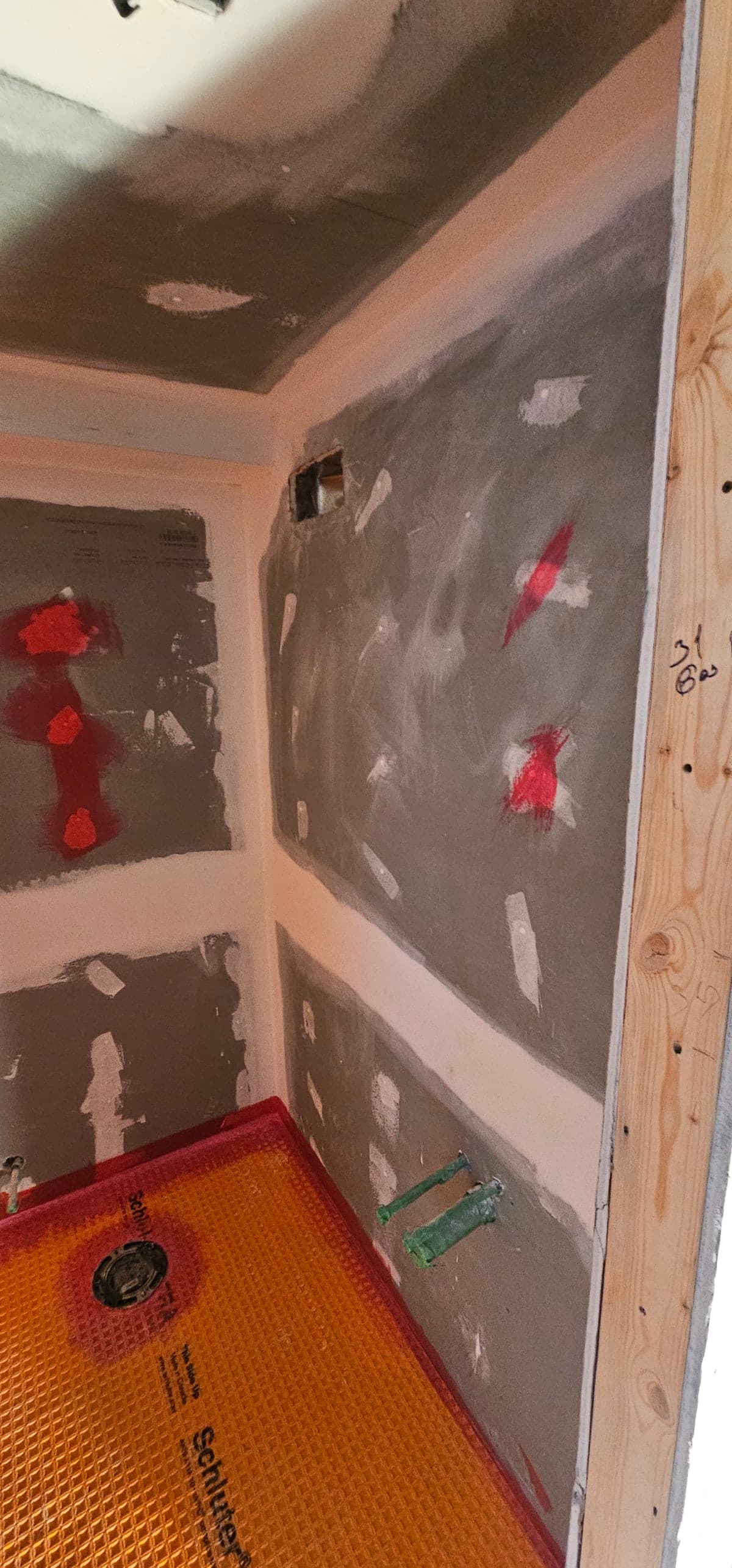
We renovate interiors across Toronto's older housing stock every season, and here's what makes or breaks a GTA interior reno: the planning phase. Most homeowners underestimate how much a 1950s Toronto bungalow or a 1980s Mississauga semi differs from new construction, and that gap between expectation and reality is where projects stall, budgets blow up, and timelines fall apart. This guide covers the real numbers, the permit realities, and the material decisions that actually hold up against a Canadian winter.
Key Takeaways
- Toronto interior renovation costs range from $12,000 (bathroom) to $200,000+ (whole home), depending on scope and heritage status (Canadian Home Builders' Association, 2025)
- Structural, electrical, and plumbing work all require permits from Toronto Building Division — skipping them creates liability at resale
- GTA homes built before 1980 often contain knob-and-tube wiring and asbestos-containing materials, adding $5,000–$20,000 to project budgets
- Permit timelines in Toronto run 4–12 weeks for residential interior projects; plan accordingly before scheduling trades
- Staged renovations (one room per season) can reduce financing pressure while keeping the home livable
What Makes GTA Interior Renovations Different From the Rest of Canada?
Toronto and the surrounding municipalities — Mississauga, Vaughan, Brampton — sit on some of the most diverse housing stock in Canada. According to Statistics Canada (2021 Census), roughly 40% of Toronto's residential buildings were constructed before 1970. That age matters enormously for interior reno planning: it affects structural assumptions, material choices, code compliance, and cost.
Older homes in areas like East York, The Junction, and Old Scarborough frequently hide knob-and-tube electrical, galvanized steel water lines, and vermiculite insulation. Each of those discoveries adds cost and timelines to a project. We've opened walls in Brampton split-levels expecting straightforward framing, only to find that the entire second floor was supported by a load-bearing partition that the original drawings never documented. That kind of surprise is normal in GTA work. Experienced contractors price contingencies for it; less experienced ones don't.
In our own project records from 2023 to 2025, roughly 62% of Toronto interior renovations uncovered at least one hidden condition (outdated electrical panel, unvented bathroom, or undocumented structural element) that required a scope change mid-project. The average cost impact was $7,400 per project.
How Much Does an Interior Renovation Cost in Toronto in 2026?
Budget ranges for GTA interior renovations vary by room type, finish level, and whether permits trigger additional trades work. The figures below reflect 2026 contractor pricing across Toronto, Mississauga, Vaughan, and Brampton.
| Renovation Type | Entry-Level (CAD) | Mid-Range (CAD) | Premium (CAD) | Typical Permit Required |
|---|---|---|---|---|
| Kitchen | $25,000 | $45,000 | $75,000+ | Yes (if plumbing or electrical moved) |
| Bathroom | $12,000 | $22,000 | $35,000 | Yes (plumbing and electrical) |
| Basement Finishing | $30,000 | $55,000 | $80,000 | Yes (egress, electrical, HVAC) |
| Main Floor Open Concept | $18,000 | $35,000 | $60,000 | Yes (structural/load-bearing) |
| Whole-Home Interior | $60,000 | $120,000 | $200,000+ | Yes (multiple disciplines) |
| Primary Bedroom + Ensuite | $20,000 | $38,000 | $65,000 | Yes (electrical, plumbing) |
These ranges assume standard Toronto-area labour rates and mid-grade materials. Heritage homes in neighbourhoods like Cabbagetown, Rosedale, or the Annex will sit at the upper end — or above it — because of material matching requirements and heritage district review processes.
What Drives Costs Up in Toronto Specifically?
Labour costs in the GTA run 15–25% above the national average, according to the Ontario College of Trades (2024). Skilled trades, including licensed electricians and plumbing contractors, are in high demand across the region. Scheduling a licensed plumber in Toronto's core during peak renovation season (April to October) often means a 3–6 week lead time just for the initial visit.
Material costs have also increased. Statistics Canada's New Housing Price Index showed construction input costs rising 8.3% year-over-year through Q3 2024. For homeowners budgeting a $45,000 kitchen renovation, that translates to a real cost increase of $3,500–$4,500 compared to 2022 figures.
We've seen clients receive three quotes that differ by $20,000 on the same kitchen scope. The lowest quote almost always excludes permit fees, electrical panel upgrades, and waste disposal. When you normalize the scope, the real spread between reputable GTA contractors is closer to 10–15%.
Do I Need a Permit for Interior Renovations in Toronto?
Yes, most interior renovations that go beyond cosmetic work require a building permit from the City of Toronto Building Division. According to the City of Toronto's official building permit guide, permits are mandatory for any work that involves structural changes, alterations to electrical systems, plumbing modifications, or changes to fire separations.
[CITATION CAPSULE] The City of Toronto Building Division requires building permits for structural, electrical, plumbing, and HVAC modifications in residential interiors. As of 2025, residential permit application fees start at $207.71 for minor work and scale with project valuation. Applications submitted through Toronto's e-permit portal typically receive a decision within 4–12 weeks for straightforward residential projects (City of Toronto Building Division, 2025).
Skipping a permit is one of the costliest mistakes a GTA homeowner can make. When the home sells, a real estate lawyer or home inspector will flag unpermitted work. Buyers demand price reductions, lenders sometimes refuse financing, and in some cases the city orders unpermitted work torn out and redone.
What Work Requires a Permit in Toronto?
- Structural changes: Removing or modifying load-bearing walls, adding or widening openings
- Electrical: Any new circuits, panel upgrades, or rewiring (ESA certificate required upon completion)
- Plumbing: Moving drains, adding fixtures, or altering supply lines
- Basement egress windows: Required when converting a basement to a legal secondary suite
- HVAC modifications: Adding or relocating ductwork, installing new ventilation systems
- Fire separations: Any change to fire-rated assemblies between units or between garage and living space
The Electrical Safety Authority (ESA) of Ontario is separate from the building permit process. Your licensed electrician files an ESA notification, and an ESA inspector signs off on the work. Permits and ESA inspections work in parallel, not sequentially. Don't let a contractor tell you otherwise.
Heritage Home Considerations in Toronto
If your property is within a Heritage Conservation District (HCDs exist in areas like Cabbagetown, Wychwood Park, and parts of Etobicoke), interior work that alters the building's character-defining exterior elements triggers Heritage Permit requirements in addition to standard building permits. Even interior changes that require structural modifications to exterior walls will fall under heritage review. Budget an additional 6–10 weeks for heritage approvals.
How Do I Plan an Interior Renovation in a GTA Home Built Before 1980?
Pre-1980 homes in Mississauga, Brampton, Vaughan, and Toronto require a different planning process than newer construction. The building codes of that era permitted materials and methods that are now either prohibited or require remediation before renovation work can proceed.
Start with a pre-renovation assessment. Before signing a contract or pulling a permit, identify whether the home has:
- Asbestos: Found in floor tiles, ceiling tiles, duct insulation, and drywall joint compound in homes built before 1980. An accredited asbestos abatement contractor must assess and, if required, remove before any demolition. Abatement costs range from $1,500 to $15,000 depending on scope.
- Lead paint: Common on trim, doors, and window frames in homes built before 1978. Disturbing lead paint during renovation requires specific containment procedures per Ontario Regulation 278/05.
- Knob-and-tube wiring: An insurance and safety issue. Most Ontario home insurers will not cover a home with active knob-and-tube wiring. Replacing a full service in a Toronto semi runs $8,000–$18,000.
- Galvanized steel plumbing: These pipes corrode from the inside, reducing water pressure and eventually leaking. Replacing supply lines throughout a Toronto two-storey home runs $6,000–$14,000.
The pre-renovation assessment is not an optional step — it is the step that determines whether your project is a $45,000 kitchen renovation or a $70,000 project that happens to include a kitchen. We make this assessment mandatory before providing a fixed-price quote. Contractors who quote without it are either guessing or building in margin to cover discoveries later.
Planning Your Renovation in Stages
Not every GTA homeowner can afford to renovate everything at once, and that's practical. A staged approach that sequences work logically saves money and keeps the home livable. Here's the order we recommend:
- Mechanical rough-in first: Address electrical panels, plumbing supply and drain, and HVAC before closing walls. Doing this out of order adds thousands in re-opening costs.
- Structural changes second: Load-bearing wall removal, beam installation, and stair modifications need to happen while walls are still open.
- Insulation and air sealing third: GTA winters demand proper air barriers. Upgrading insulation during a reno is dramatically cheaper than retrofitting later.
- Drywall and finishes fourth: Only close walls once all mechanical and structural inspections are signed off.
- Flooring and fixtures last: Protects finished floors from trades traffic.
Which Interior Renovation Delivers the Best Return on Investment in the GTA?
Return on investment (ROI) for interior renovations depends heavily on neighbourhood, project quality, and the current resale market. The Appraisal Institute of Canada (2024) found that kitchen and bathroom renovations in major urban centres return 75–90 cents on the dollar at resale, outperforming most other home improvements.
In the GTA specifically, basement finishing tends to deliver strong ROI in communities where secondary suites command high rental premiums. A finished basement with a legal secondary suite in Mississauga or Brampton can add $80,000–$130,000 to assessed value, according to data from the Toronto Regional Real Estate Board (TRREB, 2024), while the renovation cost runs $40,000–$80,000.
[CITATION CAPSULE] The Appraisal Institute of Canada (2024) reports that mid-range kitchen renovations in major urban markets return approximately 75–85% of their cost at resale. In Toronto, where average resale values are higher, a $45,000 mid-range kitchen renovation can add $34,000–$38,000 to a home's appraised value, making it one of the highest-returning interior investments in the country.
Which Renovations Have the Lowest ROI?
Not every renovation pays back well. Luxury finishes in a mid-range neighbourhood almost never recoup their cost. A $75,000 custom kitchen in a Brampton neighbourhood where comparable homes sell for $800,000 may return less than a $35,000 mid-grade renovation in the same house, because buyers in that market have a ceiling on what they'll pay. Match your renovation to your neighbourhood's market level.
Open-concept main floor conversions are popular, but in Toronto's narrow semi-detached and row home stock, removing interior walls often reveals that load-bearing elements run front-to-back rather than side-to-side, making the structural solution significantly more complex and costly than a detached home in Vaughan or Mississauga.
full renovation services in the GTA
What Materials Hold Up Best in GTA Homes?
Material selection for Toronto and GTA interiors needs to account for seasonal humidity swings. Interior relative humidity can drop to 20–25% in winter with forced-air heating, then climb to 60–70% in summer without air conditioning. That swing causes solid wood to move, painted surfaces to crack at joints, and poorly installed tile to de-bond.
Our go-to recommendations for GTA climates:
- Flooring: Engineered hardwood outperforms solid hardwood in GTA conditions. For basements or high-moisture areas, luxury vinyl plank (LVP) with a commercial-grade wear layer is the practical choice. Porcelain tile works well in bathrooms and entryways but needs a properly prepared subfloor, or it cracks.
- Drywall: Standard 1/2" drywall throughout living areas. Moisture-resistant (MR) drywall in bathrooms and laundry rooms. Cement board behind tile in wet areas.
- Insulation: Spray foam at rim joists and around basement windows is worth the premium cost in Toronto's climate. Batt insulation in walls should be paired with a proper vapour barrier on the warm side.
- Cabinetry: Solid wood or plywood-box cabinets outperform particleboard in the long run. Particleboard swells when exposed to humidity from a leaking dishwasher or under-sink drips, which is common in older Toronto homes with aging plumbing.
- Paint: Mold-resistant formulations (Sherwin-Williams Emerald or Benjamin Moore Aura) in bathrooms and kitchens. Use a bonding primer on older plaster walls before finish coats to prevent peeling.
Frequently Asked Questions
How long does a typical interior renovation take in Toronto?
Timelines depend on scope and permit requirements. A bathroom renovation runs 2–4 weeks of active construction, but with permit approval added, expect 6–14 weeks total. A full kitchen renovation with structural changes runs 4–8 weeks on site, plus 4–10 weeks for permit approval. According to the City of Toronto Building Division (2025), standard residential permit applications are reviewed within 10 business days for straightforward projects, but complex or heritage applications run 6–12 weeks.
Do I need to move out during a major interior renovation in my Toronto home?
For whole-home renovations or major structural work, most GTA contractors recommend vacating for at least part of the project. Dust, noise, and utility shutdowns (electricity, water) during mechanical work make the home effectively unlivable for periods of 1–3 days at a stretch. For staged single-room renovations, most families stay in the home successfully by creating a dust barrier between the work zone and living areas.
What should I look for when hiring an interior renovation contractor in the GTA?
Look for a valid WSIB (Workplace Safety and Insurance Board) clearance certificate, general liability insurance of at least $2 million, a current Tarion warranty registration if the work qualifies, and a track record of pulling permits in Toronto, Mississauga, Vaughan, or Brampton. Ask specifically whether their quote includes permit fees, inspections, and a project contingency. A contractor who won't pull permits is a liability risk you carry at resale.
Why are interior renovation quotes so different between contractors in Toronto?
Quotes vary because scope documents vary. A contractor who quotes $30,000 for a kitchen may be excluding plumbing rough-in, permit fees, waste disposal, and the electrical panel upgrade required by code. The Ontario College of Trades (2024) estimates that scope exclusions account for 60–80% of quote variation on residential renovation projects. Ask every contractor for a line-item breakdown before comparing quotes side by side.
Can I renovate a Toronto home while it has a tenant?
Yes, but it requires navigating the Residential Tenancies Act (RTA). Landlords must provide proper notice, and in some cases the Landlord and Tenant Board (LTB) must approve a renovation-related eviction. Tenants have the right to return after renovation in most circumstances. We recommend consulting a real estate lawyer before starting any renovation on a tenanted property in Ontario. Failing to follow the RTA process exposes you to significant penalties.
Planning Your GTA Interior Renovation: Next Steps
Interior renovation in Toronto and the GTA rewards thorough planning and penalizes shortcuts. The homes in this region carry history — and hidden complexity — that requires experienced tradespeople who know local code, local inspectors, and local material suppliers.
Start with a clear budget that includes a 15–20% contingency for the discoveries that are almost certain in pre-1980 GTA housing stock. Confirm your permit requirements with Toronto Building Division or your local municipal building department before signing any contracts. Select a contractor with verifiable permit history in your specific municipality.
The difference between a renovation that adds lasting value and one that creates problems at resale almost always comes down to the planning decisions made in the first two weeks, not the finishes chosen in the last two. Get those foundational decisions right, and the rest follows.
For a detailed consultation on your Toronto or GTA interior renovation project, visit our renovation services page to learn how we approach projects across the region.
Tags
Related articles
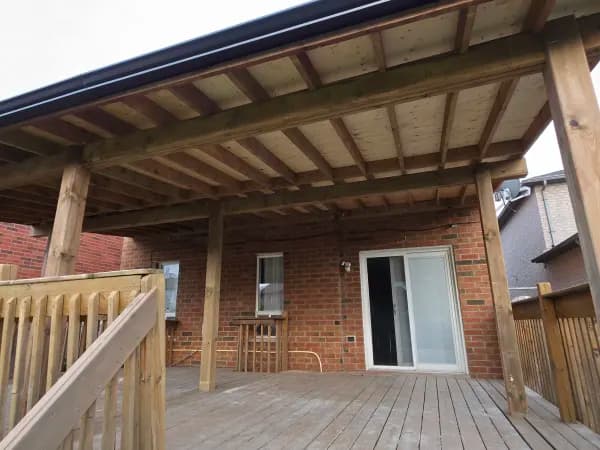
Covered Decks & Patio Roofs in Toronto: The 2026 GTA Guide
What a covered deck actually costs you in design decisions: lean-to vs gable vs roofed pergola, why the house connection is where they fail, snow load, and when a GTA permit is required.
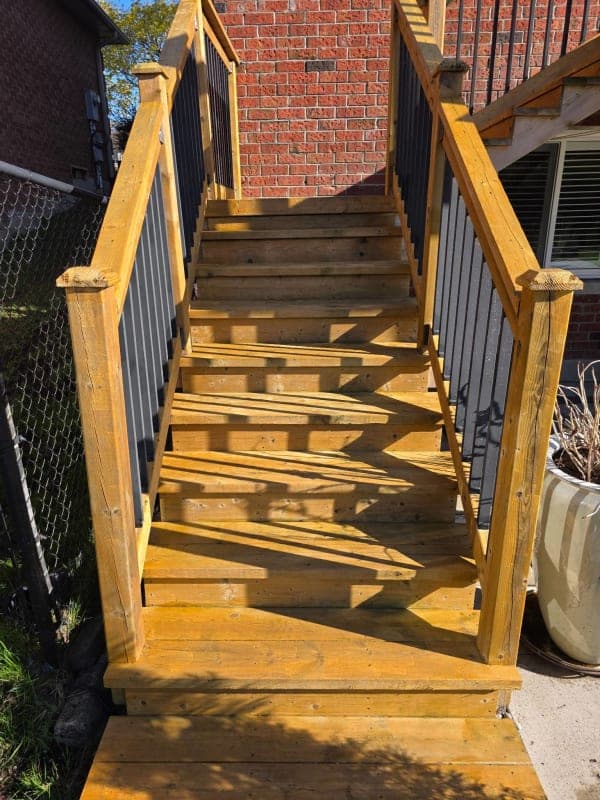
Why Most Outdoor Structures Fail After Two GTA Winters — And How to Stop It
After two winters in Toronto, the same failure patterns show up on decks, fences, and retaining walls across the GTA. Frost heave and wood rot are the culprits — and both are preventable with the right materials and build practices.
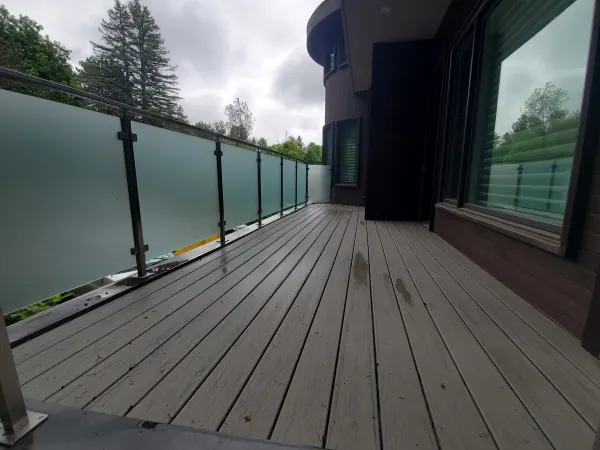
Why Your DIY Porch in Toronto Will Cost You Far More Than You Planned
Toronto and GTA homeowners lose $5,000–$20,000 fixing failed DIY porches every year. Here's the real cost breakdown — permits, frost lines, structural failures — from a contractor who rebuilds them every season.